Get Full Government Meeting Transcripts, Videos, & Alerts Forever!
Get email alerts on the State Public Defender Budget topic
No spam. Unsubscribe anytime.
New State Public Defender agency requests millions in spending authority as caseloads and costs exceed initial forecasts
Summary
The statewide public defender office asked the Joint Finance‑Appropriations Committee for supplemental and ongoing funding after the agency’s initial budget — based on lower pandemic-era caseloads — proved inadequate for post‑pandemic case volumes, transcript costs and county onboarding needs.
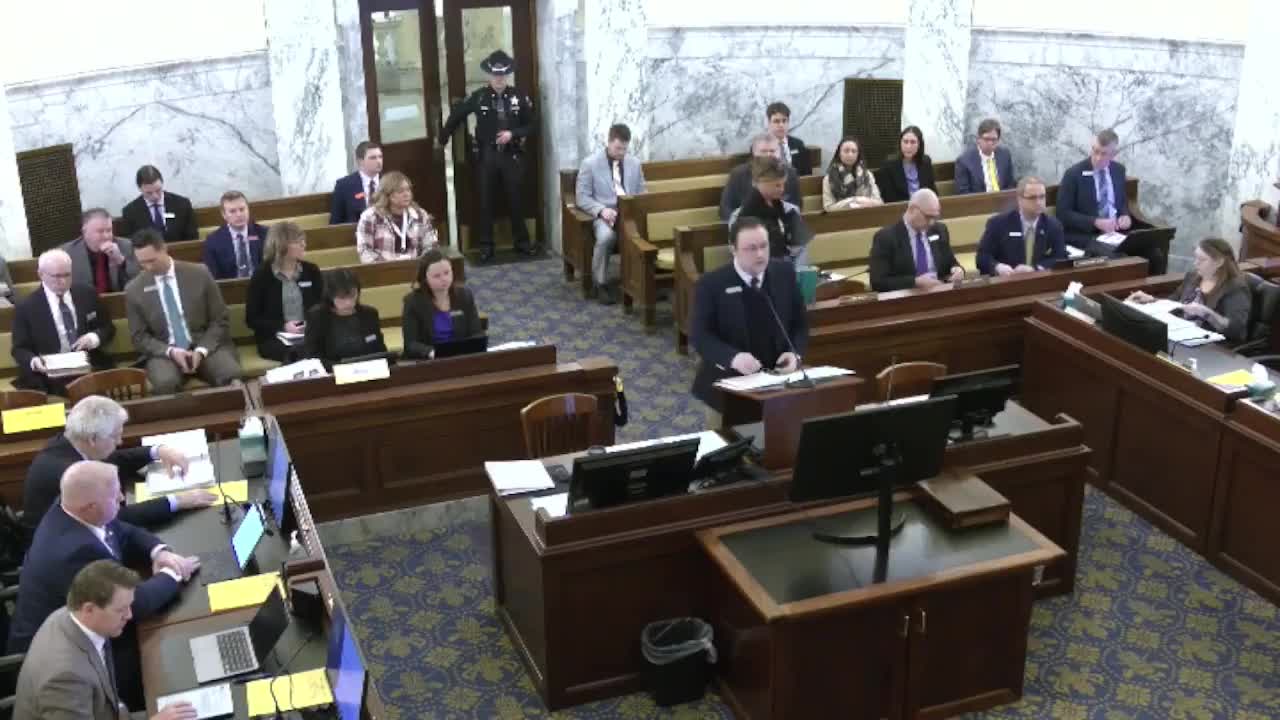
The newly created Idaho State Public Defender office told the Joint Finance‑Appropriations Committee on Oct. 24 that it needs additional spending authority and personnel to handle growing post‑pandemic caseloads, cover transcript costs after a state Supreme Court ruling, and onboard counties that will join the statewide system.
Christopher Lahoset, budget and policy analyst with the Legislative Services Office, summarized the agency’s funding structure and requests. He said the State Public Defender Act (Title 19, Chapter 60, Idaho Code) established a dedicated State Public Defense Fund and directed a $39 million transfer from the tax relief fund into that dedicated fund (citing Idaho Code §57‑8207). Lahoset said the governor’s and agency requests include a combination of one‑time and ongoing appropriations and cash transfers tied to that fund.
What the agency requested: Lahoset said the agency is seeking a $2.5 million one‑time supplemental in the current fiscal year to allow the office to fully utilize the $39 million cash transfer; $390,200 one‑time in the current year for transcript costs after the Idaho Supreme Court’s Dec. 5, 2024, ruling in State v. Blasick that the state must pay transcript costs; and $5,427,600 one‑time for additional personnel and contracting costs in FY25. For FY26 the agency requests $2.5 million ongoing to use the cash transfer, $16,000,380 ongoing from the General Fund for operating costs (including primary and conflict contract attorneys, investigators and experts), authorization for 17.96 FTE to onboard four institutional offices (Benewah, Elmore, Jerome and Shoshone counties), and other items. The governor also recommended a $16,867,400 one‑time cash transfer from the General Fund to the State Public Defense Fund to aid recruiting and raise contract rates.
Director Eric Frederickson, State Public Defender, told the committee the office is five months into operation and has faced a rapid rise in filings since transition. He said the agency inherited a system that in some places relied on flat‑fee contracts, which the new office found were both ethically problematic and insufficient; the state has begun raising contract rates and standardizing attorney pay so representation is consistent across counties. “When you look at the projects...October first looked different than it did October 15…we're learning more and more about public defense,” Frederickson said, describing a “triage” period during the agency’s formation.
Committee members pressed the agency on several practical questions: whether a FY25 supplemental can be spent in a short window, how counties will transition facilities and whether the agency is being asked to handle non‑statutory appointments. Frederickson said legislation currently requires counties to provide facilities through 2029 and that some appointments unrelated to criminal defense (for example, private terminations or custody matters) have been routed to the state office when no other attorney is available, creating litigation over scope.
The office reported 29 vacancies among its 56 authorized or budgeted positions when Lahoset presented the overview, a roughly $37.7 million personnel budget, and a base appropriation just under $49 million after initial 2024 enhancements. Lahoset told the committee that approximately two‑thirds of the agency’s budget is funded by the dedicated State Public Defense Fund. Frederickson said the agency needs to increase rates to retain contract counsel in rural counties and to recruit institutional staff, and that without the requested continuing funding the office would struggle to fully staff district and institutional offices.
No formal votes were recorded in the transcript; committee members requested follow‑up information, including breakdowns for “experts” and “miscellaneous” expenditures and the geographic distribution and repayment structure of prior workforce housing pass‑throughs referenced later in the hearing.