Get Full Government Meeting Transcripts, Videos, & Alerts Forever!
Get email alerts on the University Finance And Partnerships topic
No spam. Unsubscribe anytime.
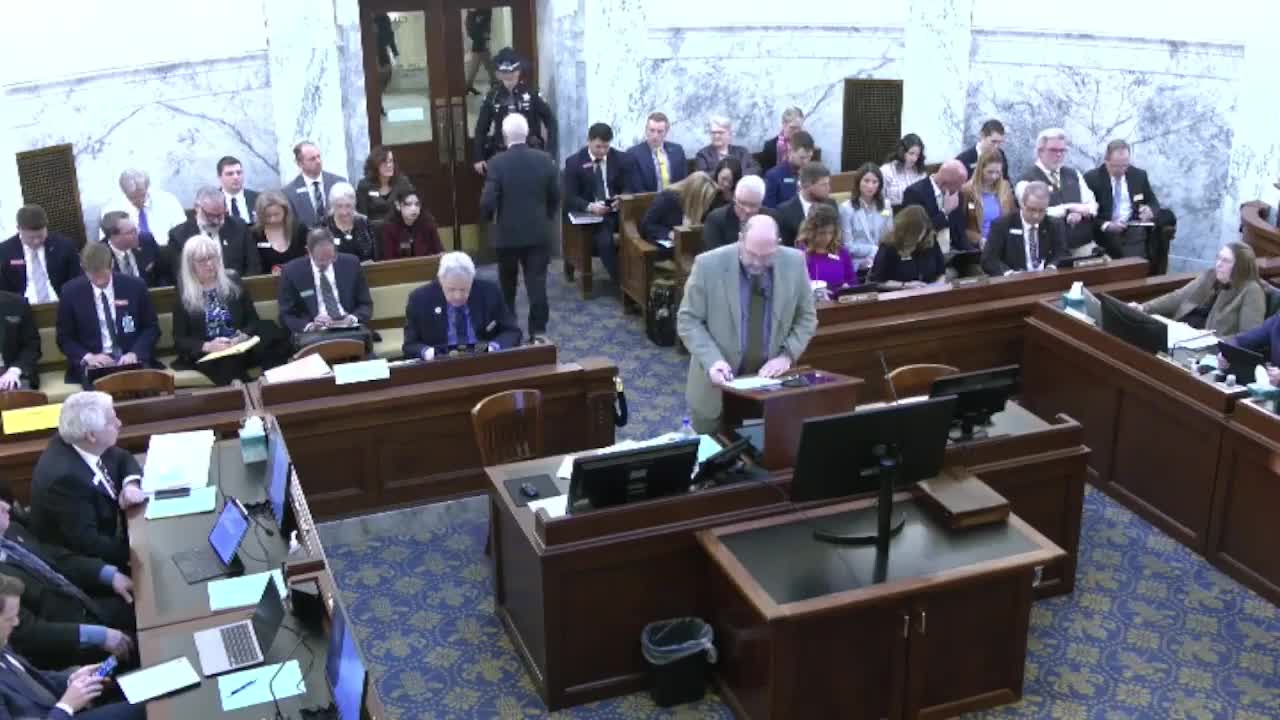
University of Idaho reports improved finances, outlines research and Phoenix negotiations at JFAC hearing
Summary
University of Idaho President C. Scott Green told the Joint Finance‑Appropriations Committee on Jan. 27 that the university has improved its financial position since a multi‑million dollar base reduction and is pursuing research and partnership plans while continuing negotiations related to a possible affiliation with the University of Phoenix.
University of Idaho President C. Scott Green told the Joint Finance‑Appropriations Committee on Jan. 27 that the university has improved its financial position since a multi‑million dollar base reduction and is pursuing research and partnership plans while continuing negotiations related to a possible affiliation with the University of Phoenix.
Why it matters: The University of Idaho is the state’s land‑grant research university; its budget, reserve position and large federal research portfolio affect statewide workforce, research capacity and long‑term capital plans.
Budget overview and financial recovery: Kevin Campbell of the Legislative Services Office presented the University of Idaho’s budget picture, saying the institution has a reported base budget of $196,300,000 and enrollment of 12,286. Campbell and Green described a $26 million base reduction taken in FY 2021, and Campbell noted the university has generally spent about 90% of its appropriations in the recent five‑year window.
President Green said the institution’s financial position is markedly improved since 2019. “Our position's greatly improved,” he told the committee, describing aggressive actions taken to right‑size the university. Green acknowledged remaining constraints tied to an accounting‑level obligation for retiree medical benefits (OPEB). The university reported a negative unrestricted net position in one accounting category and offsetting restricted net position in another; Green summarized those figures in testimony, noting the university’s total net position is positive.
Operational capacity and EWA: Campbell described recent operational capacity enhancements and the role of the enrollment workload adjustment (EWA) as a three‑year weighted credit‑hour formula that can increase or decrease an institution’s appropriation. For FY 2025 the university received $2.1 million in operational capacity enhancement; the FY 2026 request includes additional operational enhancements for compensation (CEC) and endowment adjustments.
University of Phoenix negotiation and breakup fee: Green described a non‑binding agreement with the sellers of the University of Phoenix that extends a deadline for a possible transaction through June 10. “The agreement would say if they decide not to proceed with us...we do have a breakup fee of up to $20,000,000 to cover our expenses and then some,” Green said. He added the university already received a $5 million payment under the agreement that was used to offset transaction expenses.
Federal grants and passthroughs: Several lawmakers asked about federal awards and subrecipient passthroughs. Green said the university manages a large research portfolio and frequently distributes funds to partner institutions on multi‑institution grants. He said the university’s compliance office reviews those arrangements and agreed to provide the committee a list of significant subrecipients and passthroughs on request.
DEI offices and reorganization: Green described the State Board of Education’s resolution on diversity, equity and inclusion (DEI) and said the university began planning and had “shut down our offices at the end of 2024.” He listed offices that were dissolved (Office of Equity and Diversity, Office of Multicultural Affairs, Black/African American Cultural Center, LGBTQA Office and Women’s Center) and said staff were reassigned to positions that report to student‑services leadership; some job descriptions were substantially rewritten. Green said the university retained its Tribal Relations director and that some student‑support functions were being consolidated into a Vandal Success program and a newly opened first‑generation student support unit.
Research, INL and water: Green highlighted the university’s partnership with Idaho National Laboratory (INL), ongoing work on nuclear materials, integrated energy systems and power engineering, and a formal agreement to reinforce collaborative projects. He described active water research through the Idaho Water Resources Research Institute and other university units, noting applied projects on aquifer recharge, water quality and infrastructure protection.
WAMI and medical education partnerships: Committee members asked about WAMI (the regional medical‑education partnership). Green said the university continues to support WWAMI pathways and is exploring a partnership with the University of Utah School of Medicine to expand capacity and focus on rural health; any change would require State Board approval and possible legislation.
What’s next: The committee paused the system‑wide colleges and universities hearing to allow additional follow‑up questions and requested supplemental documentation, including detailed lists of federal passthroughs, job descriptions for reassigned staff, and further clarification of the university’s reserve and net‑position accounting.
Sources: Testimony and Q&A Jan. 27 with Kevin Campbell (Legislative Services Office), C. Scott Green (President, University of Idaho), and university staff appearing at the hearing.