Get Full Government Meeting Transcripts, Videos, & Alerts Forever!
Get email alerts on the Higher Education Budget topic
No spam. Unsubscribe anytime.
Lewis‑Clark State College urges salary funding, touts LAUNCH and prison education at JFAC budget hearing
Summary
Lewis‑Clark State College officials told the Joint Finance‑Appropriations Committee on Jan. 27 that the college needs additional operational enhancements and salary increases to retain faculty and staff, described the early workforce impact of the state’s LAUNCH program and reported completion of federal approvals to expand prison education.
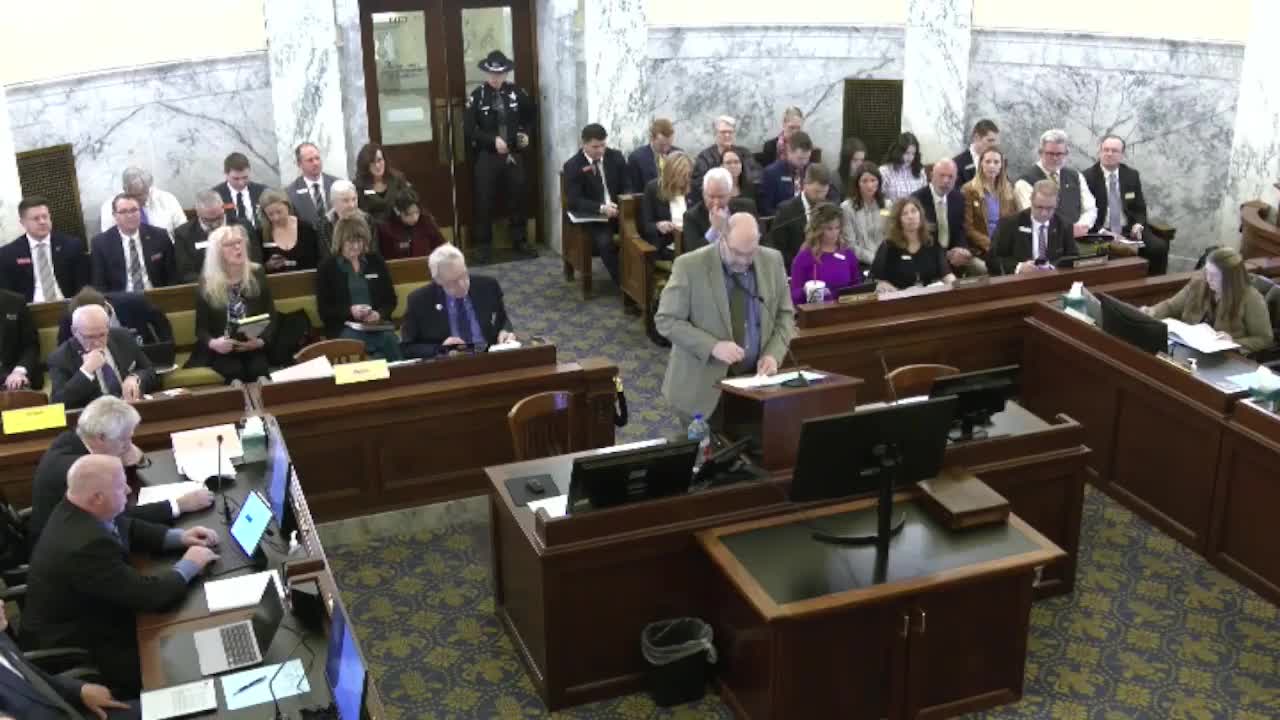
Lewis‑Clark State College President Cynthia Pemberton told the Joint Finance‑Appropriations Committee on Monday, Jan. 27, that the college’s FY 2025 base appropriation is $41,700,000 and that the institution is seeking additional operational capacity and salary funding to close a gap with K‑12 pay and to sustain recent program expansions.
Why it matters: Pemberton and the college’s budget analyst said modest state enhancements and reappropriated tuition revenue are essential to cover occupancy, staffing and targeted priorities such as competitive employee compensation (CEC). Lawmakers pressed college leaders for details on enrollment, the enrollment workload adjustment (EWA) formula and how one‑time enhancements were used.
Kevin Campbell, a budget and policy analyst with the Legislative Services Office, opened the presentation by explaining revenue treatment for colleges and universities and by listing Lewis‑Clark’s budget drivers, including tuition reappropriation and endowment distributions. Campbell noted Lewis‑Clark had $23.7 million in tuition and fee revenue reappropriated into FY 2025 and called attention to the Normal School Endowment Fund distributions governed by Idaho Code (33‑304 as referenced in the presentation).
Pemberton described the college’s current priorities and outcomes. “We are North Idaho’s health care education leader,” she told the committee, citing expansions in nursing, allied health and technical programs. She said the institution awarded LAUNCH support to about 240 students in the fall semester, with a disproportionate share in career‑technical education programs; she reported career‑technical enrollment up 19% in fall and another 10% in spring.
On workforce and completion metrics, Pemberton said several programs — welding, HVAC, diesel, nursing and electrical apprenticeship — have recent cohorts supported by LAUNCH funds and that 36 of 54 students in a fourth‑year electrical apprenticeship completed their program with LAUNCH support.
Enrollment workload adjustment (EWA) and budget impacts: Both the analyst and Pemberton described EWA as a three‑year weighted credit‑hour formula administered through the State Board of Education that redistributes a fixed pool. “It is a weighted credit hour formula that was determined about 3 decades ago. It is not an inherently bad formula necessarily… it is a net 0, you are correct,” Pemberton said, adding that Lewis‑Clark’s average weighting (about 1.85) is lower than its sister institutions (about 2.51). The college expects a $102,500 reduction for FY 2026 as a result of the EWA formula.
Compensation and staffing: Committee members pressed Pemberton on salary comparisons with K‑12. Pemberton said recent internal analyses show LC State instructors and assistant professors earn less than comparable K‑12 positions — she summarized those gaps as roughly $9,000 less for instructors and about $3,777 less for assistant professors based on the most recent data. The college requested $287,000 in operational capacity enhancement this year to put toward CEC; Pemberton said $1.2 million would be needed to substantially close the gap with K‑12 medians.
Use of prior enhancements: Pemberton described how prior operational capacity enhancements were used. She said part of the funding finalized occupancy costs for the Schweitzer Career Technical Engineering Building (custodial, utilities and support), paid for additional marketing and helped IT/security upgrades. “We keep the lights on,” she said, describing the practical allocations for occupancy costs.
Prison education and program growth: Pemberton said Lewis‑Clark completed the federal and accreditor approvals required to transition from an experimental prison education program to a full prison‑education program, and that the college is currently serving nearly 200 incarcerated students in Orofino, Pocatello and Boise under Pell eligibility provisions. She described that transition as having required coordination among the Idaho Department of Correction, the State Board of Education, the college’s accreditor and the U.S. Department of Education.
Committee follow‑ups and data requests: Committee members asked for the salary comparables report for all eight institutions, enrollment and retention comparisons, and additional financial clarifications. Vice President for Finance and Administration Julie Cray clarified that some net position and financial ratio differences reflected the presence or absence of major capital projects in a given year and offered to follow up on specific financial‑ratio questions.
What’s next: The committee requested supplemental information (salary comparables and detailed EWA clarifications) and left the college’s FY 2026 enhancement requests in committee consideration.
Sources: Presentation and answers on Jan. 27 to the Joint Finance‑Appropriations Committee from Kevin Campbell (Legislative Services Office), Dr. Cynthia Pemberton (President, Lewis‑Clark State College) and Dr. Julie Cray (Vice President for Finance and Administration, Lewis‑Clark State College).