Get Full Government Meeting Transcripts, Videos, & Alerts Forever!
Get email alerts on the Education Military Family Policy topic
No spam. Unsubscribe anytime.
House committee introduces RS 32156 to give active-duty service members admission preference at charter schools
Summary
Representative Levitt introduced RS 32156 to give charter schools an admission preference for students from active-duty military families, citing frequent Permanent Change of Station moves and family cohesion; the committee voted to introduce the resolution for a full bill hearing.
Representative Levitt, of Legislative District 25, asked the House committee to introduce RS 32156, a proposed change to charter school admissions policy that would grant admission preference to children of active-duty military service members.
The proposal, Levitt said at the podium, references the statutory definition in federal law ("US Code 10 101") describing "active duty" and related categories such as full‑time training duty and sustained service, while excluding typical National Guard duty. "A lot of military service members, the PCS — PCS means permanent change of station — it's very hard on the families when they move from duty station to duty station," Levitt said, arguing the preference would help preserve family cohesion and continuity for children who repeatedly change schools.
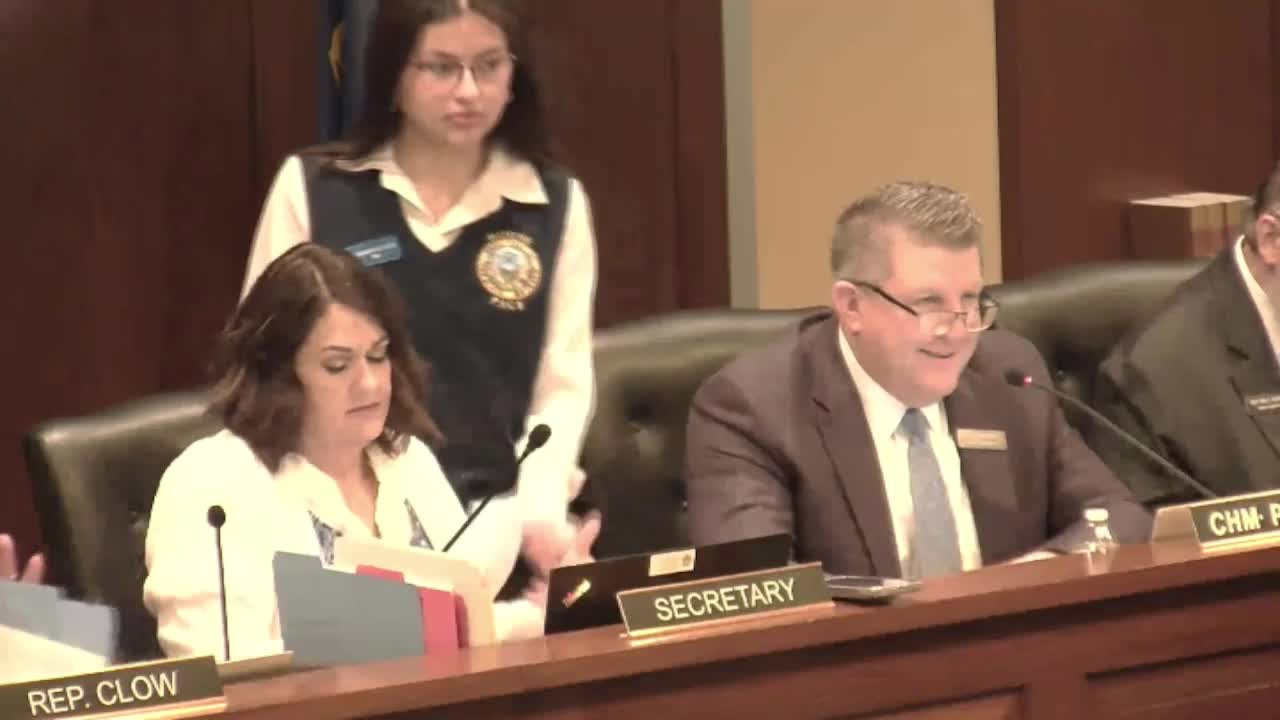
Chairman Pickett and Representative Marmon moved and supported the introduction of the RS. Representative Marmon formally moved to introduce RS 32156; the committee voice-voted in favor and the motion carried, sending the measure to a full bill hearing where committee members said they expect to examine details and take further questions.
The RS text cited the federal definition of "active duty" from 10 U.S.C. §101; the sponsor referenced that definition while describing who would be eligible for the proposed preference. Committee members did not debate amendment language during the introductory presentation; members were told more detailed questions could be handled at the full‑bill hearing.
The committee did not record individual roll-call votes in the transcript; the introduction passed on a voice vote. The RS will proceed to a formal hearing where proponents, opponents and staff will be scheduled to provide further detail and legal analysis.