Get Full Government Meeting Transcripts, Videos, & Alerts Forever!
Get email alerts on the Public Defense Appellate topic
No spam. Unsubscribe anytime.
Idaho appellate public defender seeks deputy attorney to cut contracting costs
Summary
The Office of the State Appellate Public Defender asked the Joint Finance-Appropriations Committee for authorization of an additional deputy appellate public defender post, arguing hiring would be cheaper than contracting overflow cases; the office also highlighted a remaining reappropriation balance for prior supplemental funding.
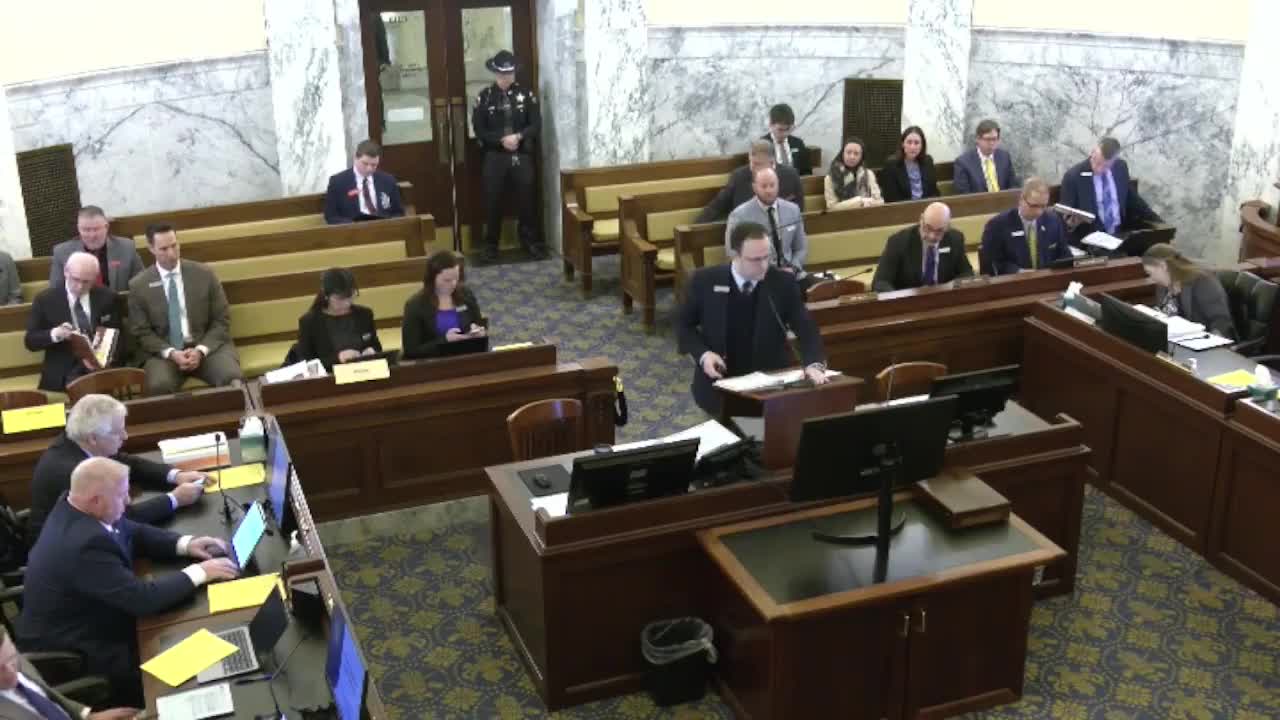
The Office of the State Appellate Public Defender told the Joint Finance-Appropriations Committee on the morning of the hearing that it is requesting one additional full‑time deputy appellate public defender position to absorb non‑capital felony, misdemeanor and juvenile appeals and reduce reliance on outside counsel.
Christopher Lahoset, a budget and policy analyst with the Legislative Services Office, summarized the office’s role and budget. "The state appellate public defender is charged with providing legal representation to indigent persons for appeals from convictions or post judgment orders in district court," he told the committee, citing statutory authority in Idaho Code.
The office currently is budgeted for 26 full‑time positions and reported no vacancies as of Dec. 15 in the year covered by the presentation. Lahoset said that about 85 percent of the division’s expenditures are for personnel and that the office has used roughly 95 percent of its personnel appropriation in recent years. He also noted a one‑time supplemental the Legislature approved in 2023 and that roughly $1,259,000 of that reappropriated balance remains available to pay overflow case costs.
Eric Leighton, identified in the hearing as the State Appellate Public Defender, told members that the office’s caseload has increased substantially since the COVID‑19 pandemic. "It has been a challenging year," he said. He described recent turnover that temporarily slowed hiring, and said the office was fully staffed at the time of the hearing but expected staffing changes when its office administrator departed.
Committee members asked about current contracting practices. Leighton said the office must always contract out for conflict cases and that it has also used contracts to handle overflow litigation. "It is more expensive to contract cases out than to handle them in house," he said, adding that overflow cases have tended to cross fiscal years and complicate budgeting. The office estimated continued contracting would generate bills of about $254,000 per year for outside attorneys, while hiring a deputy at a stated salary of about $140,000 would yield cost savings.
Leighton and Lahoset stood for questions from committee members and emphasized the office’s high utilization of personnel appropriations and reliance on the remaining reappropriated funds for FY25 caseload pressure. No formal committee action or vote followed the presentation.