Get Full Government Meeting Transcripts, Videos, & Alerts Forever!
Get email alerts on the Broadband Commerce topic
No spam. Unsubscribe anytime.
Commerce highlights broadband buildout, IIJA/BEAD planning and workforce priorities
Summary
The Idaho Department of Commerce told the Joint Finance-Appropriations Committee it is deploying federal and state broadband funds, is moving through BEAD prequalification and application phases, and continues work on workforce, childcare and energy-related economic development initiatives.
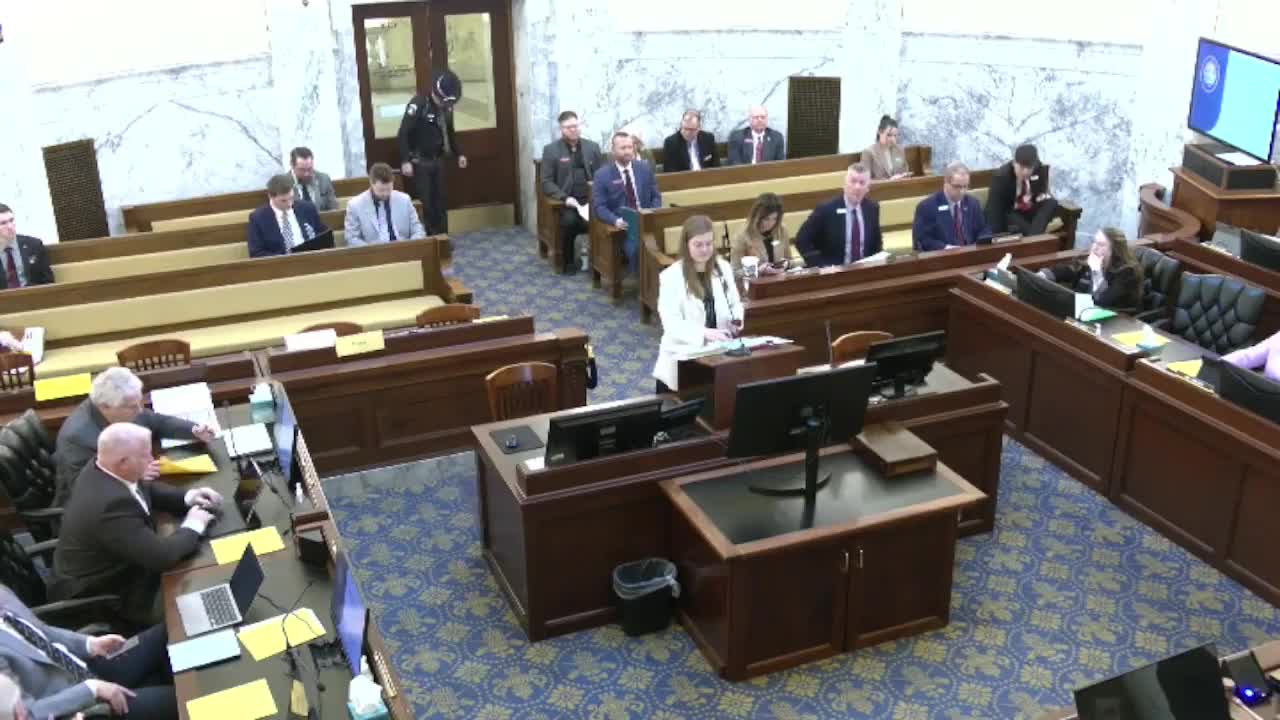
The Idaho Department of Commerce briefed the Joint Finance-Appropriations Committee on the department’s role in broadband deployment, workforce and economic development, and presented details on state and federal broadband funds and the timeline for BEAD applications.
Brooke Dupree, a Legislative Services analyst, summarized the department’s funds and staffing. Dupree said the Idaho Broadband Fund began with a $35 million general-fund transfer and that much of those dollars have been reappropriated into recent fiscal years; the department listed additional federal and ARPA-funded grants that produced a multi-hundred-million-dollar suite of broadband resources. Institutional staffing for Commerce’s broadband office stands at six FTP, with 42 FTP in the broader commerce program.
Why it matters: the department manages and helps distribute both state and federal broadband infrastructure dollars that aim to connect unserved and underserved homes and businesses; broadband deployment is also a key economic-development priority tied to workforce, housing and other local services.
Funding and timelines: Commerce and the office of broadband summarized three large funding streams. The state’s Idaho Broadband Fund (the $35 million transfer) has about $8.7 million remaining after prior obligations, the ARPA capital projects fund supported roughly $124 million worth of projects in FY2023, and the Infrastructure Investment and Jobs Act (IIJA) BEAD program represents roughly $580 million in federal resources for Idaho. Ramon Jabe Sanchez, the department’s broadband manager, told the committee the BEAD program was moving from planning to prequalification in quarter 1, with a funding-application phase planned for quarter 2; Commerce expects to grade and evaluate applications through the summer and submit a final package to the federal government in mid-fall to early winter.
Project scope and partnerships: Sanchez said the ARPA capital projects awards were already contracted to 18 projects connecting about 35,000 homes and businesses statewide. He described Commerce’s emphasis on partnership with private internet-service providers, local jurisdictions and stakeholder groups, and noted Idaho’s unique BEAD planning decision to use a portion of planning funds to provide local planning grants that assist communities and private partners in preparing applications.
Technology and resilience: committee members asked whether satellite-based services (low-earth-orbit providers such as Starlink) are a viable long-term substitute for fiber. Sanchez said the BEAD program prioritizes fiber first and licensed fixed wireless where fiber is infeasible; alternative technologies, including low-earth-orbit satellites, may be used for locations where fiber or licensed wireless are not cost effective. He added that Idaho’s BEAD plan is technologically agnostic and will consider lower-cost alternatives in locations where terrestrial infrastructure is not practical.
Commerce priorities beyond broadband: Director Tom Keely highlighted workforce, childcare, housing and energy-sector engagement as central to the department’s economic-development strategy. Lawmakers asked about leveraging Idaho’s research assets and energy supply chain for advanced energy and small modular reactor supply-chain opportunities; Keeley said the department coordinates with Idaho National Laboratory, the Idaho Advanced Energy Commission and regional partners to pursue those opportunities.
Discussion and direction: Commerce asked the committee to continue support for the broadband office and related funding oversight. No formal votes were taken at the hearing; Commerce said project selection and allocation decisions for BEAD will follow federal guidance and the Idaho Broadband Advisory Board’s statutory role in policy and project selection.