Get Full Government Meeting Transcripts, Videos, & Alerts Forever!
Get email alerts on the Medical Conscience Rights topic
No spam. Unsubscribe anytime.
Idaho committee backs bill expanding conscience protections for health workers; opponents warn of patient access risks
Summary
The Idaho House Welfare Committee voted 13-2 to send House Bill 59, the Medical Ethics Defense Act, to the full House with a due-pass recommendation after testimony from health-care workers, lawyers and patient advocates.
The Idaho House Welfare Committee voted 13-2 to send House Bill 59, the Medical Ethics Defense Act, to the full House with a due-pass recommendation after more than an hour of testimony from health-care workers, lawyers and patient advocates.
The bill would expand conscience protections for health-care professionals, entities and insurers beyond the state's existing, more narrowly drawn statutes, supporters said. Representative Bruce Scogg (R., Dist. 10) said the bill "protects the conscience rights of healthcare professionals and entities" and provides enforcement tools including a private right of action, injunctive relief, damages and reasonable attorney fees.
Supporters told the committee that HB 59 would prevent health professionals from being forced to participate in nonemergency procedures that violate their "sincerely held" religious or moral beliefs. Catherine Hartley, an attorney with the Pacific Justice Institute, said the measure "provides a much-needed expansion of conscience rights not provided in current federal or state law." Greg Chaffin, senior counsel for Alliance Defending Freedom, told the committee the bill is limited to objections to particular procedures and expressly exempts emergency care.
Opponents, including Missy Deli Carpeni Tolman of Planned Parenthood Alliance Advocates Idaho and patient witness Nixon Matthews, said the bill is overly broad and could allow staff or insurers to withhold care or information. Tolman warned the panel the bill "doesn't even require that providers or insurers notify patients of their objections," and argued the measure could permit refusal of care by staff who merely "claim it goes against their moral beliefs." Matthews said HB 59 "allows providers to take the title but reject the duty to refuse care because of personal belief," and warned of consequences in rural areas with few providers.
Committee members questioned witnesses on a range of issues including whether the bill covers employer workplace policies (masks, vaccine mandates), pharmacy refusals, hiring decisions and how "essential function" and "undue hardship" standards would apply. Counsel and witnesses said the bill does not apply to emergency lifesaving care and contains notice requirements for employees to inform employers of conscientious objections so accommodations can be planned.
Several witnesses told personal stories about workplace conflicts tied to conscience. Dr. Rod Story, a family physician from Moscow, said he left a hospital job after being required to participate in a transgender program he opposed. Joy Huffman, a registered nurse, described staffing disruptions during the COVID period and said some providers left rather than compromise conscience concerns.
Supporters also argued the bill protects institutions and faith-based insurers as well as individual providers. David Ripley, executive director of Idaho Chooses Life, told the committee the proposal expands protections to institutions and payers that the 2010 statute does not cover.
Representative John Ekberg (R.) said he would not support the motion, recounting a personal medical emergency and expressing concern about patient access in rare but urgent cases. Representative Kaler and others said they would support the bill to protect religious liberty and conscience rights.
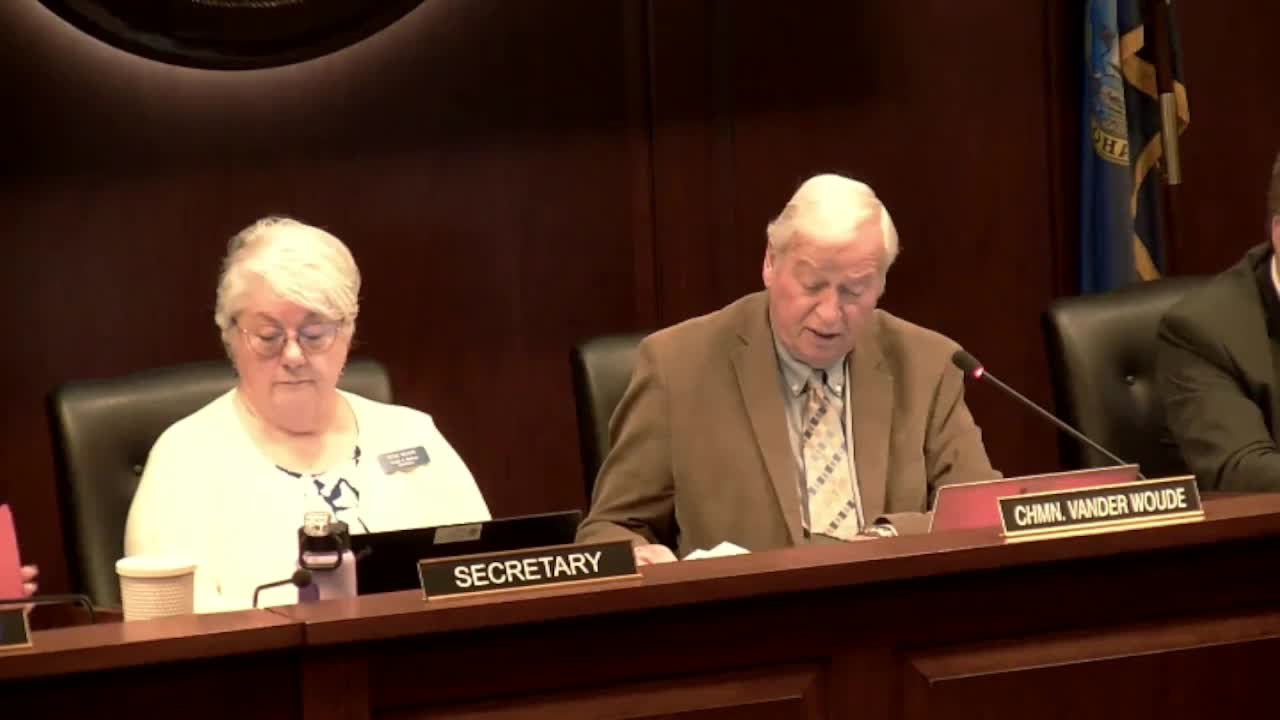
The committee recorded a roll-call vote on the motion to send HB 59 to the House floor with a due-pass recommendation. The secretary read the votes; the tally recorded 13 ayes and 2 nays. The committee transcript shows the two no votes were cast by Representative Rubel and Representative Egbert. The committee chair declared the bill sent to the floor with a due-pass recommendation.
The legislation now proceeds to the full Idaho House, where lawmakers will continue debate and may amend the bill. Committee testimony and questions focused on balancing protections for conscience with patient access and continuity of care, and on how the bill's exceptions (emergency care, essential functions, undue hardship) will be interpreted in practice.