Get Full Government Meeting Transcripts, Videos, & Alerts Forever!
Get email alerts on the State Liquor Division topic
No spam. Unsubscribe anytime.
Idaho Liquor Division outlines revenue distributions, store staffing and IT upgrade requests
Summary
The Idaho State Liquor Division told the Joint Finance-Appropriations Committee it distributed roughly $118.3 million in FY2024, is requesting modest pay increases for temporary retail clerks, and seeks one-time funds for store improvements and IT security upgrades.
The Idaho State Liquor Division told the Joint Finance-Appropriations Committee on the presentation that in fiscal 2024 it distributed about $118.3 million from liquor operations and has asked for a mix of ongoing and one-time funding to address staffing, store maintenance and IT needs.
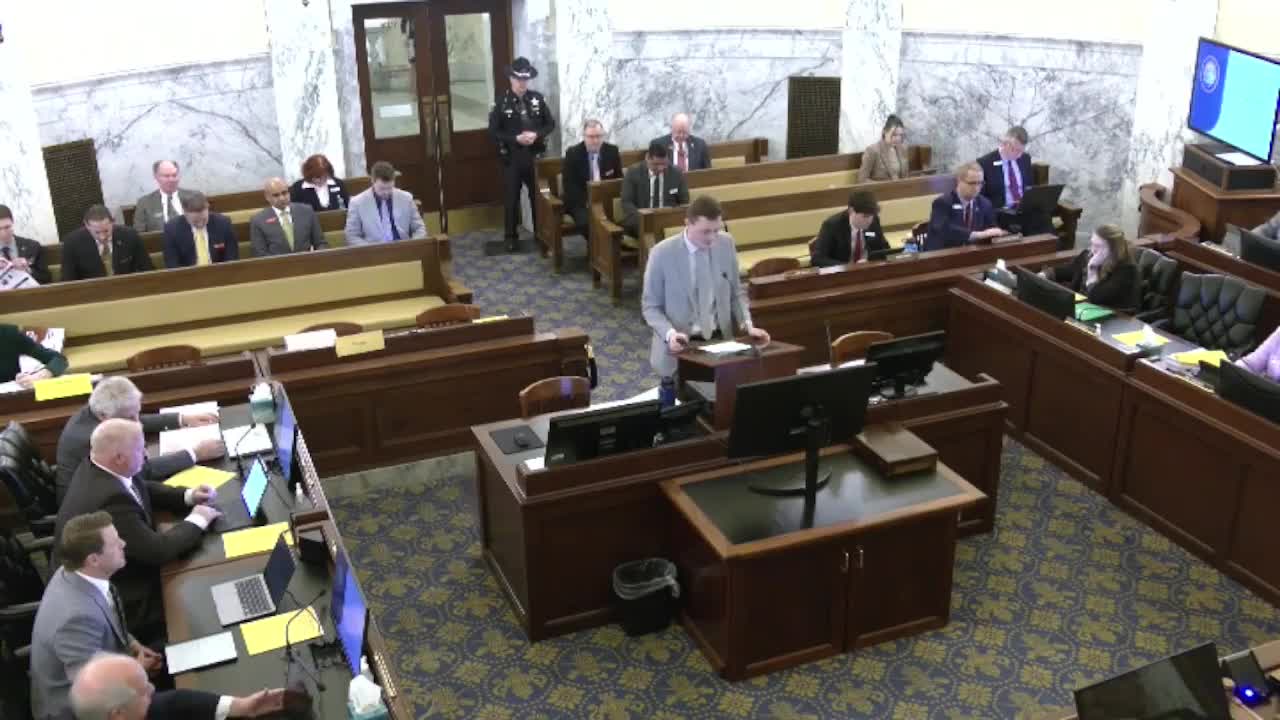
The division’s director, Andrew Arulanandam, and Legislative Services analyst Kellen McGurkin outlined how statutory distributions and the division’s operating costs interact. McGurkin said the division’s total statutory distributions in FY2024 were $118,300,000 and that a 2% surcharge on liquor sales directed about $6,700,000 to the court services fund. He said available funds are split, with roughly one half eventually flowing to cities, counties and magistrate courts (about $56,300,000 in FY2024) and the remainder covering fixed distributions, training funds and transfers to the general fund after operating costs and fund-balance requirements are met.
Why it matters: the Liquor Division is a revenue-generating state agency whose net income and statutory distributions feed other state and local budgets. Committee members pressed the agency on staffing, turnover and how one-time and ongoing funding requests would affect operations and state revenue flow.
Key details from the presentation: McGurkin and the director said the division reported $319.1 million in total sales in FY2024, with an estimated net income of $116.6 million. The FY2024 total statutory distribution ($118.3 million) exceeded that net income by roughly $1.6 million; the presenters said that difference stems from accounting adjustments for assets and inventory. The division’s appropriated expenditures were listed as about $28.1 million for FY2024, with approximately 60.6% attributed to personnel, around 20.5% to capital outlay and 12.9% to operating expense.
On staffing, the division said it maintains an FTP cap of 257.25 positions (with about 210 full-time retail positions), uses roughly 185 part-time store clerks who are not counted in that FTP number, and works with 106 contract liquor stores. Tony Grama, identified in the hearing as the division’s chief deputy and chief financial officer, said temporary store clerks are state employees and not eligible for automatic Change in Employee Compensation (CEC) adjustments; the division must seek line-item enhancements to increase their pay.
The division described turnover among temporary retail clerks as high historically — McGurkin and the director said turnover fell from about 140% to roughly 84% after prior pay increases the committee approved. The agency has requested an ongoing increase to raise temporary retail staff from $15 to $15.45 per hour and said it expects incremental increases rather than larger, one-time raises.
Capital and IT requests: the division requested several one-time appropriations for store and IT needs, including roughly $980,300 for retail store replacement items (shelving, lighting, flooring and signage); $235,000 for IT and security replacements recommended by the Office of Information Technology Services (OITS); $200,000 to purchase network firewalls and switches to support a cellular network transition in stores; and $100,000 to bring the agency website into compliance with web accessibility guidelines under the Americans with Disabilities Act. The director and analysts said the OITS review supported the planned network and security purchases and that the new configuration is projected to reduce monthly connectivity costs compared with a hardwired solution.
Committee questions focused on the scope and cost of the website accessibility work, the adequacy of the proposed hourly increase for temporary clerks, how contract stores operate in rural areas, and whether ongoing requests were included in the governor’s recommendations. Director Arulanandam described the website work as stemming from an expert review that identified multiple accessibility items, and said the division judged a one-time investment prudent to reduce legal risk and improve long-term compliance. On rural distribution, the director said contract stores receive product from the division and handle their own staffing under contract terms.
Discussion and direction: the committee heard the agency’s requests and supporting detail; no formal committee action was taken at the hearing. Committee members asked for clarity on requested lines and were advised where requests were included in the LBB materials.
The Liquor Division said it will stand ready to supply more detail as the committee reviews budget packets and asked members to contact staff with follow-up questions.