Get Full Government Meeting Transcripts, Videos, & Alerts Forever!
Get email alerts on the State Liquor Division topic
No spam. Unsubscribe anytime.
Idaho Liquor Division requests IT, store and pay upgrades as distributions and balances shift
Summary
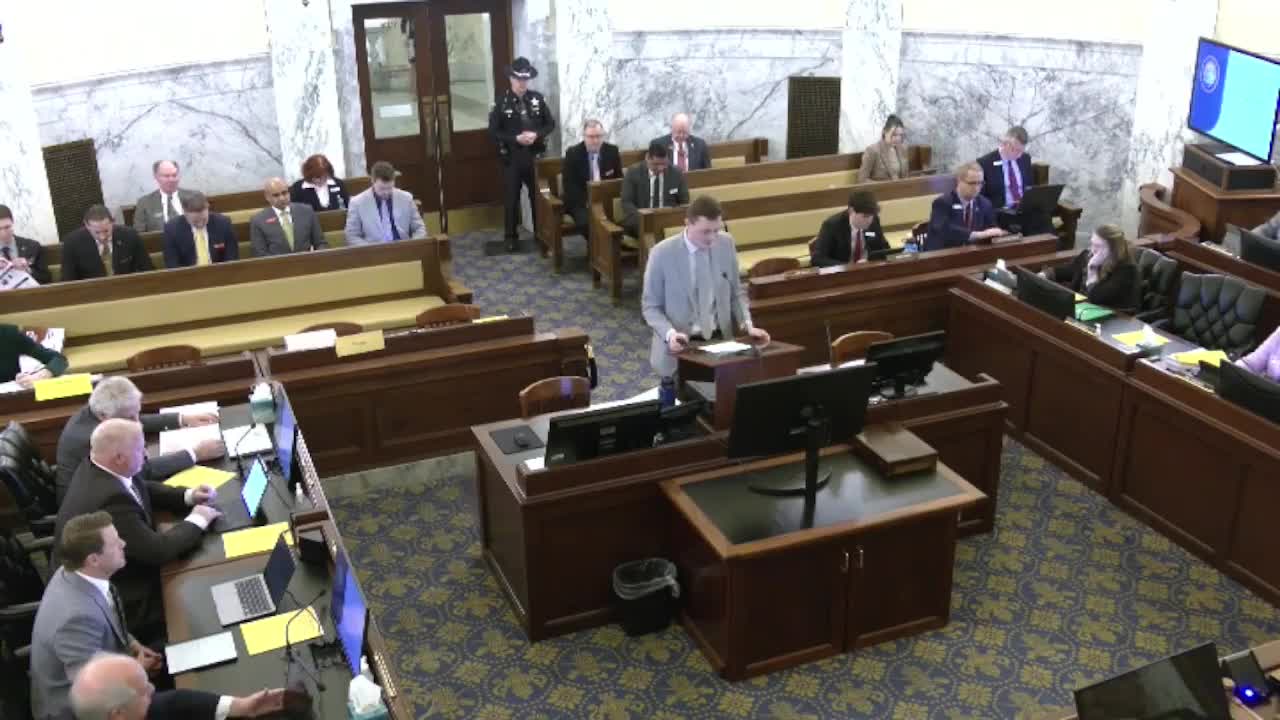
At a Joint Finance-Appropriations Committee hearing, the Idaho State Liquor Division outlined FY2024 results and requested ongoing and one-time appropriations for store improvements, IT and security upgrades, ADA website compliance work, and a modest pay increase for temporary retail staff amid continued turnover.
The Idaho State Liquor Division told the Joint Finance-Appropriations Committee that it is seeking a mix of ongoing and one-time funding to support store relocations and remodels, technology and security upgrades, and a small hourly increase for temporary retail staff.
Kellen McGurkin, a budget and policy analyst with the Legislative Services Office, told the committee the division distributed $118,300,000 in FY2024 under Idaho law, with statutory distributions and operating costs determined under Idaho Code section 23-404. McGurkin said the division’s five‑year average sales were about $319,100,000 and that net income, after operating costs, averaged about 36% of sales (roughly $116,600,000).
The division reported a decline in its unrestricted fund balance from about $38,000,000 in FY2022 to $14,000,000 in FY2024. McGurkin said the drop reflected higher direct‑to‑consumer sales during the COVID‑19 period that carried higher margins and were subsequently spent down.
Why it matters: The liquor division’s net revenue is a regular source of distributions to the court services fund, cities and counties, magistrate courts and, after statutory allocations, the general fund. Changes in the division’s sales, inventories and operating structure affect what is available to distribute to those entities.
Division staffing and turnover: McGurkin said the division has an FTP cap of 257.25, with retail operations concentrated in about 210 full‑time positions and roughly 185 part‑time store clerks (the part‑time clerks are not included in the FTP cap). The division reported a filled FTP rate of about 93% and said it spends about 96% of its appropriated personnel costs. Director Andrew Arulanandam told the committee the division has reduced turnover among temporary clerks from roughly 140% annually (historical) to about 84% after prior pay adjustments.
Temporary staff pay: The division requested $57,400 in ongoing funds to raise temporary retail staff from $15.00 to $15.45 per hour. Tony Grama, chief deputy and CFO of the Liquor Division, explained, "our temporary store clerks are state employees. We don't hire them through an agency," and that temporary clerks are not eligible for automatic CEC adjustments and therefore require a line‑item appropriation for pay changes.
IT and security requests: The division asked for one‑time appropriations including $200,000 for 70 network firewalls and 70 managed switches to complete a network modernization project recommended by the Office of Information Technology Services (OITS). McGurkin said the modernization would move stores from DSL/T1 lines to cellular connections using Cradlepoint routers purchased in FY2024 and that the recommended configuration should reduce ongoing monthly costs by about $10,000 while saving about $100,000 in upfront hardware costs compared with a hard‑wired solution.
Website accessibility and replacement items: The division requested $100,000 one‑time to bring its website into compliance with web content accessibility guidelines; Director Arulanandam said the division consulted an expert and received a list of items needed for full compliance and described the appropriation as a "prudent 1 time expenditure." The division also requested $980,300 one‑time for replacement items (retail store improvements totaling $775,000 and $205,000 for warehouse motorized equipment and vehicles) and a separate request for $235,000 for additional IT and security replacement items.
Committee questions and context: Senator Cook questioned whether $100,000 was needed to fix keyboard navigation on the site; Arulanandam replied there were other items in addition to the menu problem and cited lawsuits against noncompliant sites as a rationale for a more complete fix. Senator Ward Engelking pressed whether the $0.45-per-hour increase would materially reduce turnover; Arulanandam said the division intended an incremental approach after past increases reduced turnover substantially but noted pay remains below many private employers.
No formal committee action was taken at the hearing. The division’s director and staff stood for questions and the committee deferred budget decisions to its normal appropriation process.