Get Full Government Meeting Transcripts, Videos, & Alerts Forever!
Get email alerts on the State Employee Benefits topic
No spam. Unsubscribe anytime.
State benefits make up about a quarter of personnel costs; governor recommends $14,300 per‑FTP health appropriation
Summary
Legislative analysts summarized how health insurance, PERSI and other benefits are budgeted, explained that benefits account for roughly 25% of personnel costs, and described the governor’s recommended per‑position funding level for health insurance.
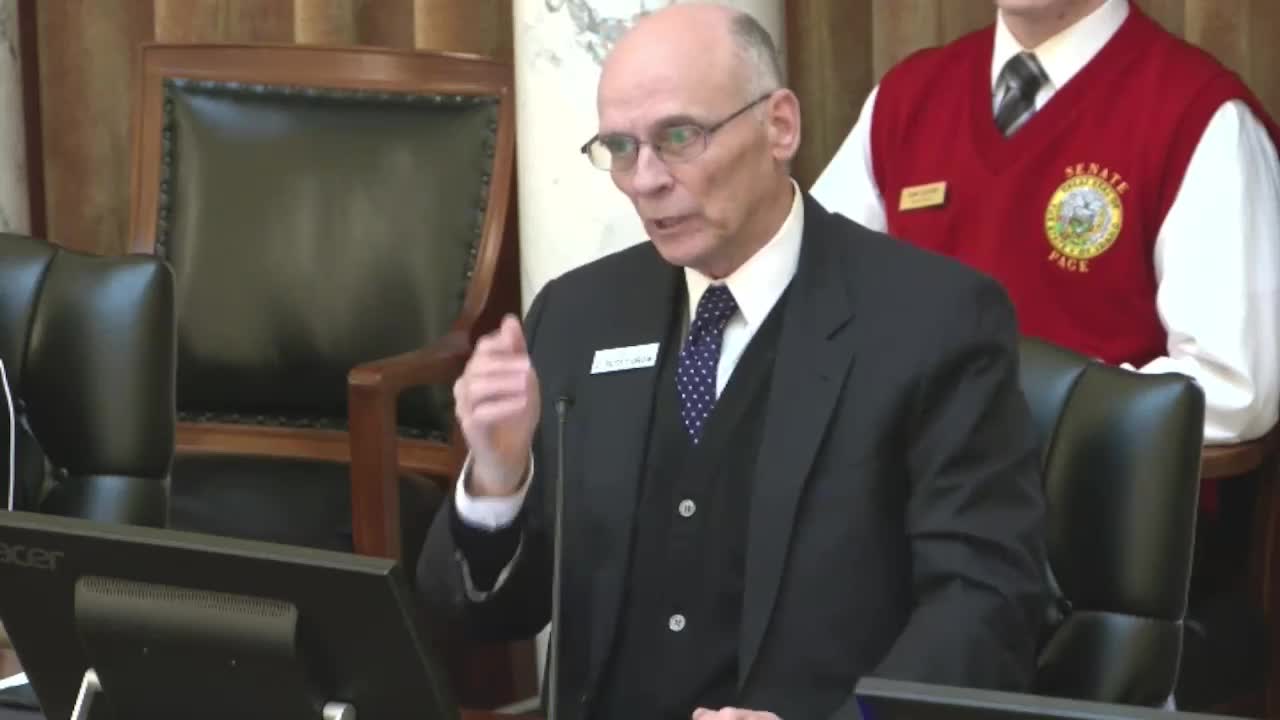
A Legislative Services Office analyst told members of JFAC that benefits roughly constitute a quarter of the state’s personnel expenditures and that health insurance is the largest single component of those benefits.
"Benefits generally account for about a quarter of the state's overall personal cost expenditures," Frances Lippitt said while reviewing the benefits section of the legislative budget book. She told members the state budgets health insurance as a per‑full‑time‑position (per‑FTP) appropriation and that the governor’s recommendation for FY2026 would set an appropriation of $14,300 per FTP.
Why it matters: personnel and benefit costs are a recurring, sizable portion of agency program maintenance budgets. Lippitt explained that variable benefits—PERSI employer contributions, Social Security, Medicare, life insurance, workers compensation and a human resources service fee—are budgeted as a percentage of salary; combined, variable benefits account for about 23% of payroll in FY2025. PERSI employer contribution rates cited during the briefing were roughly 11.96% for general members, 14.65% for public safety and 13.47% for teachers.
The health insurance appropriation is built from premium cost, a sweep for employees who decline coverage and an actuarial reserve buffer. Lippitt described the governor’s recommended per‑FTP appropriation as slightly more conservative than an actuarial minimum: she said the administration’s recommendation—$14,300 per FTP—"reflects the actuarial recommendation designed to cover 100% of plan costs in 90 percent of cases." That increase was shown in staff materials as costing roughly $56,600,000 on the general fund.
Lippitt illustrated how benefits affect total compensation budgets by example: an employee paid $20 an hour will require roughly an additional 58% of salary budgeted for benefits, while an employee paid $40 an hour requires about 40% allocated for benefits. The committee was notified that the Change in Employee Compensation (CEC) committee will take testimony and make recommendations that JFAC will consider when setting final compensation and benefits funding.
Next steps: the committee said it will review the CEC recommendations and hear agency presentations beginning with Health and Welfare, and staff offered to provide additional data on health plan reserves and actuarial assumptions on request.