Get Full Government Meeting Transcripts, Videos, & Alerts Forever!
Get email alerts on the State Budget topic
No spam. Unsubscribe anytime.
Idaho budget outlook shows roughly $700 million structural surplus; governor recommends spending, transfers
Summary
Legislative staff told the Joint Finance-Appropriations Committee the state’s revenue forecast leaves a multi‑hundred million dollar structural gap in choices among tax relief, ongoing services and one‑time spending; the governor’s recommendation uses some one‑time cash while proposing transfers into savings and targeted spending.
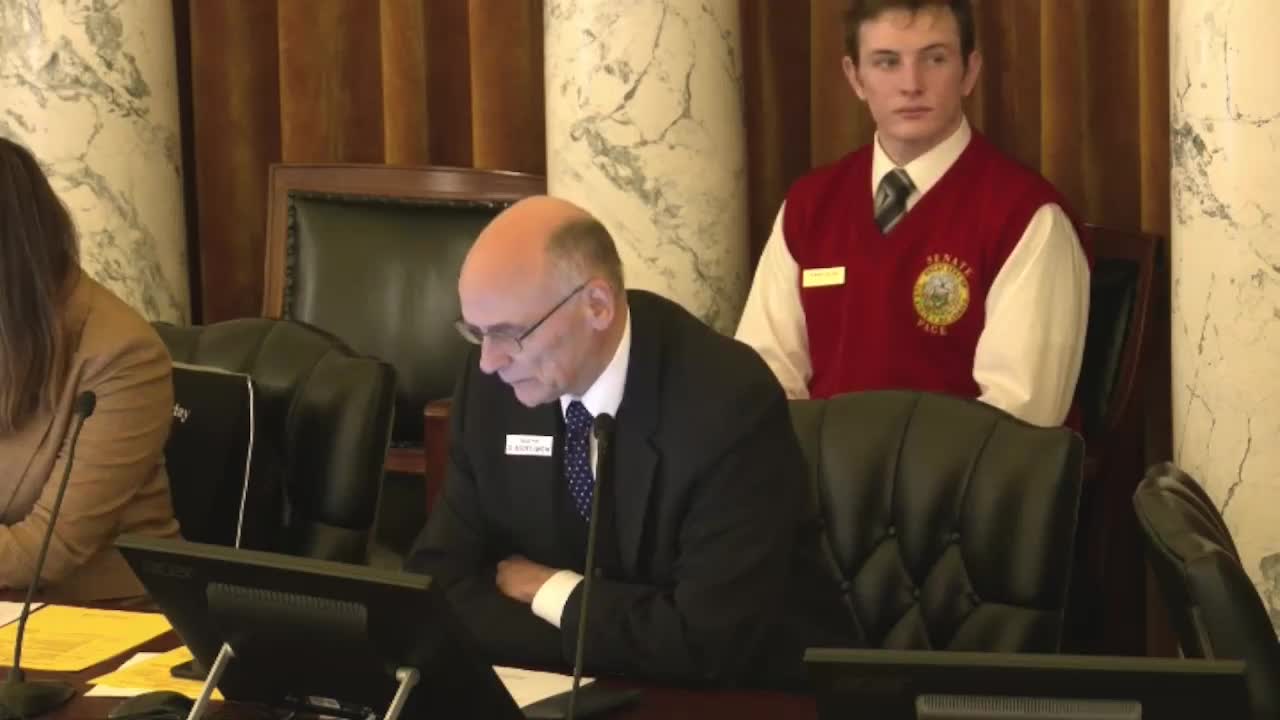
Legislative fiscal analysts told the Joint Finance-Appropriations Committee on multiple briefings that Idaho’s current revenue forecast leaves the state with several hundred million dollars of structural capacity to allocate for 2025 and 2026. Keith Bybee, division manager for budget policy analysis at the Legislative Services Office, said the chief forecasts show a structural balance "of almost $700,000,000" for fiscal 2025 and similar deltas into 2026 under the governor’s baseline numbers.
That structural balance reflects projected ongoing revenues compared with projected ongoing expenditures and represents policy choices, Bybee said. "The governor's budget is proposing a $338,000,000 ending cash balance for fiscal year '20 '20 '5," he added when summarizing the cash reconciliation in the legislative budget book.
Why it matters: committee members will use these baseline projections to weigh tax relief proposals, ongoing program expansions and one‑time transfers. Bybee explained the revenue rise since 2020 reflects federal pandemic-era aid—CARES and the American Rescue Plan—and substantial in‑migration that pushed personal income and income‑tax collections higher; those drivers create a new, higher baseline that does not simply revert to pre‑COVID trend lines.
The governor’s recommendations presented to JFAC include a mix of transfers and targeted spending. The front‑end reports show total transfers out in the governor’s plan of about $477,300,000 for a mix of spending and savings purposes, including $60,000,000 proposed to address fire‑suppression deficiency warrants and additional transfers to transportation projects and housing initiatives. Bybee said total transfers out in the governor’s package are roughly $578,900,000 when other items are included and are partially offset by a roughly $62,800,000 transfer from a now‑closed bond levy equalization balance.
Committee members pressed and clarified details during the presentations. Lawmakers asked for follow‑up on the history and disposition of bond levy equalization funds that were closed out by recent legislation and whether the cash returning to the general fund affects the state’s long‑run bonding commitments for school facilities. Bybee said the bond levy equalization program was deleted by statute and that existing cash in that program should be returned to the general fund; he cautioned that the program that replaced it distributes bond proceeds on a per‑ADA basis for school districts.
Bybee and staff also reviewed the decision‑unit approach that frames appropriation work: JFAC begins with the current fiscal year’s original appropriation, adds midyear adjustments and executive carryover, then establishes a new base before considering program maintenance items and policy‑driven enhancements. That process will shape the committee’s decisions this session on program maintenance (benefits, contractual inflation, statewide cost allocation and employee compensation) and later enhancement requests.
Next steps: staff said the committee faces a compact schedule of hearings and working groups to reconcile the governor’s recommendations, agency requests and legislative priorities. The committee will receive more detailed agency presentations and additional follow‑up information the staff promised to post to SharePoint and provide to members.