Get Full Government Meeting Transcripts, Videos, & Alerts Forever!
Get email alerts on the Education Rulemaking topic
No spam. Unsubscribe anytime.
State education staff outline revisions to standards, special education manual and graduation rules; committee hears concerns and adopts two dockets
Summary
Greg Wilson, chief of staff at the Idaho State Department of Education, presented administrative‑rule updates covering content standards, a revised Special Education Manual and revised graduation requirements.
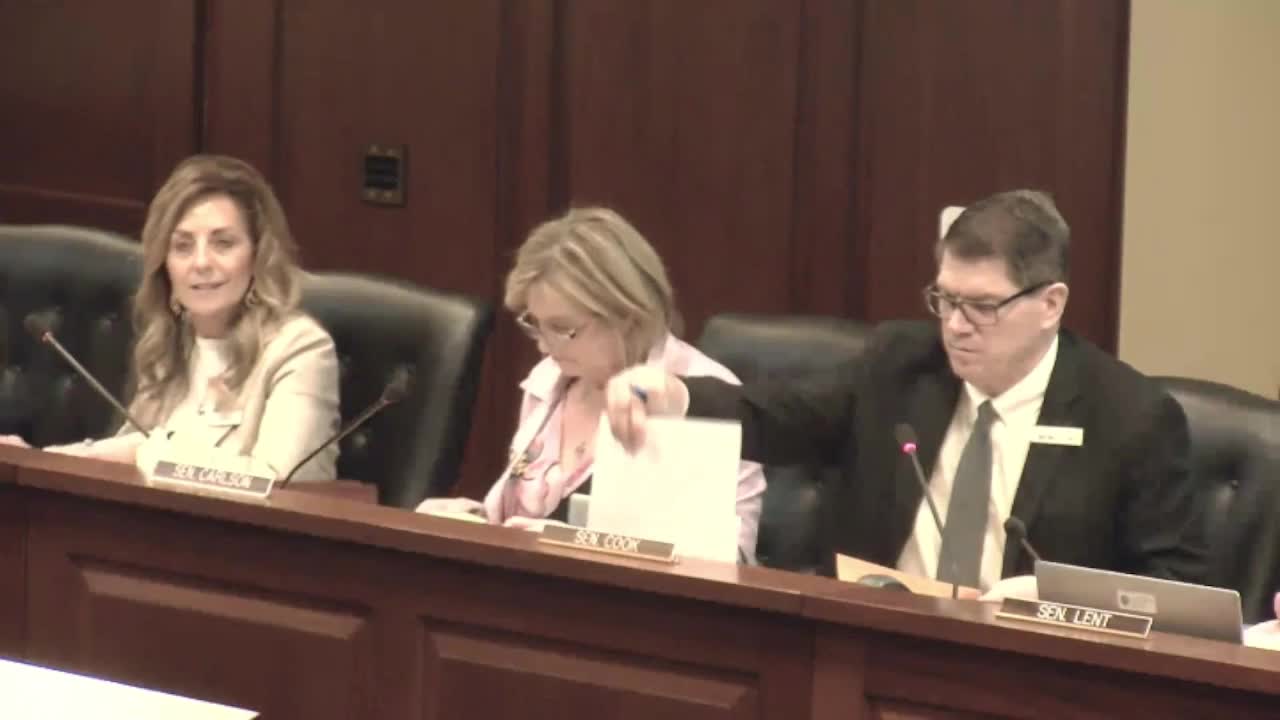
Greg Wilson, chief of staff at the Idaho State Department of Education, briefed the Senate Education Committee on a package of administrative rule updates adopted by the State Board of Education in 2024 and submitted to the Legislature for review.
Wilson said the package includes (1) incorporation by reference of the 2024 Idaho content standards across multiple subject areas; (2) a revised Idaho Special Education Manual required to address findings from the U.S. Office of Special Education Programs (OSEP); and (3) updates to high‑school graduation requirements intended to add flexibility, include digital literacy, establish localized pathways and replace the traditional senior project with a “future readiness” project.
On content standards, Wilson said the 10 distinct Idaho content areas total about 727 pages and that the State Board approved the updated standards during its June 2024 meeting after a multi‑stage review process with educator committees and public comment.
Regarding special education, Wilson said the department received a December 2023 letter from OSEP identifying portions of the special education manual that were not compliant with the federal Individuals with Disabilities Education Act (IDEA). The department revised the manual through 2024, incorporating field feedback, and submitted the updated manual via temporary rule to ensure districts began the school year in compliance with federal requirements.
On graduation requirements, Wilson described four principal changes:
- Flexibility to award core academic credit for applied or work‑based learning that aligns to standards (credit flexibility). - A new 1‑credit digital literacy requirement to cover fundamentals of computing, algorithms, coding, AI awareness, internet safety and digital citizenship; Wilson said the requirement would apply to the graduating class after Jan. 1, 2028, and the department plans to provide templates and implementation support. - Replacing the standalone communications credit with an expectation that communications standards be taught within the existing 8 credits of English language arts or as an elective; committee members expressed concern that this could lead some districts to drop in‑person speech courses. - Establishing localized pathways (minimum of two per LEA) and replacing the senior project with a future readiness project that must include an experiential component (work‑based, service‑based, research‑based or portfolio‑based experiences).
Wilson said the department will provide the committee with the incorporated‑by‑reference materials (standards and manual) and that the department has been conducting statewide outreach, negotiated rulemaking and regional meetings since 2023.
Committee members raised several issues. Senator Carlson said legislators expected to participate more directly in the social studies standards review, referencing Senate Concurrent Resolution 116, and said he would oppose the social studies standards when they come before the Legislature. Senator Ward Engel King and others questioned removal of a standalone communications requirement and whether online delivery (via the Idaho Digital Learning Academy) was a sufficient substitute for in‑person speech instruction. Several members asked how the digital literacy requirement would preserve “soft skills” and interpersonal communication. Wilson said the department is developing draft content standards and model course materials and emphasized that curricular decisions remain local.
The committee heard public comment from Sam Laird (identified as the director of the Center for American Education at the Idaho Freedom Foundation), who urged the committee to reject the proposed social studies standards and argued they prioritize diversity frameworks over a “factual, patriotic” approach; he referenced Senate Concurrent Resolution 116 and the National Association of Scholars’ guidance.
After discussion, the committee took two formal votes on rule dockets at the end of the hearing. Senator Summeral moved to approve docket number Eight‑oneThirteen‑2401; the motion was seconded by Senator Sessions and approved by voice vote. The committee then approved docket number Eight‑two0One‑2401 on a motion by Senator Sumrall, seconded by Chairman Lent.
Wilson said the department will send the committee letters and links to the incorporated documents, and he reiterated the department’s offer to support districts in implementing the digital literacy and future readiness provisions.