Get Full Government Meeting Transcripts, Videos, & Alerts Forever!
Get email alerts on the Prosecutor Pay And Resources topic
No spam. Unsubscribe anytime.
District attorneys and PAC press for pay-scale changes, expanded conflict team and Tracker funding
Summary
DA association and the Prosecuting Attorneys’ Council asked for a multi-year pay-scale increase for state-paid assistant district attorneys, funding to replenish ADAs lost in circuit splits, expanded conflict prosecutions capacity in South Georgia, and a $1 million Tracker case-management upgrade.
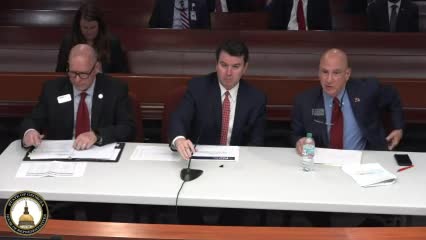
District attorneys and the Prosecuting Attorneys’ Council (PAC) told the House appropriations subcommittee on May 20 that state-paid assistant district attorneys are not competitive with other government and private sector legal employers and urged a three-year pay-scale implementation to improve recruitment and retention. DA leaders also asked for funding to restore ADAs following circuit splits and to expand PAC’s conflict-prosecution and resource-prosecutor teams.
Coweta Circuit DA Herb Cranford, speaking as DA Association budget chair, outlined a three-year plan that would raise starting salaries for state-paid ADAs from the current entry level (about $60,580) to roughly $72,000 in year one and would raise the top of the ADA scale to roughly $139,500 over time. Cranford said the DA community wants a 10‑year retention marker — ‘‘if you stick with me for 10 years you’ll be able to make over $100,000’’ — to ease recruitment for law‑school graduates with debt.
Cranford and other DA presenters said state-funded ADA vacancies hover around 10% (about 40 unfilled positions out of 431) and that 88 ADAs (about 20% of the state-funded pool) are currently capped at the top of the existing pay scale. DA leaders asked the legislature to expand the scale top and add steps so experienced prosecutors do not leave for private practice.
The Prosecuting Attorneys’ Council asked for a $1 million appropriation to upgrade Tracker (the statewide case-management system) to handle larger digital evidence files (body-camera footage, phone extractions and e‑filing volumes); PAC said approximately $690,000 of that total is a one‑time need for FY2026 and the balance would be ongoing support for greater storage and maintenance.
PAC also described a conflict-prosecution workload that arose after the AG’s office transferred many unresolved conflict matters and after several DA elections that left some offices with fewer experienced prosecutors. PAC asked for funds to maintain its regional conflict program, to add a conflict investigator and conflict prosecutor focused on South Georgia, and to support a statewide roster of resource prosecutors who advise county DA offices on specialized matters (capital, gang, domestic-violence, elder-abuse and juvenile crime). PAC said the conflict team was intended as temporary surge capacity but that demand remains high.
Committee members asked whether per-diem appointments or continued DA donations of time might suffice; PAC acknowledged those contributions but said travel burdens, overlapping caseloads and continuing vacancies have stretched local prosecutors and that direct PAC capacity remains necessary in some regions. PAC and DA leaders asked the committee to consider the broader pay-scale proposal for ADAs and for elected DAs (the DA plan proposes elected DAs be paid roughly 10% more than the top ADA step).
No formal votes were taken; presenters offered to provide additional documentation on vacancy counts, Tracker technical specifications and the DA pay-model for committee staff.