Get Full Government Meeting Transcripts, Videos, & Alerts Forever!
Get email alerts on the Education Curriculum Literacy topic
No spam. Unsubscribe anytime.
Committee sends cursive proficiency bill to floor after brief debate; one senator votes nay
Summary
Senate Bill 1044 (presented by Sen. Tammy Nichols) would require instruction in cursive with proficiency by fifth grade and resources from the State Department of Education. The Senate Education Committee recommended the bill to the floor with a due‑pass recommendation; the record shows one recorded nay.
Senator Tammy Nichols introduced Senate Bill 1044 to the Senate Education Committee, saying Idaho currently requires cursive instruction but lacks consistent measures of proficiency. "The purpose of this bill is to ensure that Idaho students learn and master cursive with consistency," Nichols said, noting the state reinstated cursive instruction in 2016 but does not require mastery.
Nichols said the bill would reaffirm instruction beginning by third grade and require students to demonstrate proficiency by fifth grade. She described benefits she and others attribute to cursive instruction: signature security, cognitive benefits, support for students with dyslexia and historical literacy so students can read older documents.
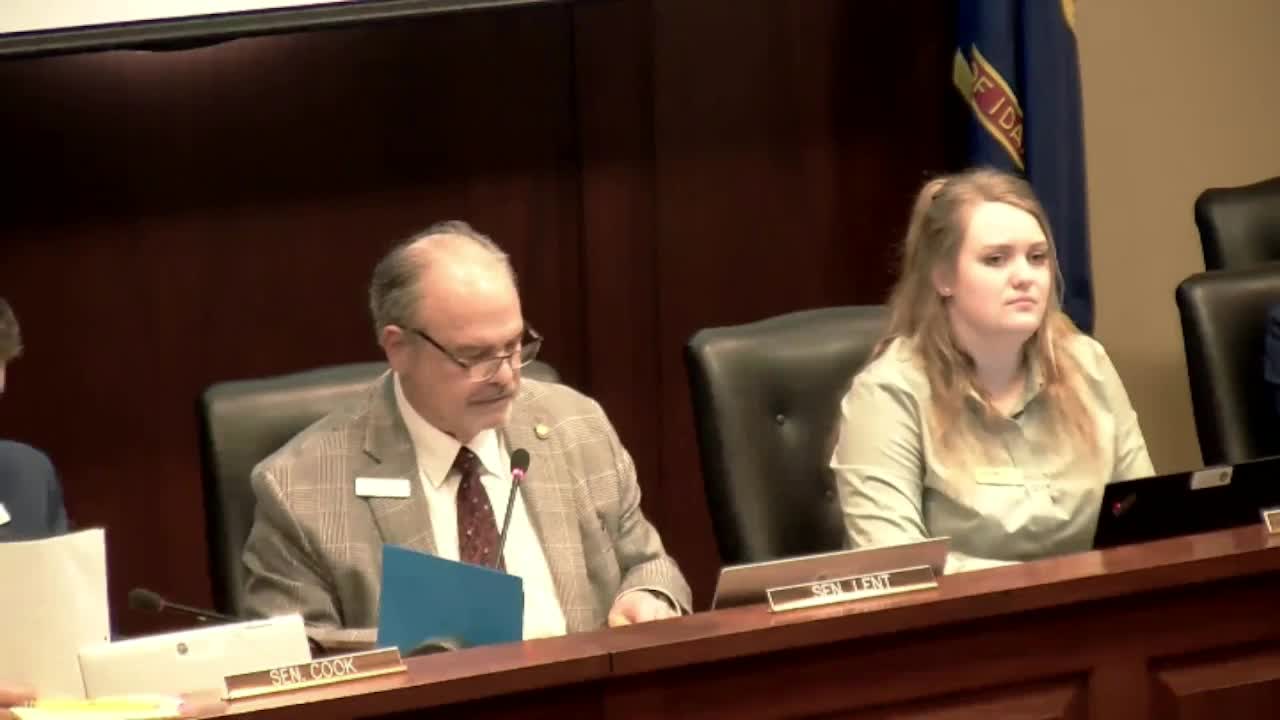
Senators asked questions and debated whether cursive should be a statewide proficiency requirement in an era of digital records. Senator Cook said he appreciates the historic value of cursive but questioned mandating proficiency when other older curricular items have been removed over time. Nichols replied the bill is intended to provide accountability for an existing state requirement and to support students' literacy and cognition.
Senator Woodward moved to send the bill to the Senate floor with a due‑pass recommendation; the motion was seconded and carried. The committee record shows one recorded nay; the transcript notes the motion passed.