Get Full Government Meeting Transcripts, Videos, & Alerts Forever!
Get email alerts on the Judicial Oversight And Litigation topic
No spam. Unsubscribe anytime.
Judicial Qualifications Commission seeks staff attorney and legal-defense funding as caseloads rise
Summary
The agency that investigates judicial misconduct reported rising complaint volume and asked the subcommittee for funding for a staff attorney for its hearing panel, rent adjustments and funds for outside counsel to cover unanticipated litigation costs after the AG declined representation in some federal suits.
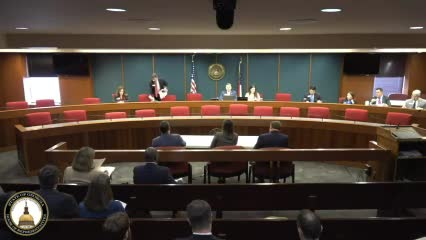
The Judicial Qualifications Commission (JQC) told the House appropriations subcommittee on May 20 that complaints and formal litigation have increased substantially and asked for FY2026 funding for a full-time staff attorney for its hearing panel, modest rent increases and a contingency for outside legal fees.
The agency’s director reported complaint volume rising from about 430 in 2020 to roughly 1,700 in 2024. The JQC said the agency now not only investigates matters but also prosecutes them before its volunteer hearing panel; recent prosecutions have required two-week hearings with presentation of evidence and extended pretrial litigation. The JQC said it needs a staff attorney (requested salary near $100,000) to assist the hearing panel with evidence, research and advisory-opinion review. The JQC said the position is expected to be justified for at least two years, given current caseloads and pending hearings.
The JQC requested $13,764 to cover increased rent at a relocated office and asked for additional one-time contingency funds for outside legal fees after two federal lawsuits in which the Attorney General’s Office declined representation. The director said the JQC spent roughly $94,000 on outside counsel in one matter that was dismissed, and at least $27,000 so far in a second pending suit.
Committee members asked about the proportion of complaints dismissed quickly; the director said historically roughly 80–85% of incoming complaints are dismissed after initial or preliminary review. The committee asked why the AG had declined to represent the JQC in the two suits; the director said the AG’s office had declined on separation-of-branch grounds in one case and declined in another instance because it represented co-defendant judges and saw a potential conflict.
The JQC director also described administrative burdens tied to formally publishing advisory opinions and preparing litigation materials that ultimately go to the Supreme Court; the proposed staff attorney would directly support those duties. The JQC reiterated that its hearing panels are volunteer, unpaid judges who must devote extended time away from their full-time work to hear contested cases.
No formal action or vote was taken during the hearing; the JQC said the requests were intended to enable the agency to litigate and manage a sustained increase in both complaints and formal prosecutions.