Get Full Government Meeting Transcripts, Videos, & Alerts Forever!
Get email alerts on the Accountability Courts And Access To Justice topic
No spam. Unsubscribe anytime.
Judicial Council requests more staff for accountability-court certification, statewide coordinator and legal help centers
Summary
The Judicial Council and Administrative Office of the Courts presented FY2026 requests for new certification and coordination positions for accountability (treatment) courts, funding for dispute-resolution program support, and continued grants for legal self-help centers and medical-legal partnerships.
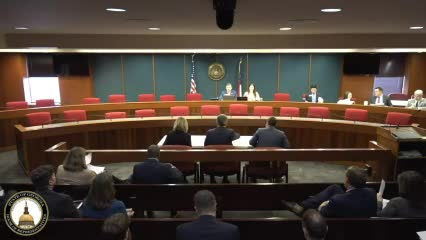
The Judicial Council and the Administrative Office of the Courts asked the House appropriations subcommittee on May 20 for FY2026 funding to increase support for accountability (treatment) courts and to expand services that help unrepresented litigants.
Presenters described three staff requests tied to the Council’s expanding oversight of accountability courts: (1) a certification officer to help manage the biennial certification process for roughly 91 accountability courts statewide; (2) a statewide coordinator to help courts identify and connect local participants to services such as job training, GED programs, transportation and housing; and (3) position funding to support the expanding juvenile-accountability-court certification workload. The Council reported 91 courts tracked across categories including adult felony drug courts, mental-health courts, veterans’ treatment courts, DUI and family treatment courts and juvenile treatment courts; all are certified every two years.
The Council said it currently has three certification-officer positions and that each officer serves many courts; presenters gave a current average of about 64 courts per certification staff member and said adding staff would lower that ratio and shorten audit/certification turnaround time (roughly five business days was provided for an audit cycle estimate).
The Administrative Office also presented a request for position funding and a statewide software maintenance allotment for the Georgia Office of Dispute Resolution (a $168,950 request). That office has not received state appropriations since 2011 and historically relied on dues; the request included a program manager position and funds for the statewide ADR software system.
The Judicial Council additionally renewed requests to fund legal self-help centers (described as “legal self-help” or “legal clinics” rather than traditional law libraries) in rural and remote parts of the state and to continue medical-legal partnerships. Presenters said a Carl Vinson Institute of Government study on best practices for self-help centers is not yet finalized; Council staff asked the committee to continue funding grants for self-help centers while the study is completed.
Committee members asked about certification workload, how the statewide-coordinator role would operate (traveling to circuits as needed and coordinating remotely), and whether the coordinator would provide direct services (the Council said it would not be a service provider but would identify resources and recruit partners to fill local gaps). Presenters said housing is a consistent need in accountability court work.
Presenters also raised ongoing juvenile case management (JCAT/JCATs) deployment and asked the committee to support annualization of the contract to extend JCAT availability to more counties so stakeholders can capture consistent data.
No formal votes were taken during the presentation; presenters supplied counts of court types and stated the position and software requests the Council and AOC planned to pursue for FY2026.