Get Full Government Meeting Transcripts, Videos, & Alerts Forever!
Get email alerts on the Workers Compensation Rules topic
No spam. Unsubscribe anytime.
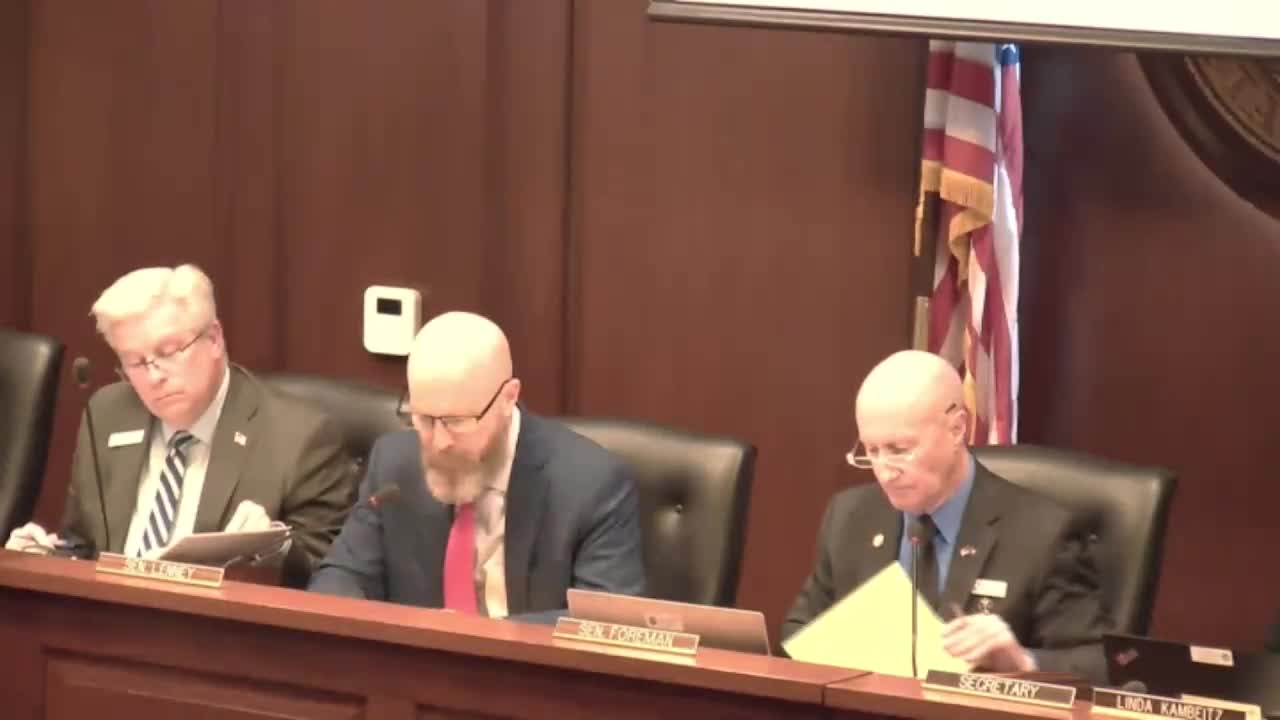
Senate Commerce approves Industrial Commission workers’ compensation chapter rewrite but rejects proposed deletion of in‑state office language
Summary
The committee approved a comprehensive rewrite of Idaho’s workers’ compensation administrative chapter but voted to reject specific language that would have removed a requirement the commission said was interpreted as requiring in‑state claims adjusting.
The Idaho Senate Commerce Committee on a voice vote accepted a comprehensive rewrite of the Industrial Commission’s workers’ compensation administrative chapter but rejected one subsection that drew prolonged questioning over whether it would weaken the requirement for in‑state claims adjusting.
Paul Jeffreys, speaking for the Industrial Commission, described rule docket 17-0101-2301 as a chapter rewrite of IDAPA 17.01.01 intended to streamline and modernize workers’ compensation rules. He said the rewrite was developed under the governor's 0-based regulation initiative and followed five negotiated rulemaking meetings with attorneys, insurer representatives, sureties and other stakeholders. "The proposed rewrite accomplishes these goals," Jeffreys said, adding examples such as updated electronic-payment and claims-reporting procedures.
The key dispute in committee focused on subsection 305.01.A, which—before committee action—read that insurance carriers, self-insured employers and licensed adjusters "shall maintain an office within the state of Idaho." Some industry and insurer representatives urged the committee to eliminate the phrasing as redundant of Idaho Code §72-305 and to avoid implying a literal brick-and-mortar mandate. Elizabeth Kreiner of the American Property Casualty Insurance Association told senators that the Industrial Commission had issued a February 2023 guidance memo clarifying that a "brick-and-mortar presence" is not required, and that the rewrite was the opportunity to make that clarification explicit.
Opponents of striking the subsection argued an in‑state presence matters to injured workers and their attorneys. Barbara Jordan of the Idaho Trial Lawyers Association said keeping a local adjuster is important so counsel can readily contact adjusters, call hearings and have parties that understand Idaho circumstances. Chris Wagner, a third-party administrator, warned that removing the office language could enable out‑of‑state call‑center handling or further remote processing of claims and said reciprocal licensing between states can permit adjusting from other states.
Industrial Commission staff said the commission does not interpret the statute as requiring a brick‑and‑mortar office and that its longstanding interpretation has been that an "office" can include a home office so long as adjusting is performed physically within Idaho. Jeffreys and Benefits Administration Manager Patty Vaughn explained that the commission requires a physical in‑state address for claims adjusting and that the EDI (electronic data interchange) standards used for reporting are national standards from the International Association of Industrial Accident Boards and Commissions.
Committee action and motion: Senator Foreman moved to approve docket 17-0101-2301 while rejecting subsection 305.01.A; the motion was seconded by Senator Burts. The committee approved the docket while rejecting subsection 305.01.A (voice vote). The committee and agency clarified that rejecting subsection 305.01.A restores the preexisting text in the rulemaking packet rather than adopting the agency's proposed language to remove that line.
Why it matters: The rule rewrite affects how claims are reported and administered statewide and touches on accessibility for injured workers and attorneys. The committee's rejection of the specific subsection preserves language that committee members and intervenors said helps ensure local responsiveness in claims handling.
Procedure notes: The commission said it held five negotiated rulemaking sessions and two public hearings (Oct. 7 and Oct. 20, 2024), and that the pending rule reflects public comment and stakeholder input. The rewrite also updates electronic claims reporting and payment expectations and references EDI reporting standards.
Ending: Committee members expressed differing views but ultimately kept the rule rewrite intact while preserving the in‑state-office provision the commission had proposed to adjust. The commission said it will continue to work with stakeholders on implementation and to answer statutory and rule clarifications as needed.