Get Full Government Meeting Transcripts, Videos, & Alerts Forever!
Get email alerts on the Program Maintenance Budgets topic
No spam. Unsubscribe anytime.
Budget staff outlines program maintenance bills, 10 appropriations and decision timeline
Summary
Budget staff explained the program maintenance approach, dividing state spending into 10 appropriations bills, the building blocks included in program maintenance (benefit costs, contract inflation, statewide cost allocation, CEC), and the committee schedule for hearings and decisions next week.
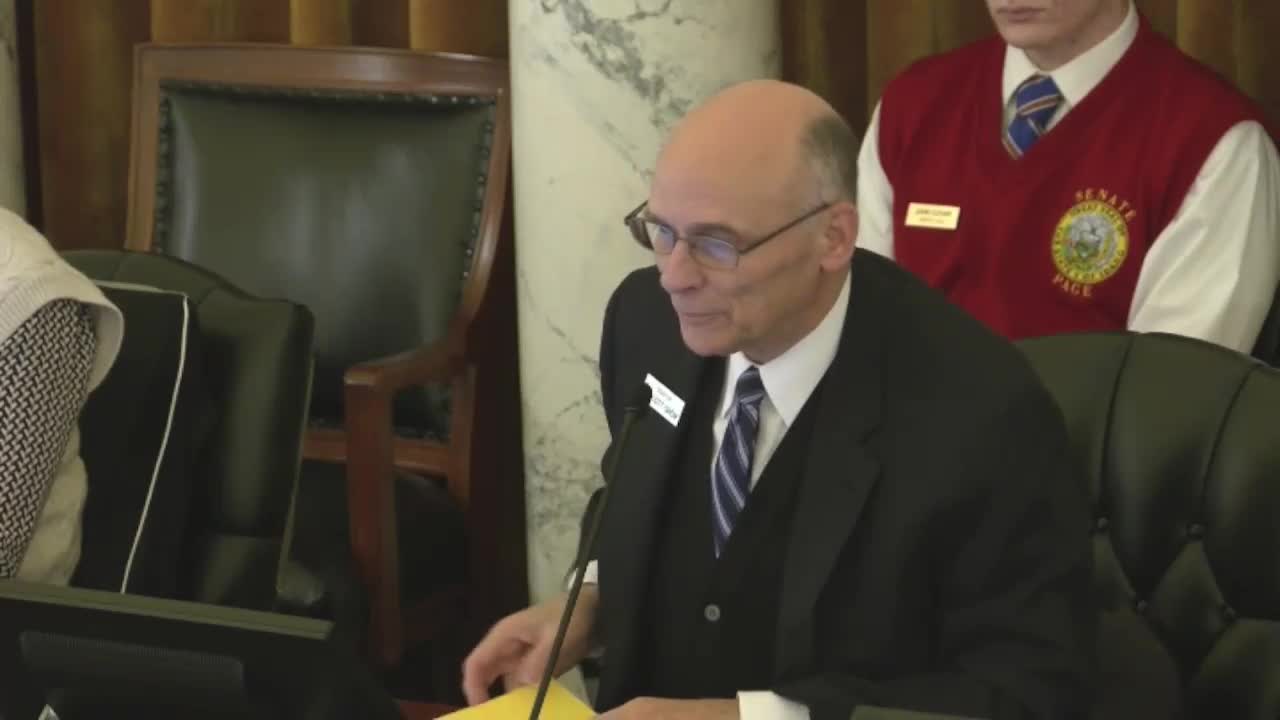
Keith Bybee, Division Manager for Budget Policy Analysis, briefed the Joint Finance Appropriations Committee on the structure and intent of program maintenance appropriations bills and the schedule for upcoming hearings.
Bybee explained the rationale for organizing program maintenance into 10 functional appropriations bills: Legislative Branch; Statewide Elected Officials; General Government; Judicial Branch; Public Safety; Public School Support; State Board of Education agencies; Health and Human Services; Natural Resources; and Economic Development (which includes Transportation, Commerce and Labor). He said program maintenance covers adjustments between the defined budget benchmarks — specifically benefit cost adjustments (including health insurance and PERSI), contract inflation, statewide cost allocation (SWCAP/SWICAP), and inclusion of the CEC changes in the maintenance bills this year.
Bybee described enhancements as a separate set of bills that will address replacement items, IT replacement requests, general inflation requests, and population-forecast adjustments (previously called non-discretionary items). He said population-forecast adjustments were placed in enhancements to give the legislature greater opportunity to review growth-driven spending (for example Medicaid or school support) instead of treating those adjustments as automatic.
Committee members asked procedural and substance questions: Senator Wintrow asked whether members should review the legislative budget book and agency requests before next week; Bybee and co-chairs advised members to review the agency pages for detail but noted the maintenance bills are structured to present similar adjustments across agencies. Senator Ward Engelking asked about whether replacement items and nondiscretionary items would be addressed; staff confirmed replacement items are broken out and IT replacements are separated so the committee can consider them independently.
Bybee noted the target dates for hearings: an initial walkthrough and hearings on proposed adjustments earlier in the week and decision-making on program maintenance scheduled for Friday (dates given in the committee schedule distributed to members). He emphasized that adopting a program maintenance package does not preclude later adjustments — the committee can subtract or reallocate items as needed during the session.
Ending: The committee will receive the program maintenance packets and language in advance, with hearings and decision sessions scheduled next week; staff will provide further detail on agency-specific items and separate IT replacement requests for committee review.