Get Full Government Meeting Transcripts, Videos, & Alerts Forever!
Get email alerts on the Itd Construction Funding topic
No spam. Unsubscribe anytime.
ITD warns $250 million reappropriation cap strains contractor payments; seeks supplemental and continuous-appropriation language
Summary
Idaho Transportation Department officials told JFAC they face spending-authority constraints on multi-year construction contracts, requested a $60 million supplemental for FY25 and proposed removing an appropriation cap so strategic initiatives transfers can be continuously appropriated to allow contractor payments.
Idaho Transportation Department officials told the Joint Finance-Appropriations Committee the agency faces spending-authority constraints on multi-year road projects and asked lawmakers to consider changes that would reduce the risk of delayed contractor payments.
Dave Tolman, ITD chief administrative officer, said the agency’s “obligated unspent construction program was a little over $600,000,000 across multiple funding sources” at the end of FY 2024 and that existing appropriation levels do not match the timing of contractor payouts on multi-year projects. “There’s a sizable amount of projects committed under contract that there is no appropriation for,” Tolman told the committee.
ITD requested a $60 million supplemental for FY25 (a mix of State Highway Local Fund and State Highway Federal Fund) to cover contractor payments for projects currently under construction this fiscal year. The department also asked the committee to authorize reappropriation authority up to $250 million (language the governor recommended omitting previously) and to allow continuous appropriation for some Strategic Initiatives Program funds to reduce year-to-year constraints.
Why it matters: ITD now runs many large, multi-year projects funded from multiple sources — GARVEE bonds, sales-tax–diversion (TECM), federal IIJA funds and state highway funds — which creates a cash-flow profile where contractor payments can spike in later project years even when cash balances exist. The department said it previously deferred small payments to manage cash flow and seeks legislative authority to avoid that pressure going forward.
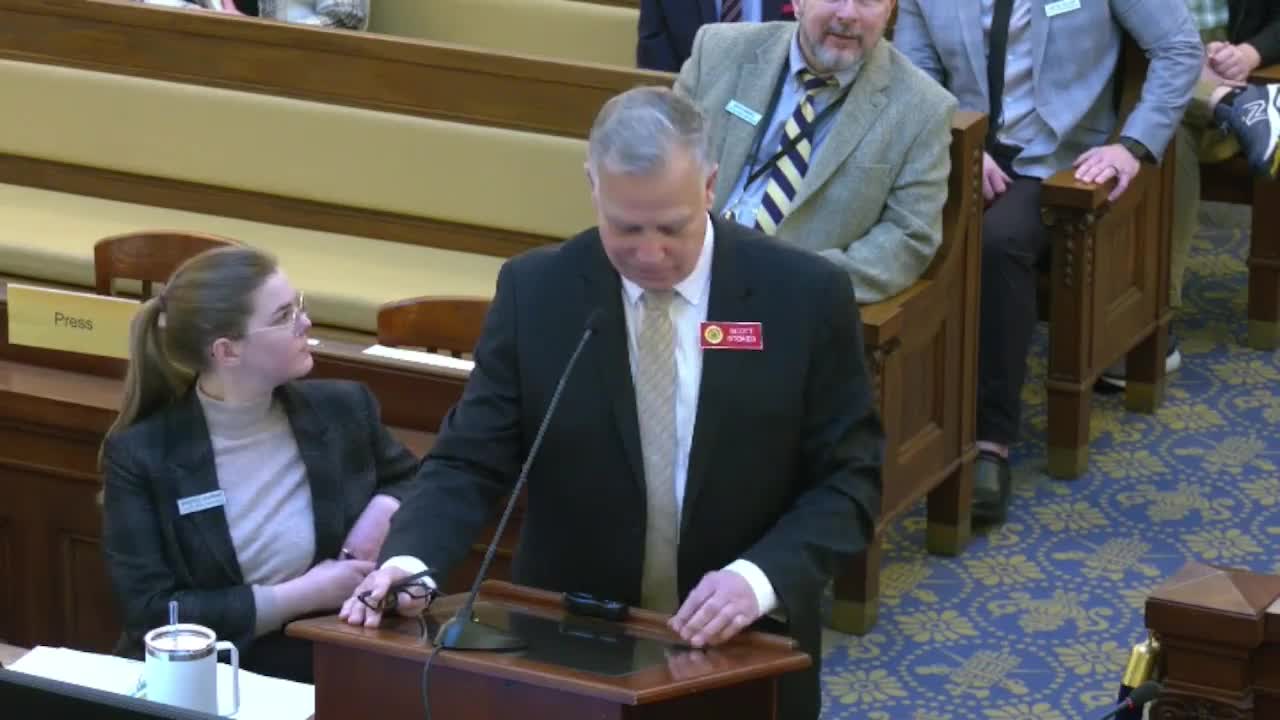
Committee members pressed for specifics. Representative John Tanner asked whether the request was to fund new projects or to ensure cash flow for already-contracted work; Director Scott Stokes and Tolman said the supplemental is primarily to ensure payments on projects already under contract. Stokes said the department had come “dangerously close” in FY24 to running out of spending authority and had delayed some contractor payments.
ITD also outlined larger FY26 requests tied to federal funding increases from the Infrastructure Investment and Jobs Act (IIJA) including ongoing federal-funded capital outlays (for example, $57.3 million the department estimates is newly available). The department detailed a requested $99.7 million general fund cash transfer for safety and capacity projects and a $212 million transfer for road and bridge maintenance; historically similar transfers have been split roughly 60% to ITD and 40% to local governments when executed through the Strategic Initiatives Program.
The department recommended language that would let unobligated cash balances in the State Highway Fund be appropriated for construction projects and asked the committee to consider lifting or increasing the reappropriation cap to smooth payouts.
Outlook: No immediate vote; committee members asked for follow-up figures and for ITD to provide project-by-project status. Lawmakers signaled interest in addressing the spending-authority mismatch but emphasized oversight concerns with any continuous appropriation language.