Get Full Government Meeting Transcripts, Videos, & Alerts Forever!
Get email alerts on the Invasive Species Quagga Mussel topic
No spam. Unsubscribe anytime.
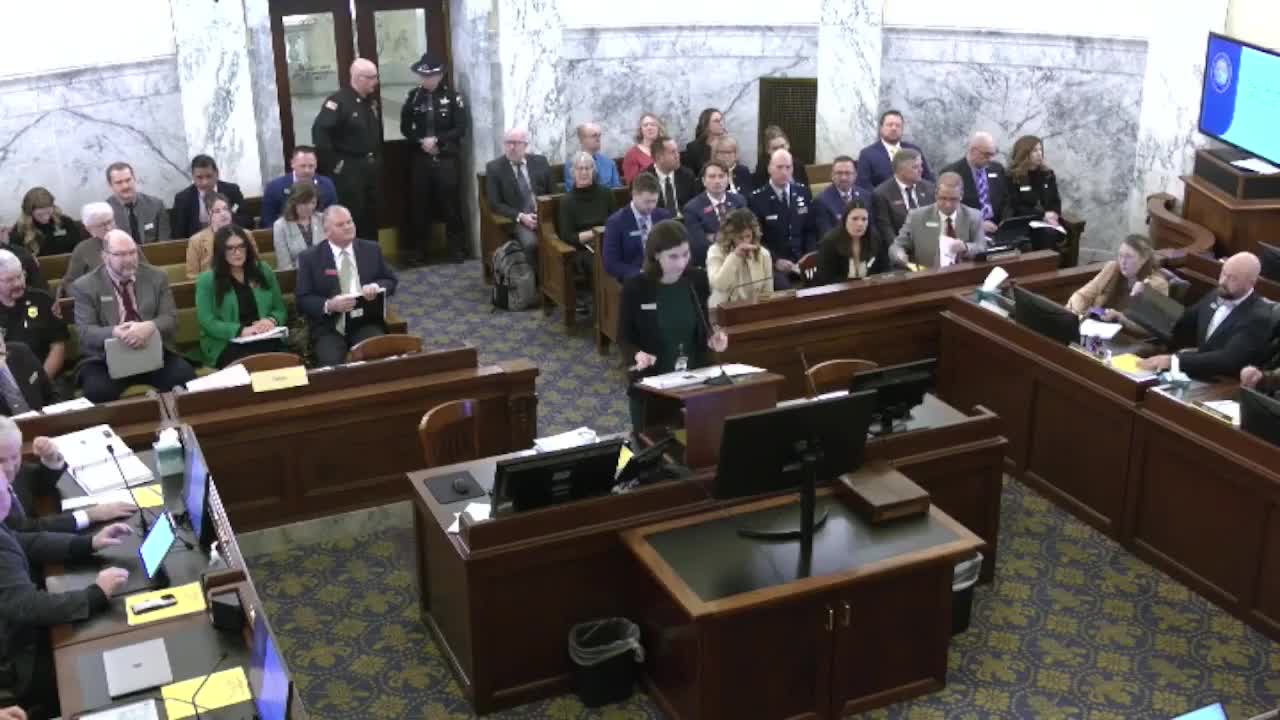
Idaho budget panel hears larger quagga-mussel response, investigator-pay and vehicle replacement requests from Department of Agriculture
Summary
The Department of Agriculture told the Joint Finance-Appropriations Committee it expanded statewide invasive-species sampling and inspections after recent detections and seeks continued general-fund support while requesting one-time vehicle and IT replacements and pay-structure changes for agricultural investigators.
For the record, Frances Lippett, budget and policy analyst for the legislative services office, told the Joint Finance‑Appropriations Committee that the Idaho Department of Agriculture is seeking continued funding for invasive‑species response and internal staffing adjustments.
Lippett said the department received a one‑time $5,000,000 general‑fund infusion during the prior legislative session for quagga‑mussel response and an ongoing $1.5 million general‑fund appropriation for staffing and check‑station needs. "In fiscal year 2025, the department did receive an ongoing appropriation of 1 and a half million from the general fund, and that was primarily for staffing and ... building additional watercraft inspection stations," Lippett said.
The money supported increased statewide sampling and more watercraft inspections, Director Chanel Tewell told the committee. "We doubled the sampling statewide ... and almost double the amount of watercraft we inspected last year compared to the year before," Tewell said, describing added personnel, three new check stations and expanded communications.
Why it matters: Quagga mussels are an aquatic invasive species that can cause significant economic and infrastructure damage. The department said the higher spending in recent years reflects active response operations rather than a decline in watercraft sticker fee revenue, the primary dedicated revenue for the invasive‑species fund.
Key budget and program details discussed
- Funding: Lippett and Tewell said the invasive‑species effort has been funded primarily from a watercraft‑sticker fee and supplemented by a $5,000,000 general‑fund cash transfer and an ongoing $1.5 million general‑fund appropriation for staffing and check stations. Lippett explained a cash‑transfer accounting convention that produces an appropriation and a corresponding revenue adjustment so the state’s net cost is the $5,000,000 infusion.
- Pest control fund and deficiency warrants: Lippett said a $1,700,000 balance in the pest control fund, incurred in FY 2024 largely for Mormon cricket treatment and monitoring, is being requested for payment in FY 2025 as part of a deficiency warrant process.
- One‑time replacement requests: The department requested $1,100,000 one‑time, including about $891,000 for replacement items (noted by the department as vehicles and other equipment) and $214,700 for IT hardware. Representative Mitchell asked for a list; Lippett said she would provide it. The department later confirmed the vehicle replacement list includes about 17 vehicles, mainly pickup trucks and a couple of SUVs.
- Investigators and retention: The department requested $340,400 to create a pay structure for 53 agricultural investigator positions intended as a career ladder to improve retention and professional development. Director Tewell said 27 of the 53 investigator positions have been with the department less than two years, which she said affects service continuity. "These are the first responders to that kind of issue," Tewell said of agricultural investigators, listing duties from animal care complaints to pesticide drift investigations.
- Other requests: The department asked for compensation adjustments for fresh‑fruit and vegetable inspectors (positions not covered by statewide CEC), and had an exotic species response deficiency‑warrant request of $1,724,300.
What was not decided
Committee members asked for follow‑up materials — including a vehicle list and clarifications about grant and federal‑grant entries on budget pages. Analysts and the director offered to provide those follow‑ups; no formal appropriation votes were taken during this hearing.
Reporting and next steps
Lippett and Director Tewell said the agency will provide supplemental information requested by legislators on vehicle replacements and grant entries. The Department of Agriculture’s formal budget requests will continue through the committee’s regular deliberations.