Get Full Government Meeting Transcripts, Videos, & Alerts Forever!
Get email alerts on the Executive Budget 2026 topic
No spam. Unsubscribe anytime.
Governor’s executive budget: education, transportation, fires, cyber and reserves highlighted
Summary
Division of Financial Management Administrator Laurie Wolf presented the governor’s executive budget to JFAC, highlighting major priorities including $150 million for public schools, transportation expansion funds, fire management funding, cybersecurity investments and transfers to reserve funds.
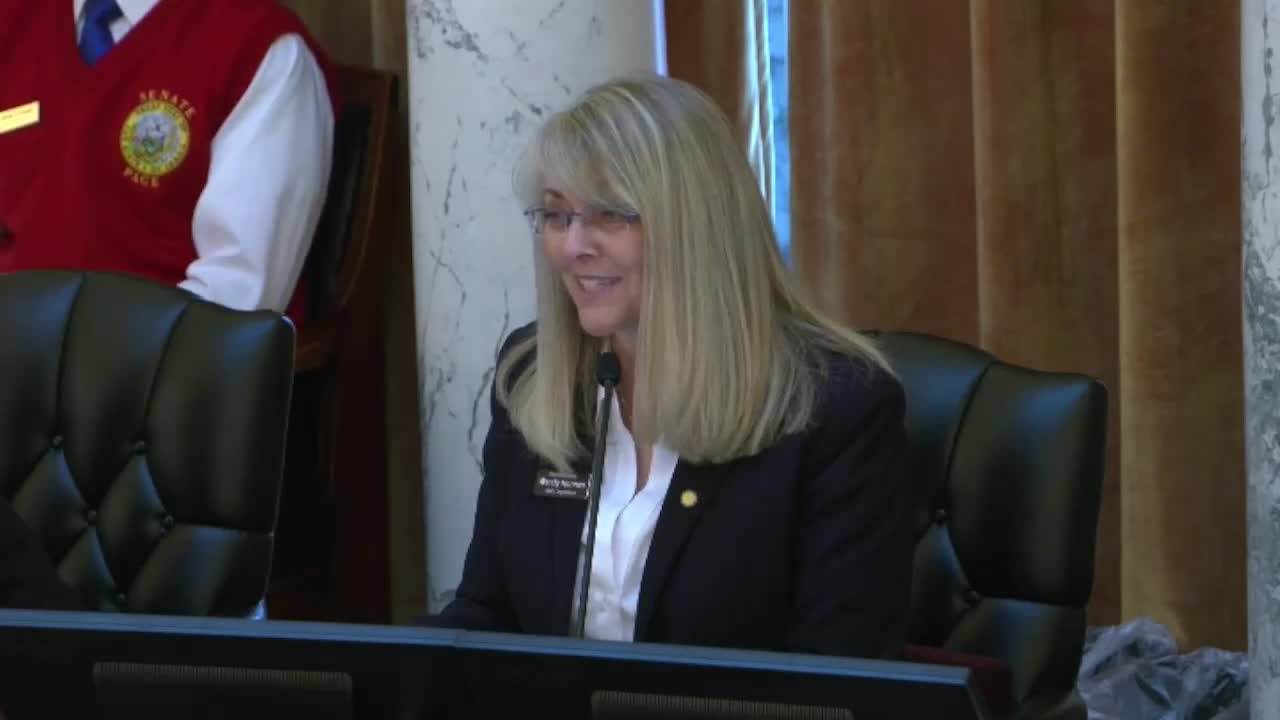
BOISE, Idaho — Laurie Wolf, administrator of the Division of Financial Management, presented the governor’s executive budget to the Joint Finance and Appropriation Committee on Jan. 8, outlining priorities that include new investments in public education, transportation capacity, wildfire management, workforce training, cybersecurity and record additions to state reserve accounts.
The presentation framed the proposal as a "keeping promises" budget that continues investments the administration and legislature have pursued in recent years, Wolf said. She described the plan as structurally balanced and based on conservative revenue forecasting while adding targeted enhancements and transfers to rainy‑day accounts.
Key numbers and priorities
- Education: The governor recommended an additional $150 million for public schools for FY 2026, including $83 million toward teacher pay and nearly $30 million for teacher health insurance. The budget also sets aside $50 million for education choice initiatives; Wolf said any policy option drawing on that amount would require a separate policy bill.
- Transportation: The governor recommended a $50 million contribution to a transportation expansion and congestion‑mitigation fund administered by the Idaho Transportation Department (ITD). DFM said that contribution would support additional bonding capacity to fund high‑value expansion projects and that ITD faces multiple unfunded expansion projects statewide.
- Wildfire and water: For FY 2025 the budget includes a $60 million supplemental to backfill the fire suppression account for costs incurred in the most recent season. For FY 2026 the governor recommended an ongoing $40 million to support fire suppression preparedness, plus $5 million for aviation and early detection tools. Wolf also recommended $30 million ongoing for the Idaho Water Resource Board to support prioritized recharge projects.
- Cybersecurity and IT: The administration proposed $10 million for statewide cybersecurity and infrastructure replacement priorities to be managed by the state’s central IT organization (ITS), citing agency IT‑security and resiliency recommendations.
- Workforce training and higher education: The budget includes $25 million for workforce programs — $15 million one‑time to match private funds in block grants for capacity expansion at community and technical colleges, and $10 million ongoing for career and technical education operations.
- Workforce housing: The governor proposed a $15 million one‑time transfer to the state workforce housing fund to support multifamily and other workforce housing projects, with a statutory emphasis on rural needs.
- State public defense: Wolf described cost pressures following consolidation of public defense into state control. The administration recommended a $5.4 million supplemental for FY 2025 and a $16.8 million addition for FY 2026; Wolf said the total FY 2026 recommendation to support State Public Defense is about $83 million. She noted that the state currently funds public defense through a public‑defense fund supplied by a distribution of online sales tax and that funding choices could require policy action.
- Reserves and transfers: The proposal projects healthy ending balances: Wolf said the administration recommends transferring $59 million to the Budget Stabilization Fund and $50 million to the Public Education Stabilization Fund for FY 2026. After those transfers, her presentation showed a historic revert reserve balance of roughly $1.4 billion (about 22% of the budget).
Fiscal framing and revenue
Wolf said DFM used a conservative revenue baseline when building FY 2026 projections and that actual collections through November were slightly ahead of the original FY 2025 forecast. The administration’s FY 2026 general‑fund revenue projection in the handout was about $6.2 billion, and the presentation highlighted that the budget leaves an ending balance for both years of the biennium while funding the enhancements above.
Questions and clarifications
Committee members asked about the structure and size of several items. Wolf said the fire supplemental is intended to replenish an account that had been depleted by firefighting costs this last season and that the ongoing $40 million is meant to smooth funding across years rather than respond only after the season ends. On transportation, Wolf said the additional $50 million is intended to keep a pipeline of high‑value projects moving so ITD can continue necessary bonding and construction work.
On public defense, Wolf said the $52 million appropriation enacted last year and the state takeover on Oct. 1 prompted budget updates after a December Supreme Court decision clarified parts of the statutory cost responsibility. DFM’s recommendation reflected higher contract and operating costs experienced during transition and the administration presented the supplemental and FY 2026 increments as one‑time and ongoing adjustments to ensure operations.
Wolf described the budget as "structurally balanced," recommended conservative revenue forecasting and said the governor intended to continue direct tax relief while preserving funds for long‑term reserves. She said all figures and details will be available in agency presentations and analysts’ materials for upcoming hearings.
Speakers quoted in this article are drawn from the Jan. 8 committee transcript. The figures cited are the administration’s recommendations and were presented for committee consideration; they are not appropriations until the legislature votes on them.