Get Full Government Meeting Transcripts, Videos, & Alerts Forever!
Get email alerts on the Scholarships And Grants topic
No spam. Unsubscribe anytime.
Office of State Board briefs committee on Scholarships & Grants: 99.5% of spending is grants, OSBE asks for educator incentive funding and a software engineer
Summary
Legislative Services presented the Scholarships and Grants budget, noting most spending is trustee payments (99.5%). The Office of the State Board of Education requested $1.375 million for the Bridging and Underserved Educator Incentive program and $124,000 to hire a software engineer to maintain public scholarship databases.
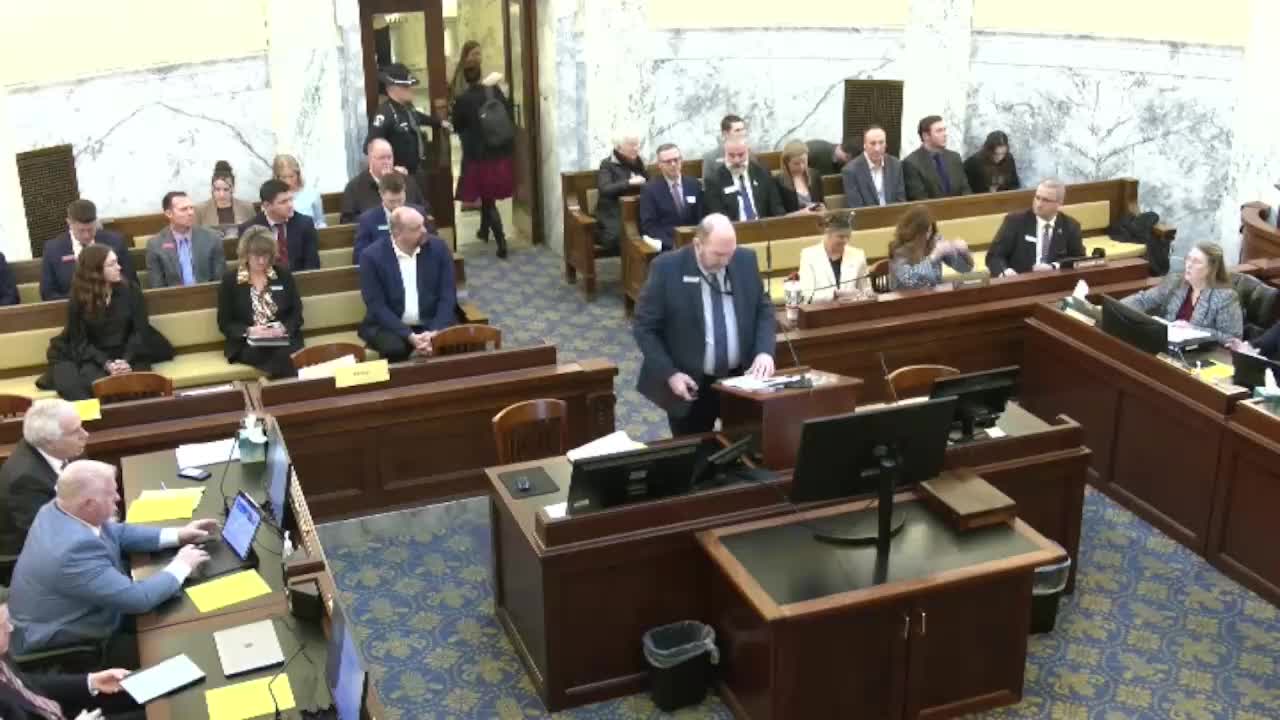
Legislative Services Office analyst Kevin Campbell presented the Scholarships and Grants budget to the Joint Finance‑Appropriations Committee, which is administratively housed in the Office of the State Board of Education (OSBE).
Campbell said the program administers multiple awards including the Opportunity Scholarship, Armed Forces and Public Safety Officer Scholarship, GEAR UP scholarships and an Idaho Work Study program. He told the committee the program has 1.35 authorized FTP and reported that 99.5% of program spending is in trustee and benefit payments, with roughly 0.5% in personnel costs.
OSBE Executive Director Josh Whitworth told the committee the agency relies on staff in other OSBE budgets for parts of the workload and that scholarship databases and public user interfaces require upgrades and security work. Whitworth said scholarships and grants maintain extensive databases and that there is a backlog of maintenance and security work the current staffing does not fully address.
OSBE requested $1,375,000 for the Bridging and Underserved Educator Incentive Program for FY2026 and a $124,000 request to hire a software engineer to address system maintenance, upgrades and security. Campbell also identified a small enhancement to correct a CEC calculation from FY2025.
Committee members asked about performance measures and outcomes: Whitworth said OSBE will develop and provide more outcome reporting, including data on which districts receive rural and underserved educator incentives and on recruitment and retention outcomes tied to the program. Lawmakers asked OSBE to return with metrics disaggregated by rural and underserved definitions and program cohorts.
Why it matters: scholarship and incentive programs are intended to increase postsecondary access and to recruit educators to high‑need areas; the committee requested more outcome data to evaluate whether funding meets intended goals.
(Reporting based on testimony from Kevin Campbell (LSO) and Josh Whitworth (Office of the State Board of Education).)