Get Full Government Meeting Transcripts, Videos, & Alerts Forever!
Get email alerts on the Substance Abuse Prevention topic
No spam. Unsubscribe anytime.
Substance‑abuse budget: $8M opioid grants and Millennium Fund adds ongoing programs; agency seeks fund swaps to meet federal admin limits
Summary
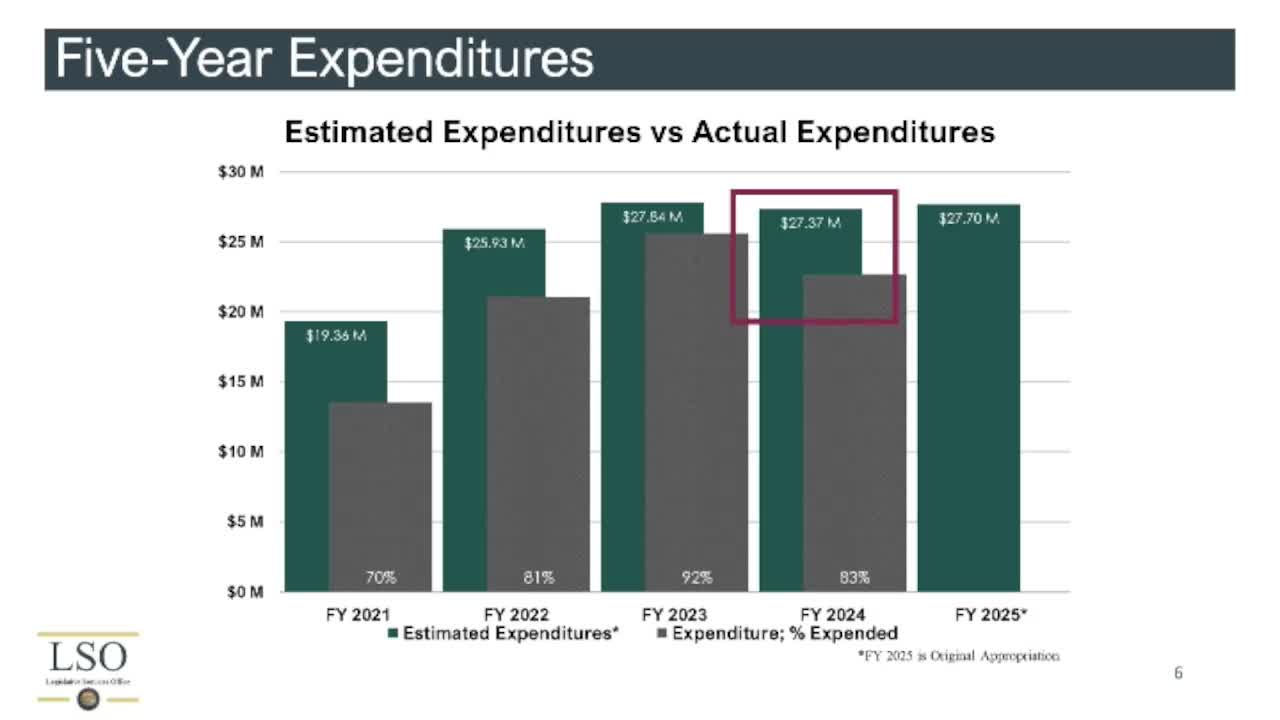
Legislative analysts and DHW told the committee the substance abuse program includes an $8 million ongoing state opioid response grant, new Millennium Fund support for recovery centers and a federal administrative cap that is driving a fund‑source swap request to remain in compliance.
The committee reviewed the Department of Health and Welfare’s Substance Abuse Treatment and Prevention budget, including federal grants, ongoing Millennium Fund appropriations and a federal administrative spending cap that prompted a fund‑source reallocation.
Alex Williamson, LSO budget analyst, summarized recent appropriations: an $8,000,000 state opioid response grant made ongoing beginning FY2024; an FY2025 ongoing enhancement of $1,600,000 that included $1,350,000 for Millennium Fund support for community‑based recovery centers; and earlier one‑time appropriations for COVID relief and prevention activities.
Williamson explained that the agency faces a federal limit on administrative spending for the Substance Use Block Grant (a 5% cap on administrative/personnel spending). To remain in compliance while maintaining existing staffing, DHW is asking the Legislature to approve a fund swap that would shift personnel costs to liquor‑control or other dedicated funds and leave more federal dollars available for trustee and benefit payments.
"The federal organization doesn't necessarily have a preference on how much is spent, just how much of it needs additional personnel to carry that out, as long as they're not using the federal dollars for more than 5%,” Williamson said. He described the department’s request as moving roughly $533,900 from liquor control funds to pay personnel (so federal funds can be used for trustee payments) while simultaneously moving $673,900 from federal personnel to trustee and benefit payments on the federal fund side.
Senator Cook pressed on whether the fund swap was effectively an accounting maneuver to avoid a federal "hand slap." Williamson and Director Adams replied that the department proposed a net reduction in FTP for the program (a net loss of 4 FTP in one budgeted program) and reductions in personnel cost requests to mitigate concerns. Adams said the department did not plan to make those Millennium Fund items ongoing as general fund asks and described some of the requested changes as internal realignments to meet federal compliance.
Why it matters: the substance‑abuse budget funds statewide prevention and treatment programs. Changes to fund sources and ongoing Millennium Fund appropriations affect local recovery centers, prevention work and how federal grant money is spent. The committee asked for more detail on the opioid settlement and Millennium Fund recipients; Director Adams said he would provide follow‑up information on Boise State’s collegiate recovery program and other grant recipients.
(Reporting based on testimony by Alex Williamson and Alex Adams during the Joint Finance‑Appropriations Committee hearing.)