Get Full Government Meeting Transcripts, Videos, & Alerts Forever!
Get email alerts on the Idaho Behavioral Health Plan topic
No spam. Unsubscribe anytime.
Committee hears department seek $6.7M to access federal grants for Idaho Behavioral Health Plan; asks broad transfer exemptions
Summary
The Joint Finance‑Appropriations Committee was told by agency officials that the Idaho Behavioral Health Plan (IBHP) went live in July 2024 after procurement delays and legal challenges, and the Department of Health and Welfare (DHW) asked the committee for authority to access federal grant funds and more flexibility to move dollars across programs.
The Joint Finance‑Appropriations Committee was told by agency officials that the Idaho Behavioral Health Plan (IBHP) went live in July 2024 after procurement delays and legal challenges, and the Department of Health and Welfare (DHW) asked the committee for authority to access federal grant funds and more flexibility to move dollars across programs.
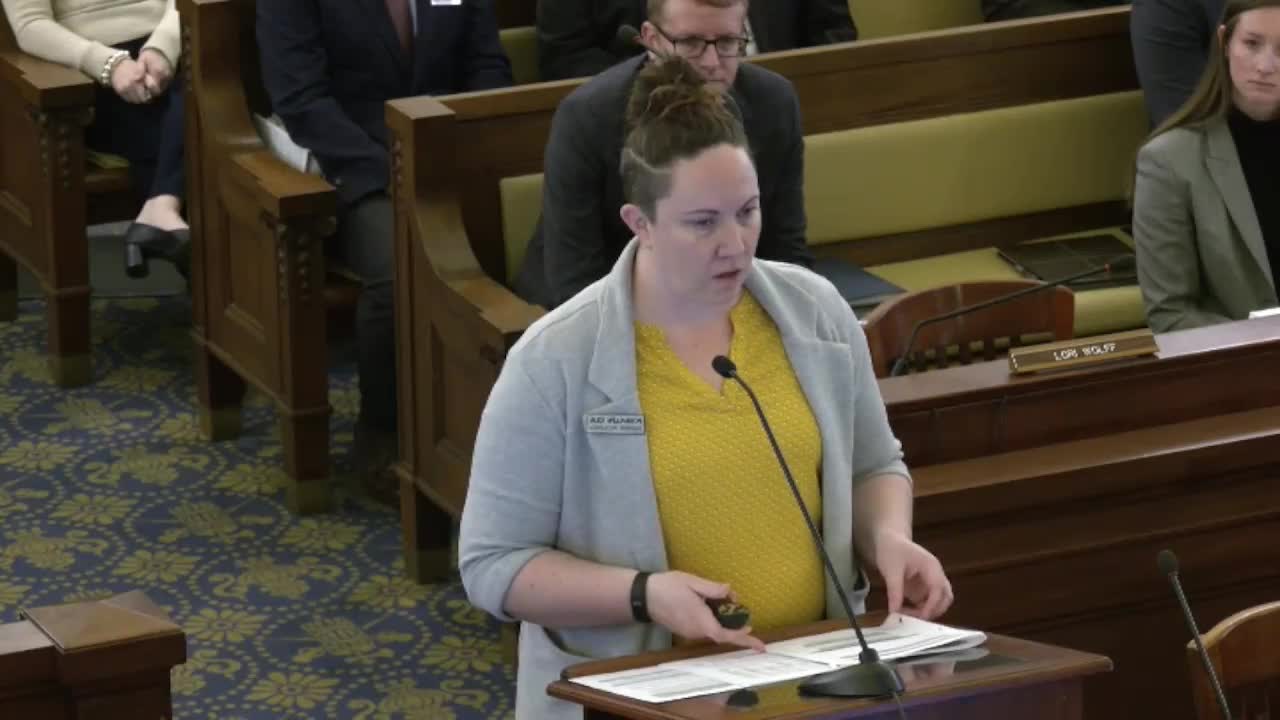
Alex Williamson, budget and policy analyst with the Legislative Services Office, told the panel that the agency’s FY2025 supplemental request includes $6,700,000 in one‑time federal funds to support year‑one costs tied to IBHP and a separate $261,400 ongoing federal request for operating expenditures related to grants administered by the federal Substance Abuse and Mental Health Services Administration (SAMHSA).
The request is intended to allow DHW to access federal grants that were issued to Idaho around the IBHP go‑live but for which the agency lacked appropriation authority because the awards were aligned to earlier fiscal years. “The Idaho behavioral health plan was originally slated to go live in 2022. However, due to some delays, it actually went live July of this last year, so 2024,” Williamson said.
Why it matters: IBHP is a large Medicaid‑related contract covering behavioral health services for Medicaid enrollees. Funding gaps or unspent federal awards can affect services DHW says are intended to fill gaps not covered by Medicaid — such as respite care and services for people not eligible for Medicaid — and those gaps can lead to mid‑year budget requests.
Director Alex Adams, Department of Health and Welfare, told the committee the procurement attracted legal challenges and that the department prioritized doing the contract carefully. “This was, I believe, the largest contract in the history of the state, so I do think it is wise and prudent for the department to do it right versus to do it quickly,” Adams said, adding that “about a year in legal challenges” delayed the procurement.
Adams and Williamson also described a transfer‑exemption request. The department is asking the committee to approve exemptions to the program transfer limitations in Idaho Code §67‑3511 for FY2025 and to remove additional transfer limits beyond §67‑3511 in the FY2026 budget. Williamson described the FY2025 ask as an exemption to the 10% program transfer limitation in Idaho Code §67‑3511 to allow department‑wide transfers into adult and children’s mental health for unforeseen expenditures.
Committee members pressed for detail. Senator Cook asked why the RFP and procurement process were delayed; Adams replied that the contract size attracted legal challenges and that once litigation cleared the department focused on implementing correctly. Senator Wintrow and others asked how IBHP fits with Medicaid budgeting; Adams said Medicaid covers most behavioral health services, and these appropriation requests primarily backfill non‑Medicaid gaps or services for non‑Medicaid patients (for example, children above 300% of the federal poverty level) and involuntary/crisis services.
The director told the committee the supplemental funding and transfer flexibility would let DHW access federal grant dollars and move resources as needed to cover unforeseen costs, but he also cautioned that statutory entitlements (Medicaid) constrain program choices because the department must provide statutorily defined services when eligible people present.
Looking ahead: DHW and committee members indicated IBHP and Medicaid billing and contract performance will receive fuller review during the Medicaid budget hearings scheduled later in the session. The department asked the committee to consider the transfer‑exemption language to avoid repetitive supplemental requests when entitlement or contractual costs exceed initial estimates.
(Reporting in this article is based on presentations and question‑and‑answer exchanges recorded at the Joint Finance‑Appropriations Committee hearing. Key evidence: statements by Alex Williamson and Director Alex Adams.)