Get Full Government Meeting Transcripts, Videos, & Alerts Forever!
Get email alerts on the State Health Insurance topic
No spam. Unsubscribe anytime.
JFAC approves $14,130 health‑insurance appropriation per eligible FTE for FY2026
Summary
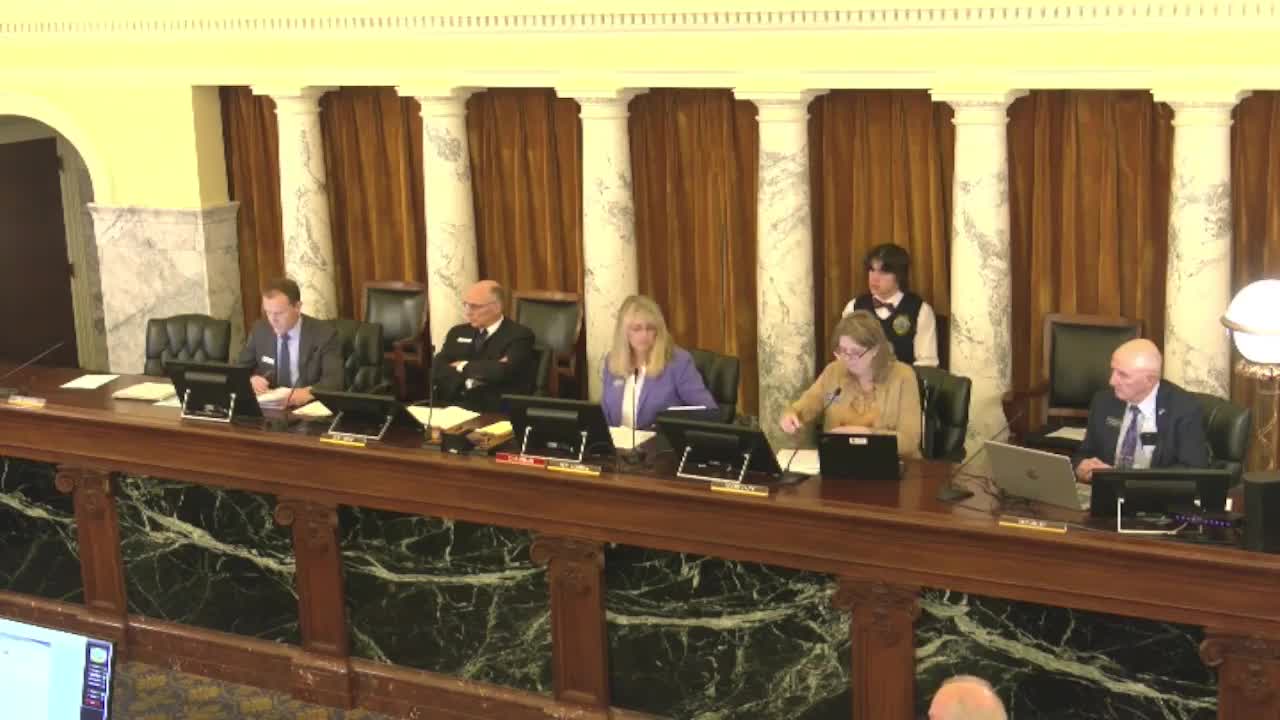
The Joint Finance‑Appropriations Committee voted Jan. 31 to set the FY2026 state health‑insurance appropriation at $14,130 per eligible full‑time equivalent, approving roughly $48.4 million in increased spending across fund sources.
The Joint Finance‑Appropriations Committee voted Jan. 31 to increase the state health‑insurance appropriation to $14,130 per eligible full‑time equivalent (FTE) for fiscal year 2026, a change the committee said reflects agency cost pressures and avoids using one‑time reserves to mask recurring costs.
The committee’s approved figure — the compromise motion offered earlier in the meeting — will increase appropriations by $36,043,900 from the general fund, $8,599,500 from dedicated funds and $3,753,800 from federal funds, for a total increase of $48,397,200.
Committee staff presented three dollar options for the committee to consider: $13,960 (the CEC recommendation), $14,300 (the governor’s recommendation) and $14,130 (the midpoint compromise). Mr. Bybee, an LSO analyst, described the three motion options and the agency adjustments they would trigger.
“...on the screen before you, you see three separate motions,” Bybee said as he reviewed the packet. He explained the motions’ projected effect on the insurance reserve balance and that the largest personnel benefit cost change is the health‑insurance appropriation.
Lawmakers debated whether to reflect the full actuarial cost or to use reserves to soften the impact on current budgets. Senator Ward Engelking argued the committee should “be reflecting the actual cost of insurance,” warning that using reserves to buy costs down in one year can create larger apparent increases the next. Representative Furness pushed back on the actuarial projections, citing Milliman forecasts and reserve history and urging caution about overfunding the reserve.
The committee took a series of roll calls on substitute and original motions. After earlier substitute motions failed, the final roll call on the original motion produced 17 ayes, 0 nays, and 3 members absent or excused (Senate: 8 ayes, 0 nays, 2 absent/excused; House: 9 ayes, 0 nays, 1 absent/excused). With a majority in the affirmative, the motion passed and was recorded as carrying a due‑pass recommendation.
The committee staff noted projected reserve balances associated with each option: under the adopted $14,130 level the projected ending reserve balance for FY2026 falls between the extremes presented (staff provided a $51.6 million and $61.4 million comparison for the lower and upper options). Mr. Bybee said the midpoint calculation would not dramatically change the state's expected reserve position compared with the other proposals.
Next steps: the committee adopted the appropriation level and indicated the change will be carried forward in the committee’s recommendation language to the full Legislature.