Get Full Government Meeting Transcripts, Videos, & Alerts Forever!
Get email alerts on the Student Safety Review topic
No spam. Unsubscribe anytime.
External review recommends policy, training and safety fixes; Bedford staff consider making it a district goal
Summary
A consultant review presented to the Bedford School Board on Jan. 13 recommends clarifying district policies, expanding pre‑K–12 prevention and training, improving supervision and privacy in physical spaces, and formalizing staff debrief and self‑care after incidents.
A consultant presentation summarized to the Bedford School Board on Jan. 13 recommended a multi‑year, multi‑pronged approach to preventing and responding to sexual misconduct and related student safety concerns.
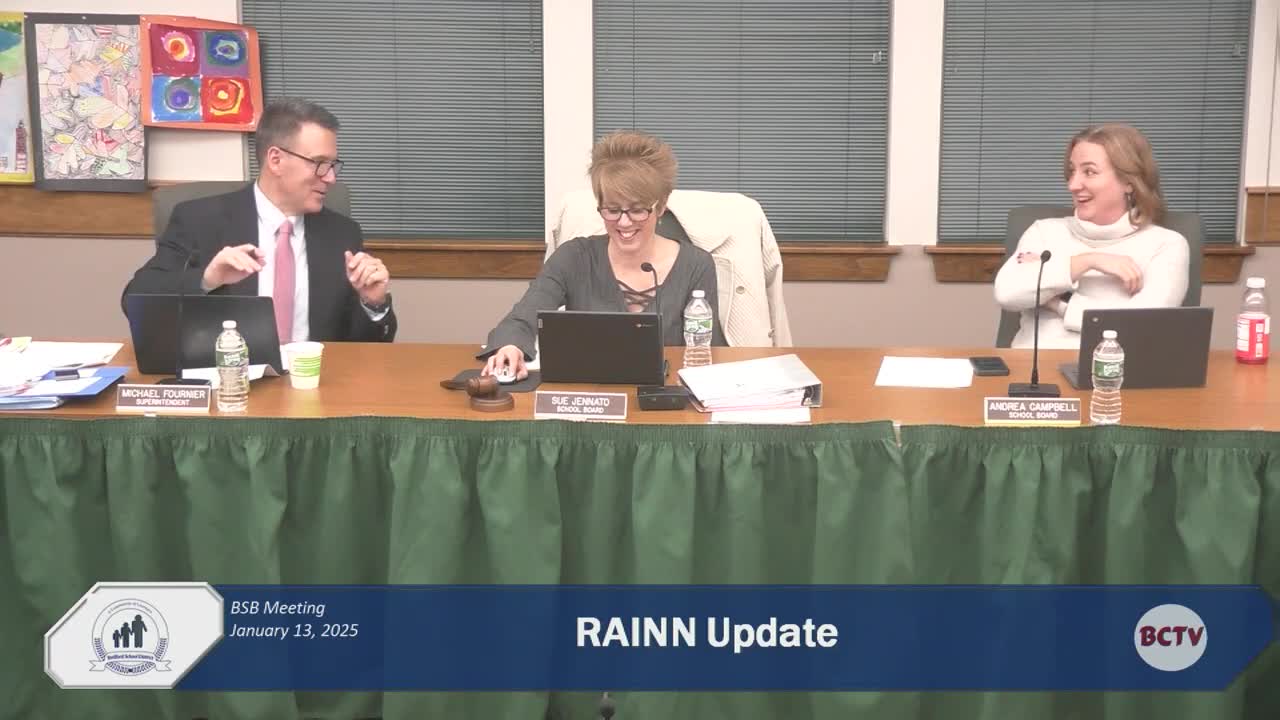
Superintendent Mike Fournier and outside consultants from the group known in the transcript as Rain briefed the board on a multi‑section report that identified strengths and weaknesses in district policy, training, supervision and response protocols. Fournier told board members that the review surfaced no surprises but flagged areas for improvement, and he said the district will consider whether the work should become an explicit multi‑year goal.
The report highlighted strengths that include active prevention programs, engaged counseling staff and a local culture where staff reported trust in their supervisors. It also recommended clearer, centralized policy language and a single, easily accessible repository for protocols; a pre‑K–12 prevention sequence tied to social marketing and curriculum; formalized debrief and self‑care protocols for staff; clearer supervision and privacy rules for spaces such as locker rooms and the theater; and training that addresses evolving threats such as cyberharassment.
Fournier gave specific examples raised by the consultants: the district lacks a consistent procedure on personal devices in locker rooms and needs clearer notification steps for school resource officers; staff said some prevention programs and trainings are under‑advertised; and some areas of school grounds (behind the high school) could benefit from improved lighting. Consultants recommended a structured case‑review or postmortem process to identify recurring themes and improve response.
Board members and administrators discussed next steps. Several trustees said embedding the review's recommendations into a school‑board goal would keep follow‑up visible and accountable. The board noted that recent legal changes (and ongoing shifts in Title IX guidance) complicate policy work and that the district should focus on pragmatic, trauma‑informed practices that center student welfare while remaining legally compliant.
Fournier and other administrators said the report will inform policy revisions, staff training plans and possible facility improvements. No formal vote was taken on adopting the report or funding a consultant follow‑up; the discussion concluded with agreement to continue work on policy and training and to consider making implementation a formal board goal.
The Rain report is available to the board and staff; administrators said they will return with prioritized next steps, potential timelines and cost estimates if formal implementation is recommended.