Get Full Government Meeting Transcripts, Videos, & Alerts Forever!
Get email alerts on the Juvenile Corrections Budget topic
No spam. Unsubscribe anytime.
Idaho juvenile corrections seeks funds as treatment costs, mental-health needs rise
Summary
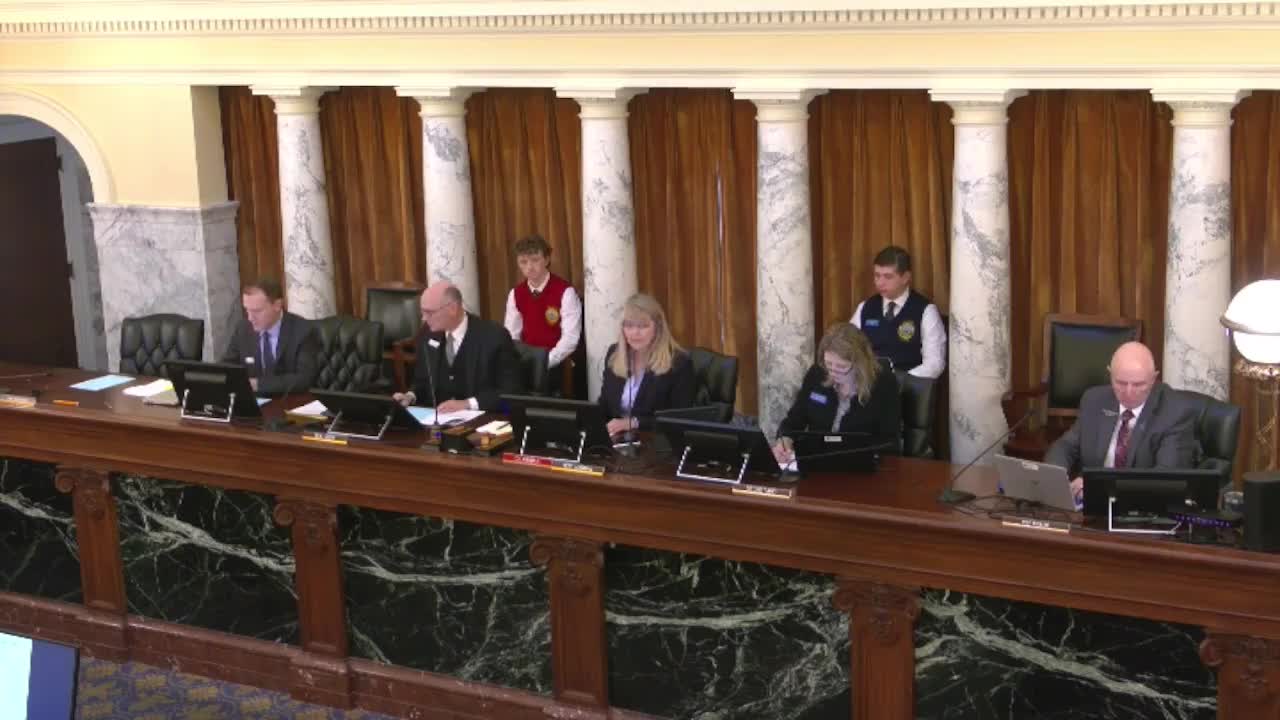
Department of Juvenile Corrections Director Ashley Dowell and legislative analysts told the Joint Finance-Appropriations Committee on Feb. 18 that the department is asking for targeted funding as it sees growing mental-health needs among youth in custody and rising costs for residential substance-use disorder (SUD) treatment.
Department of Juvenile Corrections Director Ashley Dowell and legislative analysts told the Joint Finance-Appropriations Committee on Feb. 18 that the department is asking for targeted funding as it sees growing mental-health needs among youth in custody and rising costs for residential substance-use disorder (SUD) treatment.
Dowell, director of the Idaho Department of Juvenile Corrections, said the agency’s staff and county partners “do tremendous work” but noted increasing rates of suicidal ideation and self-harming behavior among youth in custody. That rise, she said, has led the department to prioritize mental-health treatment and diversion options to reduce long-term contact with the justice system.
The department’s budget presentation, delivered by Legislative Budget Analyst Noah Peterson, listed specific requests to address operational and treatment needs. Among the enhancement items: a $380,000 one-time purchase from the Juvenile Corrections Endowment Income Fund to replace and upgrade radio equipment across all three state juvenile correction centers with “man down” functionality; and a $300,000 ongoing general-fund request to cover higher costs for residential SUD treatment now that prior short-term American Rescue Plan Act (ARPA) funds from the Department of Health and Welfare are no longer available.
Why it matters: Peterson told the committee the daily cost for residential treatment rose from about $198 in 2021 to $399 in August 2021, while average length of stay rose from 31 days to 67 days. Those changes increased program costs from about $1.26 million in fiscal 2021 to $2.7 million in fiscal 2024. Peterson said the $300,000 request would replace what Health and Welfare had temporarily funded with ARPA money.
Officials and legislators pressed for more data on population trends and program outcomes. Representative Tanner asked for counts and trend data on youth served; Peterson said he could supply those figures and Director Dowell said she would bring additional analysis to the committee. Dowell told the committee the department’s in-custody census reached an all-time low of 137 in May 2024 but had risen to 176 at the time of the hearing, representing roughly a 19% increase from the low point.
Committee members also asked about youth crisis centers, created to divert youth from custodial settings. Dowell said she had anecdotal evidence that crisis centers helped stabilize children — including those under 10 — and divert them from detention, and she and staff agreed to provide any available data on diversion counts to the committee.
On program oversight and treatment decisions, Chairman Jeff Peterson and several lawmakers noted that residential treatment providers make placement decisions using the American Society of Addiction Medicine (ASAM) placement criteria. Peterson and Dowell said those are community providers—not employees of the Department of Juvenile Corrections—and the department currently lacks licensing and utilization-management capacity to second‑guess individual placement decisions. The committee suggested the fiscal-impact team could examine utilization and cost drivers.
Other budget details explained by Peterson: about 60% of department expenditures in fiscal 2024 were personnel ($32.9 million), 29% were trustee/benefit payments (largely pass-throughs to counties and nonprofit vendors), and 11% were operating expenses (about $6 million). Peterson described a program shift moving youth assessment center costs from administration to community operations (a net-zero transfer), and a requested $232,500 for IT replacement items recommended by the Office of Information Technology Services.
Members also asked about the educator career ladder funding included in the agency request. Peterson and others clarified the career-ladder monies apply to teachers working inside juvenile corrections facilities; the committee heard that initial career-ladder implementation had not created parity for correctional-area teachers, prompting the adjustment.
The department noted a prior one-time software replacement and several supplemental appropriations in fiscal 2022–23 that produced year-to-year spending spikes. Peterson said the department expended about 83% of what was anticipated over the prior five years and that recent year-to-year changes reflect a mix of one-time supplementals and reappropriations.
Closing notes: Dowell said the department would work to provide the committee with population and program-outcome data and thanked legislators for support as the agency seeks to balance public safety and treatment needs.