Get Full Government Meeting Transcripts, Videos, & Alerts Forever!
Get email alerts on the Early Learning And Development topic
No spam. Unsubscribe anytime.
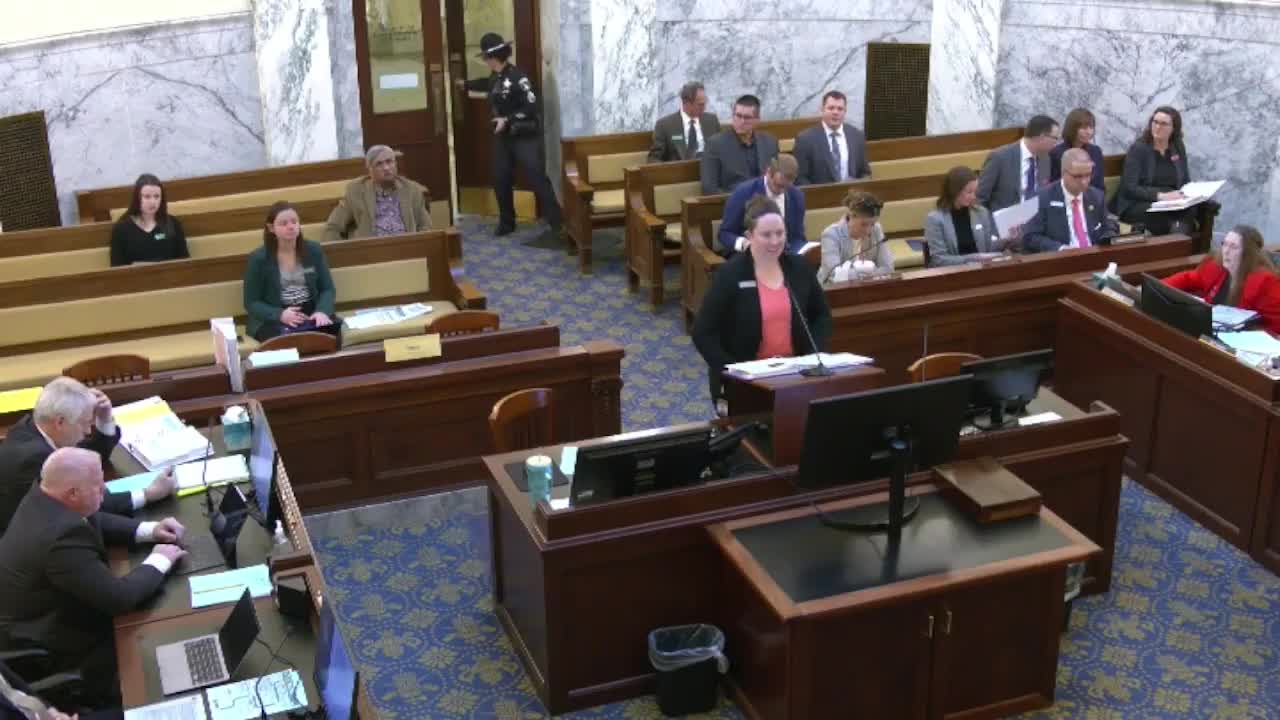
Budget hearing: Early learning, SWITC and childcare funds spotlighted; governor recommends $15M one-time ICCP installment
Summary
The Joint Finance and Appropriations Committee on Feb. 20 considered the Department of Health and Welfare’s requests tied to early learning, the Idaho Child Care Program and specialized treatment at SWITC, including a governor recommendation of $15 million one-time ICCP funding.
The Joint Finance and Appropriations Committee on Feb. 20 considered the Department of Health and Welfare’s requests tied to services for the developmentally disabled, early-learning programs and the Idaho Child Care Program (ICCP), which moved under the newly reorganized Early Learning and Development division.
Alex Williamson, budget and policy analyst with Legislative Services, explained the reorganization and noted that some developmental-disability services now sit in Medicaid and will be discussed in that budget hearing. For the items in this hearing, the governor recommended a three-year plan of $15 million one-time installments for ICCP, with $4.2 million ongoing also proposed for the program.
Why it matters: Williamson said the governor’s one-time ICCP recommendation draws from underutilized federal Child Care and Development Block Grant funding, about $45 million of one-time funding available across three years. The ICCP subsidy is designed to help low-income families access child care and was the subject of recent department rule changes and temporary pauses in enrollment.
Director Alex Adams summarized the department's recent actions and choices on child-care enrollment. Adams said the department spent its full childcare appropriation last year and that, absent adjustments, the program would have required an additional $15.4 million to treat ICCP as an entitlement. Facing that shortfall, the department paused new enrollment and later lifted the pause after taking corrective steps. “We did have to pause enrollment, but we tried to do so in the most, humane way possible,” Adams said.
Selected program items discussed - Idaho Child Care Program (ICCP): The governor recommended $15,000,000 one-time in FY2026 and the agency requested $4,200,000 ongoing in addition to the one-time funds. Williamson said the $45,000,000 of one-time federal funds under the Child Care and Development Block Grant are available over three years and the governor’s recommendation proposes using $15,000,000 per year.
- START certification and crisis treatment funding at SWITC: Williamson listed a START certification program request (year 3 of 4) with a one-time request of $249,200 and noted earlier SWITC-related supplementals to pay for crisis patient treatment and construction/demolition work in prior years. Lisonbee Tate, who oversees Early Learning and Development and SWITC operations, told the committee a recent operational focus involved facility improvements and buying food in bulk to reduce food costs across state treatment sites; she said a walk-in cooler purchase would enable bulk purchasing and lower per-meal costs.
- Infant-toddler service coordination: Previous supplementals for infant-toddler service coordination (around $1.98 million) and SWITC crisis patient treatment (about $1.3 million) were made in FY2024 and carried into FY2025 as ongoing in the agency’s base.
Discussion and follow-ups Sen. Maryanne Wintrow and others asked whether federal funding for developmental-disability services is at risk; Director Adams said he was not seeing immediate federal reductions and that entitlement programs would continue under current federal guidance, while the department maintains exit strategies for non-entitlement programs.
On START certification, Allison Tate (division administrator) said the START clinical model is being used at SWITC and the department has been training staff; she reported that after adopting START on Feb. 3 in one team, enrollments rose from about five people to ten with additional enrollments pending. A START progress report is due to the committee this summer.
On child-care program administration, Adams said last year’s policy and operational changes (income eligibility, lower co-pays, higher market rates) increased program costs; the department paused new enrollments to live within the legislative appropriation and later restarted enrollments after adjustments.
Ending The committee took no vote on the requests during the hearing. The ICCP one-time recommendation and the START and SWITC items will be considered in subsequent budget deliberations and in the Medicaid hearing where much of the developmental-disability funding now resides.