Get Full Government Meeting Transcripts, Videos, & Alerts Forever!
Get email alerts on the Daycare Licensing Rules topic
No spam. Unsubscribe anytime.
Committee advances bill moving 19 daycare licensing rule sections into statute
Summary
House Bill 312 would move 19 specified sections of Idaho Administrative Code (IDAPA) related to daycare licensing into statute; the Department of Health and Welfare told the committee the bill does not remove all 21 pages of rules but only the listed sections.
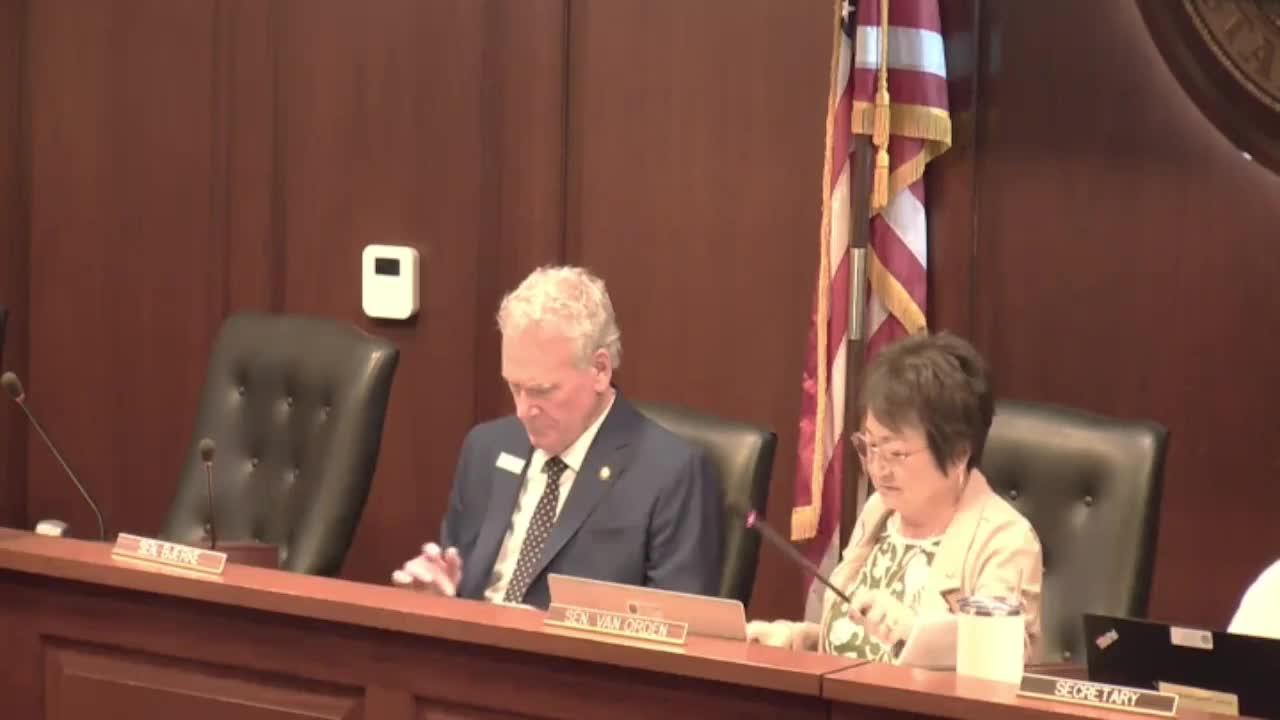
The Senate Health and Welfare Committee voted to send House Bill 312 to the floor with a due-pass recommendation. The bill transfers 19 specified sections of daycare‑licensing administrative rules into state statute.
Sponsor Senator Glenita Zieterville (District 24) told the committee the bill moves longstanding provisions from IDAPA into statute, covering definitions, licenses, safety standards, fees, training, behavioral management and complaint procedures. Senator Zieterville described the measure as part of a broader trend this session to codify administrative rules in statute.
Adam Jones of the Department of Health and Welfare told the committee the bill does not lift the entire set of daycare regulations out of rule; it specifically moves the 19 sections listed on page 7 and 8 of the bill and that many other regulatory pages would remain in rule. Jones also said the bill does not conflict with other active legislation concerning daycare licensing; if both bills pass, Legislative Services Office would reconcile any overlaps.
Senators asked whether the 60‑day issuance language in the bill (that the department “shall … issue a basic license to the applicant within 60 days”) was new; Jones said that language is present in rule (IDAPA) and the bill moves it into statute. The committee heard no in‑person opposition and several senators expressed differing views about moving rules into statute — some said doing so improves legislative oversight and permanence; others said rulemaking provides needed administrative flexibility and public comment opportunities.
Senator Shippey moved to send House Bill 312 to the floor with a due‑pass recommendation; Senator Buerke seconded. The committee approved the motion by voice vote.