Get Full Government Meeting Transcripts, Videos, & Alerts Forever!
Get email alerts on the Licensing Rules Fees topic
No spam. Unsubscribe anytime.
Senate Health and Welfare approves multiple licensing rule rewrites and temporary fee cuts
Summary
The committee approved a series of pending rule chapters and temporary rule fee reductions for multiple professional licensing boards after presentations by division staff; the Genetic Counselor rules were approved with one removal to an incorporated code-of-ethics section.
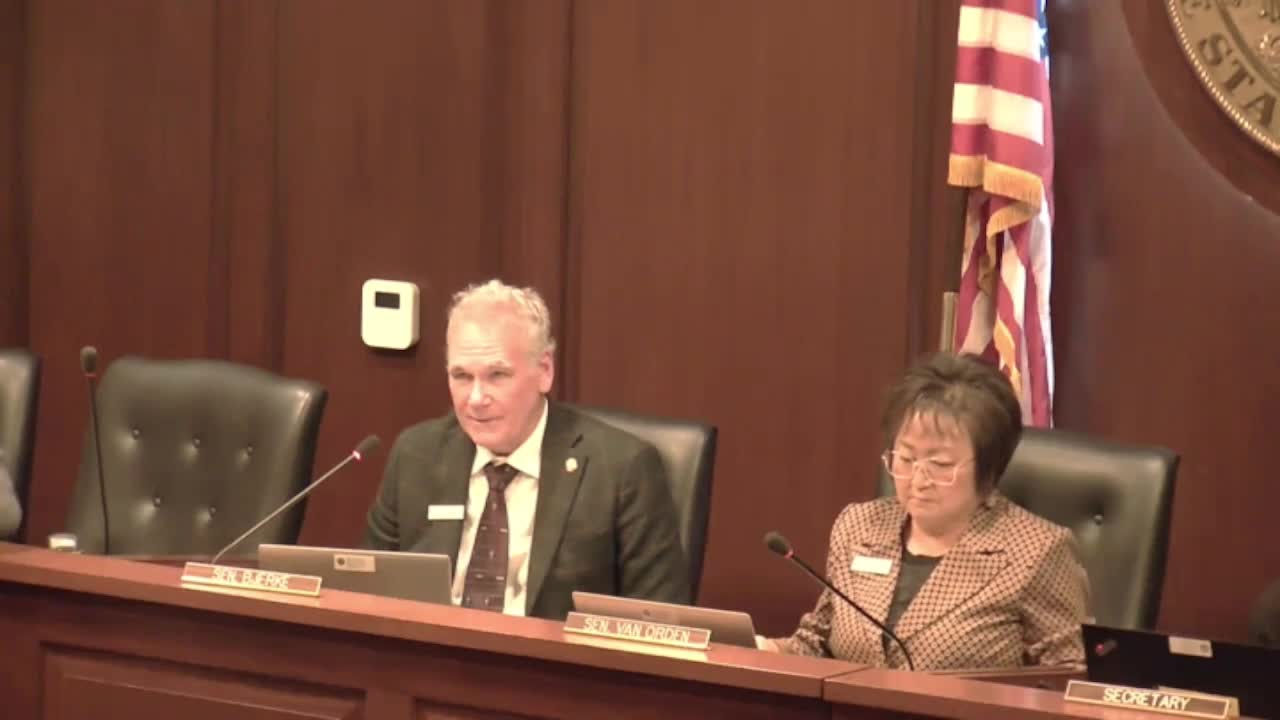
BOISE, Idaho — The Idaho Senate Health and Welfare Committee approved several pending rule dockets and temporary fee decreases on Feb. 7, 2025, following presentations by staff from the Division of Occupational and Professional Licenses.
The committee voted to approve pending rule chapters submitted by the Idaho State Board of Chiropractic Physicians; the Idaho Board of Examiners of Nursing Home Administrators; the Idaho Board of Examiners of Residential Care Facility Administrators; and the Genetic Counselor Licensure Board. The committee also approved temporary rule dockets that reduce licensure fees for the Board of Midwifery and the Board of Dentistry, and a separate temporary fee reduction for an additional board (board name not specified in the hearing record).
John Price, bureau chief for the Occupational Licensing Bureau, summarized the chiropractic rules rewrite (docket 24.03.01, IDAPA chapter 24.03.01) and highlighted changes such as aligning continuing-education hours to a biennial cycle and removing duplicative provisions related to compounding and sale of prescription products. "There were no adjustments to the fee table," Price told the committee in describing the proposed final rule.
Cecily Metcalfe, Board Services Program Manager and executive officer for multiple licensing boards, presented several chapter rewrites on behalf of boards. For the Board of Examiners of Nursing Home Administrators (docket 24.09.01) and the Residential Care Facility Administrators (docket 24.19.01), Metcalfe said the rule chapters underwent 0-based rewrites to remove duplicative statutory language, renumber sections and reduce regulatory burden. She told the panel the boards held public meetings, negotiated rulemaking and public hearings and that the changes included removing a jurisprudence exam requirement and aligning continuing-education cycles to biennial renewals.
Katie Stewart, bureau chief for the administration bureau at the Division of Occupational and Professional Licenses, presented temporary rules reducing licensure fees under the division's cash-balance plan. Stewart said the division is lowering fees where possible under intent language in last year's appropriation legislation. She told the committee the midwifery board reduced fees from a prior $200 application and $850 renewal to a $35 application, $35 licensure and $35 renewal fee following consolidation with the Board of Nursing. The dentistry board voted to reduce fees by 25 percent, and a final temporary rule reflected a $20 reduction (from $90 to $70) for another board; the hearing record did not identify that board by name.
The Genetic Counselor Licensure Board's docket (24.24.01) was approved with one change: Senator Steve Shippey moved, and the committee adopted, a motion to exclude one sentence (section 3 of item 2) from the National Society of Genetic Counselors code-of-ethics document incorporated by reference. The motion removed language in the NSGC code that read in part that counselors "provide genetic counseling services to their clients regardless of their clients' abilities, age, culture, religion, ethnicity, language, sexual orientation and gender identity." The committee carried that motion on a voice vote.
All described pending rule dockets and temporary rule dockets were approved on voice votes after motions by committee members; specific roll-call tallies were not recorded in the hearing minutes.
The committee chair and committee members thanked presenters and closed the hearing after approving the dockets. Several dockets had been held for additional information earlier in the legislative-review process by the House Health and Welfare Committee and were presented to the Senate committee following those holds and additional review.