Get Full Government Meeting Transcripts, Videos, & Alerts Forever!
Get email alerts on the Crna Scope Liability topic
No spam. Unsubscribe anytime.
Senate committee advances bill codifying CRNA autonomous practice and liability protections
Summary
House Bill 289 was advanced with a due-pass recommendation after testimony from CRNAs and educators explaining that CRNAs provide rural anesthesia care, have extensive critical-care prerequisites and certification, and that codifying scope and liability protections would keep insurance costs down and protect access to services.
The Senate Health and Welfare Committee voted to send House Bill 289 to the floor with a due-pass recommendation. The bill places into statute the scope of practice and liability protections for certified registered nurse anesthetists (CRNAs), reaffirming their autonomous role in providing anesthesia care in Idaho.
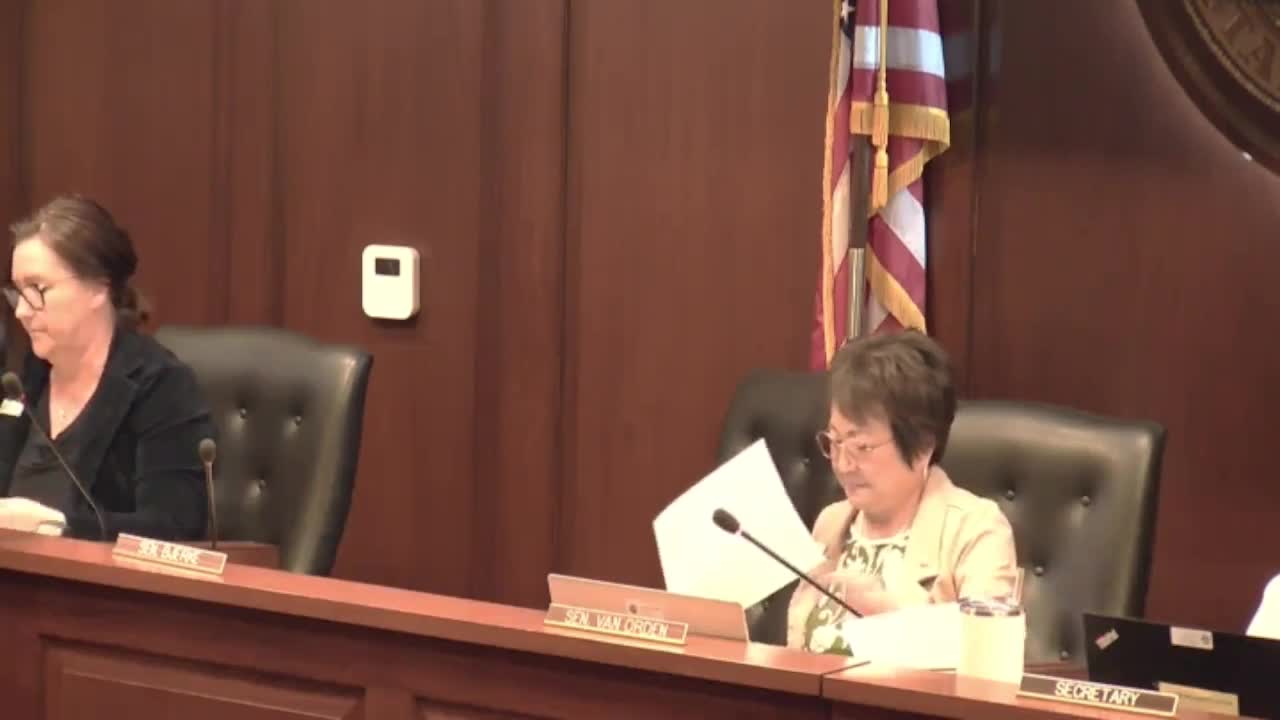
Senator Carl Bjerke (District 5), the floor presenter, told the committee the bill “clarifies the scope of practice responsibilities and liability protections for certified registered nurse anesthetists” and noted CRNAs often serve as the sole anesthesia provider in many rural counties. Bjerke said the measure codifies longstanding practice and reduces potential extraneous liability for physicians and facilities when a CRNA provides anesthesia.
Several CRNAs testified in support. Maria Conan, president of the Idaho Association of Nurse Anesthesiology and a practicing CRNA for 19 years, said CRNAs “provide safe, high quality, cost effective care in every setting where anesthesia is delivered” and described educational and certification requirements. Conan said the 2002 Medicare ‘‘opt-out’’ recognized independent CRNA practice in Idaho, and the bill would codify the practice and relieve surgeons and facilities of extraneous liability that can raise insurance costs and limit competition.
Shad Westover, a CRNA who served as the first program director for Idaho State University’s nurse anesthesia program, described the training pipeline and the role CRNAs play in rural care. Westover said programs now typically require prior critical‑care nursing experience and multi‑year anesthesia training, and that CRNAs are trained “to the full scope of practice” needed in rural hospitals and surgery centers.
Senators asked clarifying questions but there was no substantive opposition in the hearing. Senator Harris moved to send House Bill 289 to the floor with a due-pass recommendation; Senator Blaylock seconded. The committee approved the motion by voice vote.
The bill’s sponsor and supporting witnesses said the measure would help preserve access to anesthesia services across Idaho, particularly in rural areas, by codifying CRNA practice and clarifying liability protections for physicians and facilities.