Get Full Government Meeting Transcripts, Videos, & Alerts Forever!
Get email alerts on the Vocational Rehabilitation Audit topic
No spam. Unsubscribe anytime.
Federal auditors designate Idaho Vocational Rehabilitation high-risk; $10 million federal reallocation, contractor spending and forensic review prompt state sup
Summary
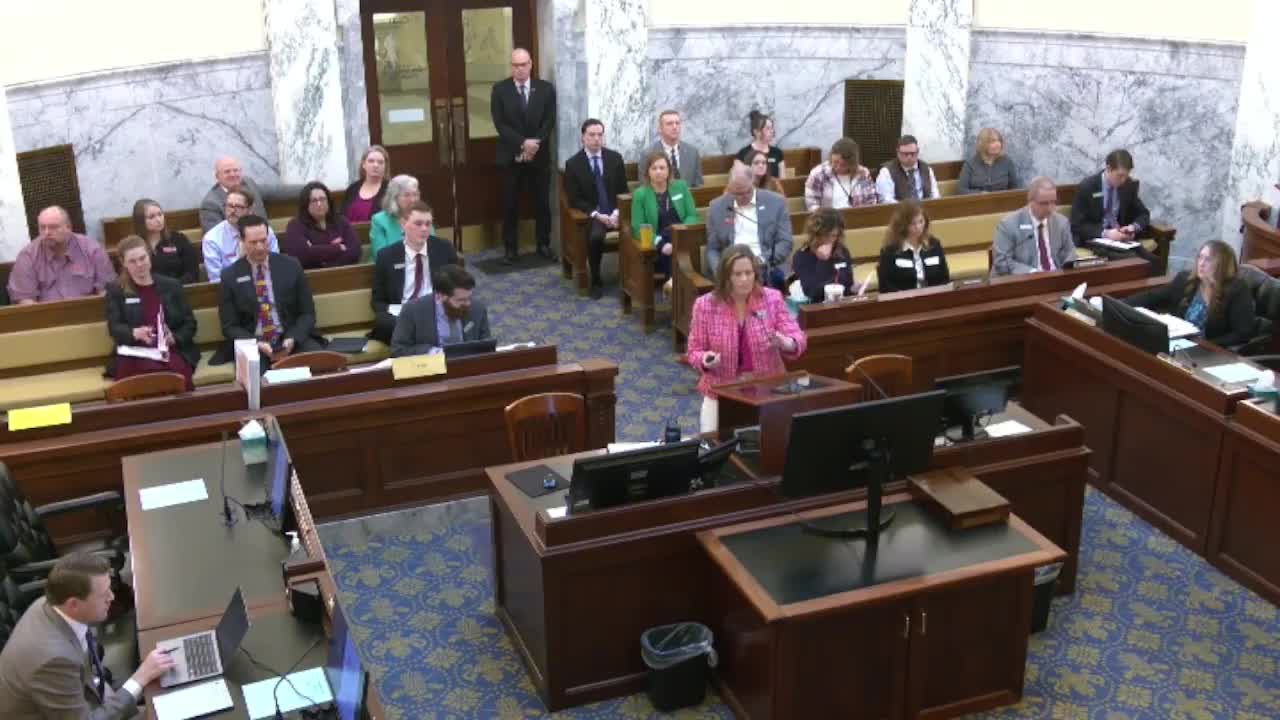
Legislative auditors and Vocational Rehabilitation officials told the Joint Finance-Appropriations Committee on Feb. 24 that the Idaho Division of Vocational Rehabilitation is under federal high-risk designation, received a $10 million federal reallocation that requires state match, and is undergoing a forensic and financial review while a consulting contract was expanded to about $2.4 million.
Legislative auditors and Vocational Rehabilitation officials told the Joint Finance-Appropriations Committee on Feb. 24 that the Idaho Division of Vocational Rehabilitation (IDVR) is under intensive federal scrutiny after the Rehabilitation Services Administration (RSA) designated the division a "high-risk" grantee, a $10 million federal reallocation was recognized by the governor, and auditors found weaknesses in financial controls and federal reporting.
April Renfro of the Legislative Services Office audits division told the committee the audit team issued an accountability report (dated Jan. 13, 2025) that identified a failure to establish procedures and control activities to ensure compliance with appropriation laws applicable to FY2024; insufficient financial-management systems; failures to account for and report obligations and expenditures properly; and inaccurate and unsupported federal financial reporting. RSA subsequently imposed specific conditions on the grant under 2 CFR 200.208 and required a corrective action plan; auditors found the corrective action plan the division submitted lacked specific, measurable steps.
The division received a noncognizable $10,000,000 federal adjustment in September 2024 — a reallocation of RSA funds to states able to absorb and spend the money — but those federal funds require state matching dollars. Brooke Dupree, budget and policy analyst, said the federal share of that funding is about 78.7%; the state share would be about 21.3%, and IDVR requested a $2,700,000 one-time general-fund supplemental as the state match to access the reallocated federal funds. The governor’s recommended budget included a $1,700,000 one-time general-fund recommendation described by staff as covering services that auditors/federal partners may deem unallowable for federal reimbursement.
April Renfro and agency officials described additional complications: IDVR's case-management system did not communicate with the state fiscal system, commitments recorded in program plans sometimes stretched across fiscal periods, and a backlog of invoices created late-year obligations that exceeded annual appropriations. Renfro also noted the division had not fully submitted required RSA quarterly reports for fiscal-year 2023 and that one submission included a committee comment that the division could not certify accuracy of reported data.
Renfro said the division contracted with a consulting firm to implement corrective actions. The original professional services contract signed Aug. 12, 2024, was for $499,999 and described work on business-process mapping, period-of-performance control-system analysis, forensic accounting and grants-management manual development. An amendment in November increased the contract by about $1,900,000, extending the term through December 2025 and expanding scope; the division has paid approximately $900,000 to the contractor so far and those payments have been charged to federal funds (which will carry state-match implications). Auditors flagged that both the initial contract and the amendment were approved as one-time exemptions from competition by state purchasing.
Director Judy Taylor, who is serving as interim director for IDVR, told the committee the division engaged the consultant because the agency lacked in-house capacity to reprogram its case-management system and restate reporting so charges would be reported to the correct federal period of performance. Taylor said the vendor is among the few national firms with the specific expertise to correct that technical issue and that RSA encouraged a third-party oversight model to restore federal confidence and avoid more extreme federal enforcement such as appointing a fiduciary.
Committee members asked about the scale of potential questioned costs and timing. Taylor told lawmakers that one problematic draw request for Pre-Employment Transition Services (Pre-ETS) — largely summer activities for students — produced a low reimbursement rate from RSA (agency staff described receiving about $0.25 on the dollar for the draw, implying a roughly 75% disallowance on that submission). Renfro said the contractor's February update reported a disallowance rate of about 20% in sampled plan reviews but cautioned the final questioned-cost figure will depend on the forensic review, single-audit work and federal determinations. Auditors said the forensic/financial review will extend back to 2019 for purposes of maintenance-of-effort analysis, and that timelines for final federal decisions were uncertain.
Taylor and agency staff said operational impacts are real: as of Feb. 24 the division reported about 2,735 active clients and roughly 1,950 qualified people on a waitlist created under austerity measures. The division also is operating with a number of vacancies and has been pursuing internal changes, including an eventual differentiated-practice model and hiring a quality-and-compliance specialist to bring tasks back in-house as contractor work fades.
No committee votes were taken during the Feb. 24 hearing; staff outlined supplemental requests and decision points that JFAC must consider in upcoming budget work.