Get Full Government Meeting Transcripts, Videos, & Alerts Forever!
Get email alerts on the Aging Services topic
No spam. Unsubscribe anytime.
Commission on Aging asks to use remaining ARPA funds for one-time senior services enhancements
Summary
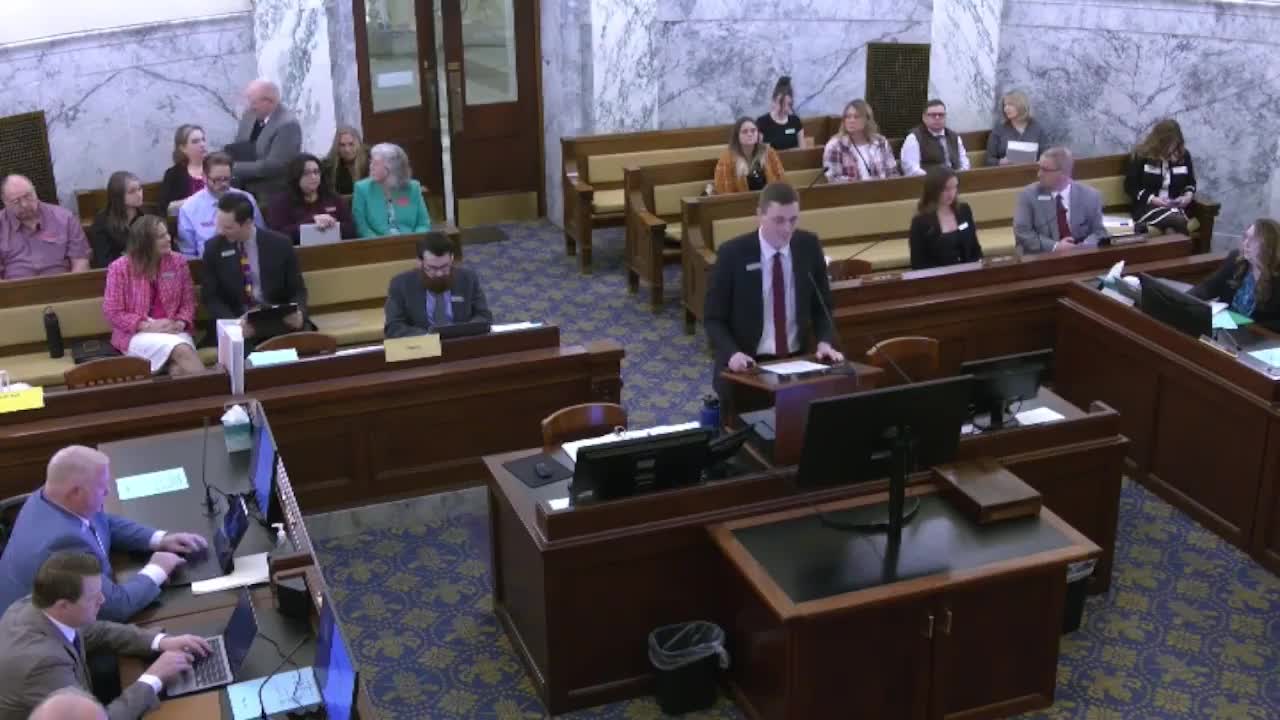
Colin McGurkin, a budget and policy analyst with the Legislative Services Office, told the Joint Finance-Appropriations Committee on Feb. 24 that the Idaho Commission on Aging’s budget largely implements the federal Older Americans Act and the Idaho Senior Services Act and that the commission has relied on federal ARPA awards for one-time modernization and service enhancements.
Colin McGurkin, a budget and policy analyst with the Legislative Services Office, told the Joint Finance-Appropriations Committee on Feb. 24 that the Idaho Commission on Aging’s budget largely implements the federal Older Americans Act and the Idaho Senior Services Act and that the commission has relied on federal one-time awards — including ARPA — for modernization and service enhancements.
The commission’s FY2024 expenditures totaled about $16.7 million, McGurkin said, with nearly 88% of that spending recorded under trustee and benefit payments that flow to the state’s six local Area Agencies on Aging (AAAs). He said that figure represented roughly $10.4 million in federal funds and $4.2 million from the general fund to support direct services.
“Direct services of the commission are provided by these 6 AAAs,” McGurkin said. “Broadly speaking the role of the agency is to keep aging Idahoans safe and healthy in the communities of their choice through a coordinated network of community based services.”
The commission has a history of one-time federal appropriations tied to ARPA. McGurkin said the agency received a $5.2 million one-time federal appropriation for ARPA-related drawdowns used for caregiver education, COVID-related services, adult protective services enhancements and a pilot to support unpaid caregivers of people with dementia. He said the agency had spent roughly $7.4 million of ARPA funds between FY2022 and FY2024 and that the commission requested $1.8 million in FY2025 “to utilize remaining federal ARPA funds by the deadline of 09/30/2025.”
Director Judy Taylor, who appeared as the commission’s director, described how the one-time funds were used and what will end or continue when ARPA funding ends. Taylor said the commission followed guidance that “one time money should be spent on one time need and or enhancements and should not be relied upon for ongoing programming.” She listed programs funded or expanded with those dollars, including a pilot high-risk caregiver program using community health workers and additional respite and training for adult protective services staff.
Taylor told the committee the community health worker pilot placed a community health worker in each AAA “that went out and did the assessment and the planning for our caregivers in our high risk caregiver program.” She said those community health workers will continue to be paid with available funds and that “we have enough money to pay for their salaries. We just now will be able we'll have to provide a a few less hours of respite, but the program will continue.”
Taylor also noted a general fund request the commission received for FY2025: one new financial specialist (1.0 FTP) and roughly $805,000 in general-fund nutrition program support for AAAs to reduce meal wait lists, serve more seniors, or increase meal counts. She reported that, based on the funding deployed last year, “as of today we have no waiting lists in Idaho” for home-delivered meals after the commission used appropriations to raise meal rates by $0.25 and reduce the waitlist.
McGurkin and Taylor described staffing and budget details: the commission has an authorized 15 full‑time positions with one vacancy reported; a portion of personnel costs were charged to federal one-time awards in previous years; and FY2026 governor and agency requests align on a modest ongoing general‑fund inflation request of about $162,600 (largely to increase trustee and benefit payments to AAAs). McGurkin said the commission requested a one‑time federal appropriation of $500,000 to pay final invoices and draw down remaining ARPA funds before the Sept. 30, 2025 expiration — roughly $450,000 to AAAs for final invoices across meal programs, caregiver assistance, adult protective services and the pilot public-health workforce expansion, and $50,000 for staff time and operating costs tied to contract processing and implementation.
Senators and representatives pressed for detail. Senator Cook asked whether the record included dollars targeted to Alzheimer’s programs; McGurkin said he did not have a specific Alzheimer’s dollar amount in the hearing and would follow up. Representative Mitchell questioned whether pilot public-health workforce funding was properly one-time; Taylor said the community health workers were funded from ARPA specifically for public-health workforce expansion and that the program will continue with reduced respite hours once those funds end.
On administrative questions about using ARPA to cover staff time, Vicki Janzick, the commission’s project manager, explained that AAAs and commission staff “direct bill our federal grants,” and that the commission requested $25,000 to cover administrative staff time so those administrative costs can be charged to the appropriate federal grant rather than to other federal funding sources.
Taylor closed by reiterating the commission’s mission and the agency’s stewardship of appropriated funds: “I confidently assure you that all appropriated funds will be used to advance our mission, invested wisely, with outcomes monitored and reported transparently.”
No formal committee votes were recorded on the commission’s requests during the Feb. 24 hearing; requests and appropriation decisions remain before the committee for later action.