Get Full Government Meeting Transcripts, Videos, & Alerts Forever!
Get email alerts on the Aging Services topic
No spam. Unsubscribe anytime.
Idaho Commission on Aging asks JFAC to approve final ARPA drawdowns and small inflation increase for senior services
Summary
At a Feb. 24 Joint Finance-Appropriations Committee hearing, the Idaho Commission on Aging described use of American Rescue Plan Act funds for meals, caregiver supports and pilot programs and requested one-time federal and modest ongoing state funding to cover remaining ARPA drawdowns and inflationary costs.
The Joint Finance-Appropriations Committee heard Feb. 24 that the Idaho Commission on Aging is seeking authority to draw down remaining ARPA funds and is asking for a modest ongoing general fund increase to cover inflation-related costs in FY 2026.
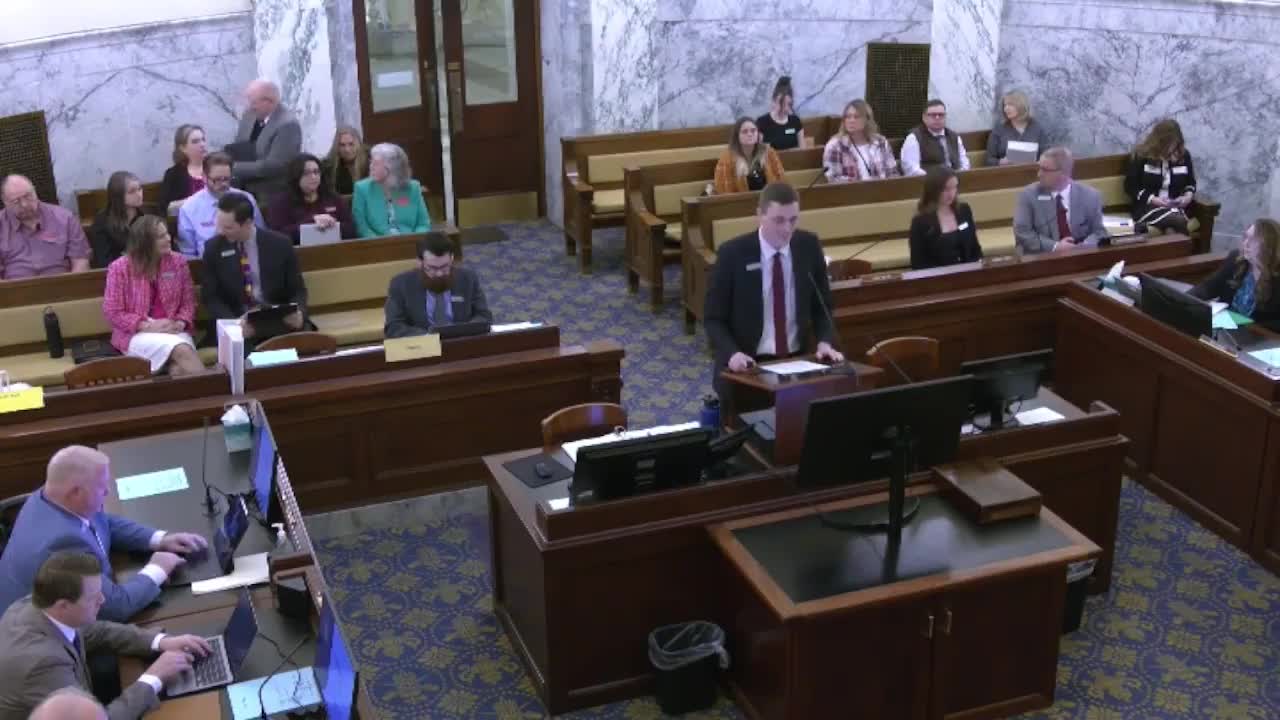
The Commission on Aging, represented to the committee by Colin McGurkin of the Legislative Services Office and Director Judy Taylor, told lawmakers the agency has used federal ARPA and other federal funds for service modernization — including meal programs, caregiver supports and a pilot to expand community health workers — and seeks one-time and limited ongoing state support to close out expiring federal awards and cover inflation.
McGurkin, a budget and policy analyst with Legislative Services, told the committee that the commission has used a recurring pattern of one-time federal appropriations from ARPA in FY2022–FY2024 and has recorded about $7,400,000 in ARPA-related expenditures tied to those awards. He said FY2024 expenditures for the agency totaled about $16,700,000, with trustee and benefit payments representing roughly 88% of that amount (about $10,400,000 in federal funds plus about $4,200,000 in general-fund payments to local Area Agencies on Aging). McGurkin also said the agency requested a $1,800,000 one-time federal appropriation in FY2025 to utilize remaining ARPA balances before the federal deadline of Sept. 30, 2025.
Director Judy Taylor said the agency has used ARPA funding for a variety of time-limited enhancements, including targeted caregiver education and outreach, COVID-related services, adult protective services enhancements, a pilot to support unpaid caregivers of people with dementia, and meal-program modernization. Taylor told the committee some services paid by ARPA will end when the federal money expires — for example, memberships and virtual-conference access for adult-protective-services staff — and that the agency has followed guidance to use one-time money on one-time needs.
Taylor described how ARPA-funded community health workers were embedded in each local Area Agency on Aging to conduct assessments and planning for a high-risk caregiver pilot. "Those workers will stay," Taylor said, adding that the agency expects to sustain core staff costs but may reduce respite-hour allocations when one-time funds are exhausted.
The commission's budget request and the governor's recommendation align on a $162,600 ongoing general-fund increase for FY2026 to cover inflationary costs. McGurkin said about $155,000 of that request would fund a 3% increase in trustee-and-benefit payments to the local AAAs; the remaining $7,600 would cover a 2% rise in the commission's operating expenditures. Taylor also noted a FY2025 ongoing addition of 1.0 FTP and $76,700 general fund for a financial specialist to improve timeliness and accuracy of reports, and an $805,000 general-fund allocation in FY2025 for nutrition programs to reduce waitlists.
On one-time requests, McGurkin described a federal one-time request of $500,000 to pay final invoices and draw down remaining ARPA funds before the federal expiration; he said $450,000 would go to AAAs for final invoices covering supportive services, meals, caregiver assistance, adult protective services and the public-health workforce pilot, and $50,000 would cover staff time and modest operating needs such as training materials and website updates. Vicki Janzick, project manager for the commission, explained that $25,000 of the $50,000 would be charged to federal grants to reimburse staff time spent processing invoices and contracts rather than shifting that work onto other federal funding sources.
Committee members asked about programs that could lapse when ARPA funds end, the nature of the caregiver pilot, and how much of current staffing is paid with ARPA. Taylor said the agency budgeted to avoid creating ongoing obligations with one-time funds and that some enhancements (for example, paying staff association memberships) will cease when ARPA funds expire. She also said the Commission has reported it currently has no meal-delivery waitlists after last year’s appropriation increased meal rates by $0.25 and funded efforts to reduce waiting lists.
The commission cited the federal Older Americans Act and the Idaho Senior Services Act as the statutory bases for its work and said its core mission is to maintain community-based services that keep older Idahoans safe and healthy in their communities.
The committee did not take an immediate vote on the commission’s requests during the Feb. 24 hearing; staff indicated they would provide follow-up detail on some spending questions raised by members.