Get Full Government Meeting Transcripts, Videos, & Alerts Forever!
Get email alerts on the Long Term Care Surveillance topic
No spam. Unsubscribe anytime.
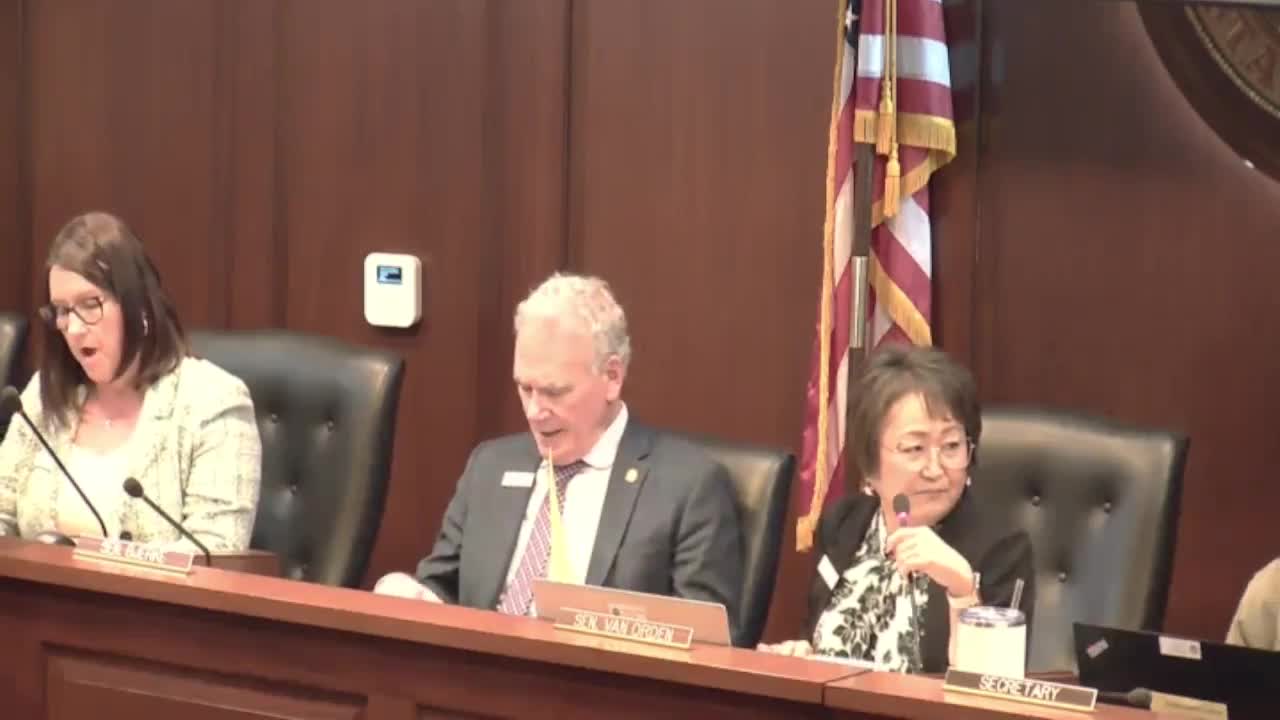
Senate committee advances bill allowing residents or guardians to install cameras in private care apartments
Summary
The Senate Health and Welfare Committee voted to send House Bill 337 to the floor with a due-pass recommendation after a lengthy hearing in which supporters said cameras can protect vulnerable residents and industry representatives warned about privacy, staffing and legal risks.
Representative Dory Healy, R.-District 15, told the Senate Health and Welfare Committee that House Bill 337 would let a resident, a resident's guardian or a health-care agent authorize installation and use of an electronic monitoring device inside a resident's private room in a residential care facility.
The bill, Healy said, responds to constituent concerns about abuse in long-term care settings and would be optional — placed by the resident or an authorized person and paid for by the resident or family. "Who are we protecting? Are we protecting staff or are we protecting our most at-risk adults? That's my concern here," Healy said during closing remarks.
Healy cited national studies and advocacy-group findings in her opening statement, and told the committee that lawmakers in about 10 other states have adopted similar provisions allowing in-room monitoring when families or residents request it.
Industry witnesses opposed the bill in its current form. Elizabeth Sonnichsen, deputy general counsel for Pinnacle Senior Living, said the measure is "overbroad" because it could prevent facilities and staff from reviewing footage when an allegation arises. "If a complaint is raised against one of our facility staff and there's footage of that, I believe that this bill is so overbroad that it disallows our care staff from viewing the footage," Sonnichsen said.
Cody Bennett, regional administrator for Grace Assisted Living, told the committee his company allows cameras under written agreements but said the bill lacks clear language on consent, notice to facilities and protections for residents who lack decision-making capacity. "How are we defining authorization for the use of this bill? Are we defining it as consent? If we are defining authorization as consent, shouldn't the resident always be required to consent prior to the use of a recording device?" Bennett asked.
Monica Heath, executive regional nurse for Grace Assisted Living, said staff morale and recruitment could suffer if caregivers must work under permanent in-room surveillance. "How many people are going to want to work underneath a camera?" she asked, saying the policy could worsen staffing shortages.
Robert Van der Merwey, executive director of the Idaho Health Care Association, also raised privacy and dignity concerns and questioned practicalities around covering "intimate body areas" during routine care. He described approaches used by other facilities, including cameras that provide only body outlines to detect falls while not showing sensitive details.
Committee members probed several practical issues during debate: whether the guardian may authorize a camera for a resident with dementia (Healy said the bill allows a resident, guardian or health-care agent to authorize installation), who pays for cameras (testimony indicated families typically pay), whether facilities may require that residents have private rooms (Healy noted the bill specifies single-occupancy placement), and whether facilities could refuse service (Healy said the bill would require facilities to allow such monitoring and that policy standards would be set by facilities for placement and coverage).
After testimony and discussion, Senator Blaylock moved to send the bill to the floor with a due-pass recommendation. The motion passed; Senators Harris, Shippey and Wintrow were recorded as voting no. The committee recorded no further roll-call of individual yes votes on the record.
Proponents said the change would give families an optional tool to monitor care and document alleged abuse; opponents warned the statutory language as written could create privacy violations, increase legal exposure and raise operational costs that could be passed to residents. Committee members expressed mixed views and said they were struggling with the competing concerns of resident safety and staff privacy.
Representative Healy asked that the committee send the bill to the floor.
Outcome and next steps: The committee advanced House Bill 337 with a due-pass recommendation. If the bill proceeds, sponsors and stakeholders are likely to negotiate language on consent, access to footage, camera specs and procedures for intrusive care events before floor debate.