Get Full Government Meeting Transcripts, Videos, & Alerts Forever!
Get email alerts on the Legislative Audits topic
No spam. Unsubscribe anytime.
Legislative auditors report many uncorrected findings, warn of delayed statewide audits after late financial statements
Summary
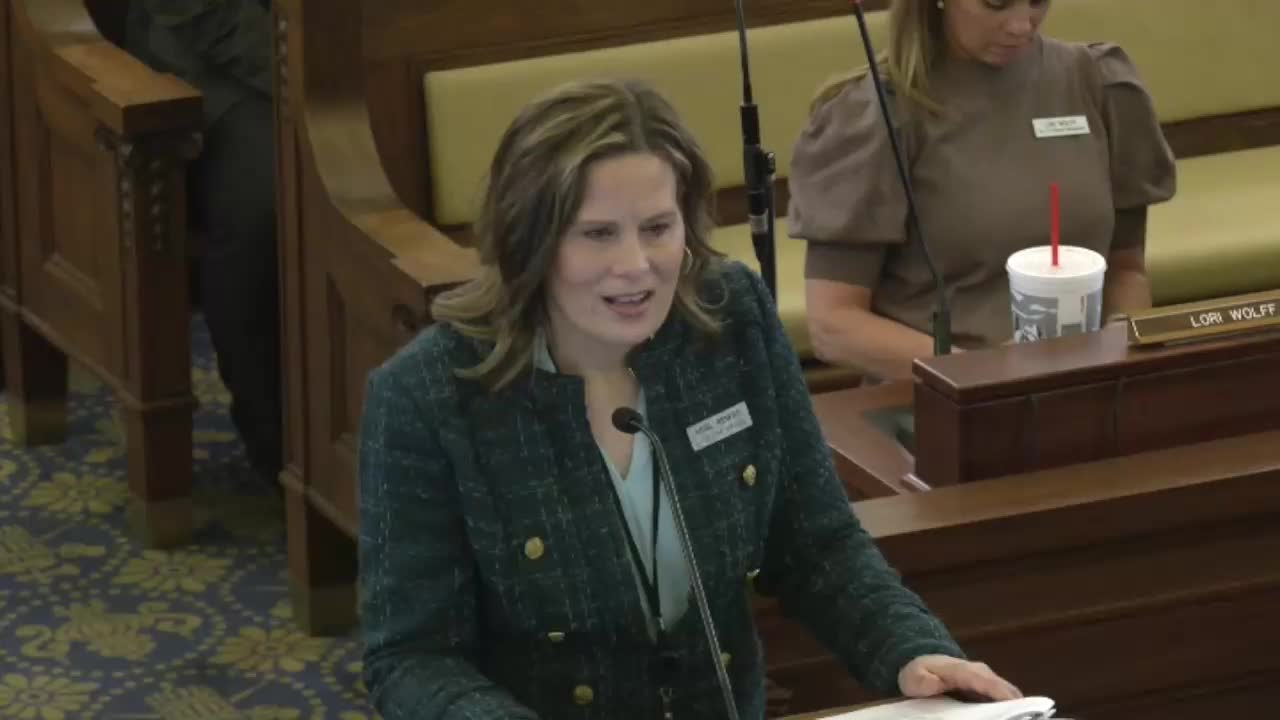
April Renfro, director of Legislative Audits at the Legislative Services Office, told the Joint Finance and Appropriation Committee on Jan. 7 that the audit division has dozens of open findings and expects to miss statutory deadlines for the statewide financial statement audit and the federal single-audit because the State Controller’s office provided financial statements too late.
April Renfro, director of Legislative Audits at the Legislative Services Office, told the Joint Finance and Appropriation Committee on Jan. 7 that the audit division has dozens of open findings and expects to miss statutory deadlines for the statewide financial statement audit and the federal single-audit because the State Controller’s office provided financial statements too late.
The finding count matters because the division’s reports inform appropriation and oversight decisions: “We complete the audit of the annual comprehensive financial report each year,” Renfro said, and the division must report uncorrected findings annually to the Legislature so lawmakers can “work with the agency on solutions.”
Renfro described how the audit shop is organized and how it follows standards. The office has 30 financial and IT auditor positions and one administrative assistant and plans roughly 28 reports a year, she said. Audits fall into several types: the annual audit of the state’s comprehensive financial report (ACFR), the single audit of federal awards (SEFA), recurring accountability reports of individual agencies and special agreed‑upon procedures.
Renfro told the committee that the office is required to complete the audit of the ACFR after the State Controller submits financial statements (typically due Dec. 31 and statutorily submitted to the governor and Legislature by Jan. 1) and that the single audit generally is due by March 31. She said the audit office received the controller’s draft financial statements on Dec. 30 — a day before the audit office’s work was due — and that late delivery has pushed the audit timeline. “We knew they would be delayed this year…we didn't receive them until December 30,” she said, adding that the office currently estimates completing the ACFR audit in March and that the single‑audit deadline is likely to be missed.
Renfro said most uncorrected findings are recent. The office’s annual uncorrected findings report covers the prior four years; currently about 70% of the uncorrected findings are from the current reporting period and therefore have not yet gone through follow‑up testing, she said. “We really only have 30% that the entities have not been able to get their findings corrected in a reasonable amount of time,” Renfro said. She described the audit division’s three‑step follow‑up for accountability reports: a 90‑day visit, a first annual follow‑up and a second annual follow‑up, with status classifications of corrected, partially corrected or uncorrected.
Renfro highlighted examples she described as higher‑risk findings. In an accountability report for the Department of Fish and Game (FY2020), auditors found noncompliance with state travel policy because of missing or incomplete travel vouchers and missing receipts; the finding moved from “partially corrected” to “uncorrected” in follow up when auditors could not verify improvements during the agency’s transition to the LUMA accounting system. On the Department of Health and Welfare FY2023 accountability report, auditors tested 19 Qualified Residential Treatment Program (QRTP) placements and reported multiple documentation shortcomings: auditors found that 10 of 19 had no documented placement assessment, some records lacked required details (identified in testimony as 5%), about 21% lacked a retrievable court order, 5% were not documented as placed within 60 days, 84% did not retain required notice of placement filings with the court, and 42% did not have evidence of required 30‑day case consultations. Renfro described these as qualitatively significant because they involve children in state care.
She also flagged systemic information‑technology control weaknesses and internal‑control problems that increase the risk of undetected errors. In the FY2023 single audit, she said, auditors found that the Low Income Home Energy Assistance Program (LIHEAP) benefit matrix did not have a documented review and approval process; while no errors had been identified, the absence of a documented review increases the risk that a mistake could go unnoticed.
Committee members asked about consequences when agencies disagree with findings. Renfro explained that disagreements are uncommon but can occur, particularly with complex federal requirements; when they do, the dispute can be escalated to the federal grantor for resolution and, in rare past cases, auditors have rescinded findings based on federal input. Co‑chairs noted that, in a few instances, the Legislature withheld funds until agencies enacted corrective action plans.
Renfro said the audit office will issue its uncorrected findings report to the committee the same day. She urged lawmakers to use the report to identify open issues tied to agency budgets and to follow up in work groups. “Seventy percent of our uncorrected findings are from the current reporting period,” she said, and the office will continue its follow up testing to validate agency corrective actions.
The audit director and committee members discussed communication with federal grantors about the likely late single audit. Renfro said she planned to reach out to the federal cognizant agency — Health and Human Services — to explain the expected delay and to determine if additional steps are needed.
Renfro closed by noting that some findings require only modest internal‑control changes while others have resulted in criminal investigations in recent years; she said the audit office pursues the appropriate response based on the issue.
The audit office stood for questions and committee members pressed staff to review open findings in their work groups as they prepare for budget deliberations.