Get Full Government Meeting Transcripts, Videos, & Alerts Forever!
Get email alerts on the Bioethics topic
No spam. Unsubscribe anytime.
Idaho committee rejects resolution reaffirming Nuremberg Code as research standard
Summary
Senate Concurrent Resolution 104, which would have reaffirmed the Nuremberg Code as the foundation for ethical research in Idaho, failed in committee after extended debate over its references to international declarations and the need for new language beyond existing protections.
Senate Concurrent Resolution 104, which would have reaffirmed the Nuremberg Code as the foundation for ethical medical and scientific research in Idaho, failed in committee after debate about scope and international references.
Sen. Tammy Nichols, R-District 10, introduced SCR 104, telling the committee the resolution "reaffirms Idaho's commitment to ethical medical and scientific research by recognizing the Nuremberg Code as the foundation for protecting human rights." She cited the Nuremberg Code's origins after World War II and named historical abuses — the Tuskegee syphilis study, Willowbrook hepatitis research and the Guatemala syphilis experiments — as reasons Idaho should restate basic protections like voluntary consent and transparency.
The resolution text says it is advisory only and imposes no fiscal impact.
Supporters framed the measure as a preventative, foundational statement. "We want to go back to the basics," Nichols said, arguing the resolution would emphasize informed consent, transparency and protection of vulnerable people as science evolves.
Opponents focused on references to foreign and international declarations cited in the resolution and on whether existing U.S. and state protections already cover the concerns raised. "I don't know why we would adopt foreign declarations and research versus Idaho and America," Sen. Melissa Wintrow said, questioning the utility of citing United Nations organizations. Sen. Dan Shippey asked why the Nuremberg Code should be treated as the definitive standard and whether Idaho should instead set its own principles.
Other senators also linked the measure to recent distrust arising during the COVID-19 pandemic. Sen. Blaylock said he supported ethical protections but rejected an equivalence between modern pandemic responses and the atrocities that prompted the Nuremberg Code: "COVID was bad. People lost their jobs. People got hurt from the vaccine. I understand that. But to say that it's the same, I don't see it at that level." Nichols responded that her point was about public distrust and the need to emphasize foundational principles going forward.
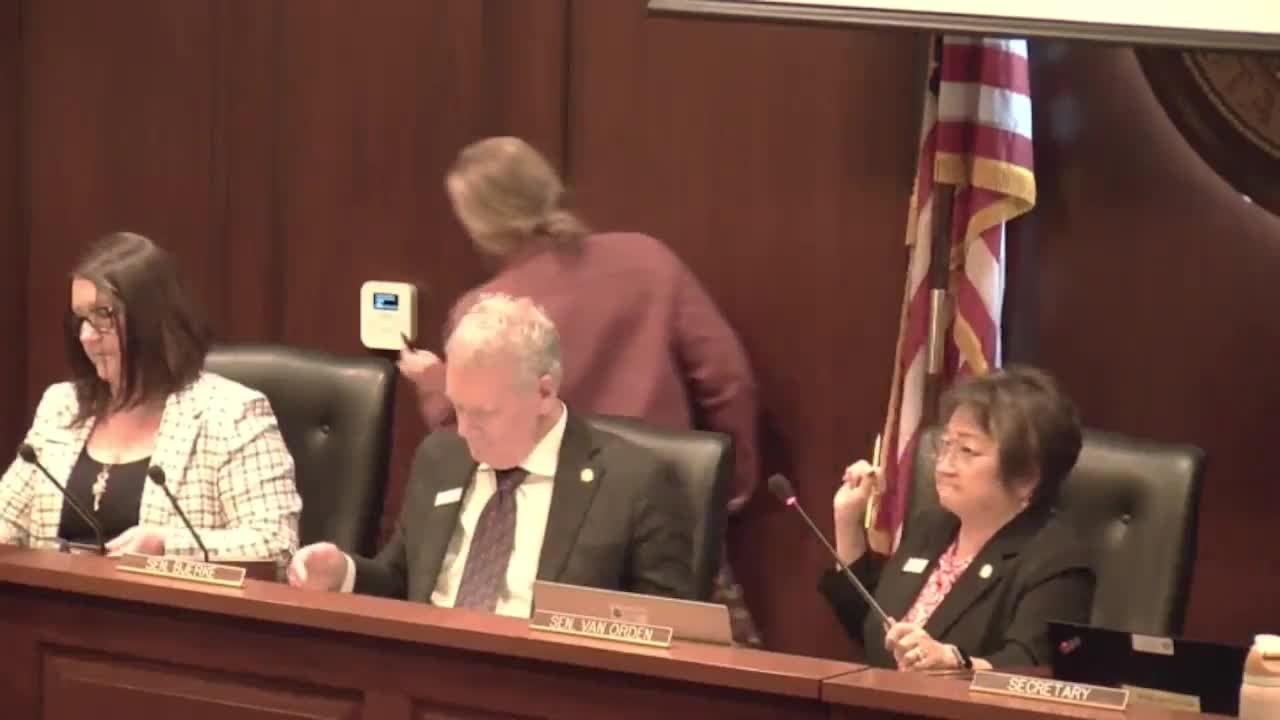
Following discussion, Senator Keiser moved to send SCR 104 to the floor with a "do pass" recommendation; the motion was seconded. The committee conducted a roll call. The chair announced "3 ayes and 6 nays" and declared the motion failed.
The committee record shows the measure was advisory only and would not have changed Idaho law or created new regulatory authority had it passed. The resolution drew extended debate this session because members differed on whether reaffirming historical international ethics instruments helps restore public trust or risks endorsing foreign declarations that some senators oppose.
Votes at a glance: motion to send SCR 104 to the floor (do pass) — failed in committee, roll-call result reported as 3 ayes, 6 nays.