Get Full Government Meeting Transcripts, Videos, & Alerts Forever!
Get email alerts on the Scholarships And Grants topic
No spam. Unsubscribe anytime.
Scholarships and grants program seeks funding for educator-incentive expansion and permanent software support as officials promise performance data
Summary
Legislative analysts and the Office of the State Board of Education told the Joint Finance-Appropriations Committee the Scholarships and Grants program is mostly trustee payments for scholarship recipients. The office requested $1.375 million for the rural and underserved educator incentive program and funding for a permanent
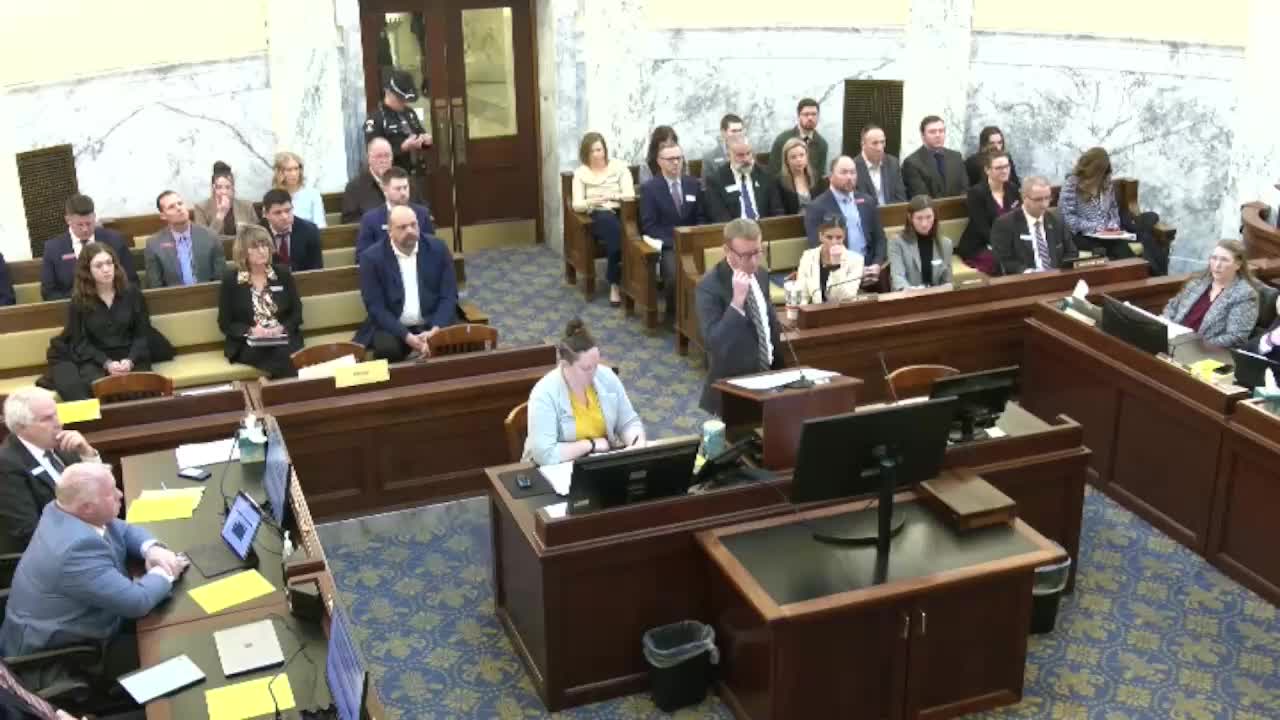
Kevin Campbell, budget and policy analyst with the Legislative Services Office, presented the Scholarships and Grants program budget housed in the State Board of Education. He emphasized that trustee-and-benefit payments—scholarships and grants—comprise about 99.5% of the program’s spending, with personnel accounting for about 0.5%.
Campbell said spending is timing-sensitive because award cycles do not align perfectly with the state fiscal year and can vary depending on applicant numbers and federal grant timing. The program administers multiple awards, including the Opportunity Scholarship, the Armed Forces and Public Safety Officer Scholarship, GEAR UP, Idaho Work Study, and the Brighter and Underserved Educator Incentive program (sometimes referenced as the rural/underserved educator incentive).
Director Josh Whitworth of the State Board of Education told the committee the board has absorbed some operational work in other budget areas and that scholarship-related customer service and database work relies on team members whose costs are borne elsewhere in the board’s budget. Whitworth and analysts requested $1,375,000 in FY2026 funding for the Brighter and Underserved Educator Incentive program and a software-engineer position to maintain scholarship application systems, citing a backlog of database maintenance and security work and the need for long-term staff capacity to manage public user interfaces.
Members asked about outcomes and performance measures. Whitworth said the board will supply data on program outcomes, including student recipients, program completion and retention of educators receiving incentive awards. Committee members asked that the office provide district-level detail—where the educator incentive dollars were used, counts of participants, and retention data—so lawmakers can evaluate recruitment and retention effects in rural and underserved districts.
Ending: The board agreed to provide performance data and district-level breakdowns for the educator-incentive program and to return data on the Opportunity Scholarship and Launch program effects on enrollment. Lawmakers flagged the need for clearer outcome measures before approving ongoing expansion funds.