Get Full Government Meeting Transcripts, Videos, & Alerts Forever!
Get email alerts on the Medicaid Budget topic
No spam. Unsubscribe anytime.
Idaho Medicaid budget grows amid pandemic fallout, provider rate changes and hospital assessment adjustments
Summary
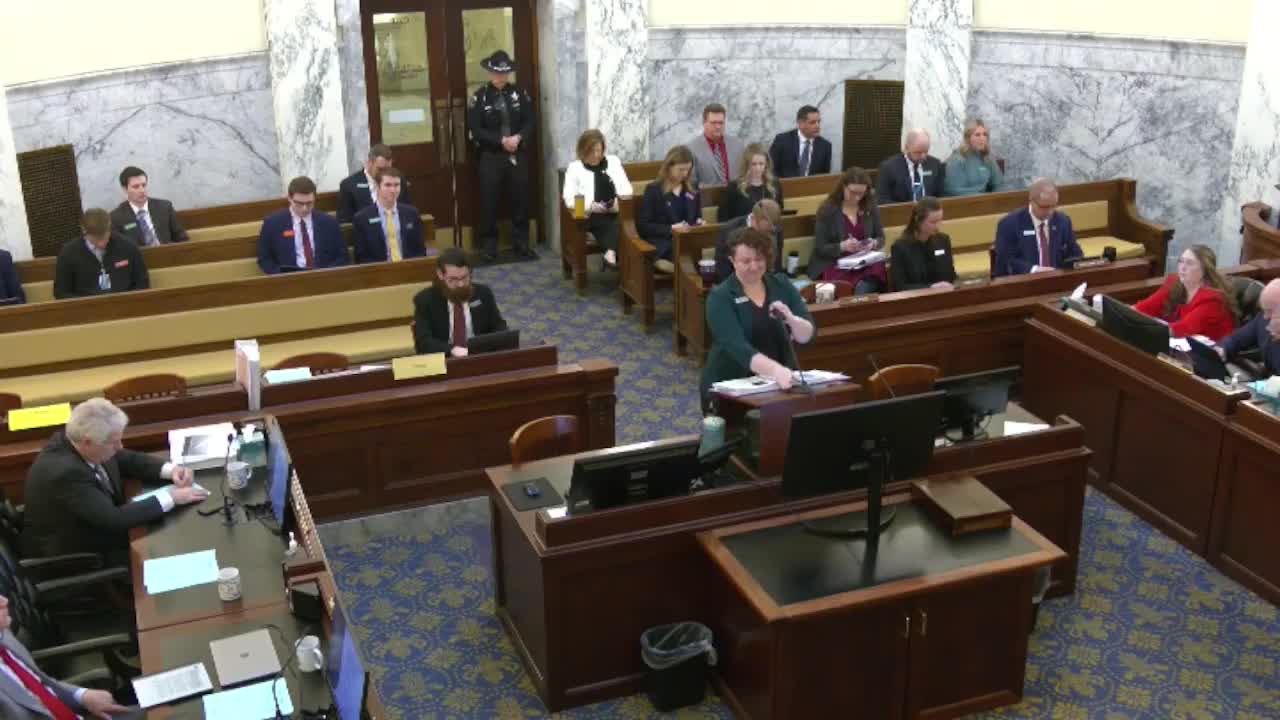
The Joint Finance-Appropriations Committee heard a detailed briefing Feb. 26 on the Division of Medicaid’s budget, including multiple supplementals and 2026 enhancement requests that together reflect rising costs driven by the 2020 Medicaid expansion rollout, provider rate increases and changes to how the state calculates hospital reimbursements.
The Joint Finance-Appropriations Committee heard a detailed briefing Feb. 26 on the Division of Medicaid’s budget, including multiple supplementals and 2026 enhancement requests that together reflect rising costs driven by the 2020 Medicaid expansion rollout, provider rate increases and changes to how the state calculates hospital reimbursements.
Alex Williamson, budget and policy analyst with Legislative Services, told the committee the division administered five budgeted programs and that the expansion plan — adults up to 138% of the federal poverty limit, which began in January 2020 — is a major driver of costs. “This will probably feel like information overload,” Williamson said as she began her presentation.
Why it matters: Idaho Medicaid appropriations have increased significantly in recent years; of the $4.56 billion appropriated for fiscal 2024, the division expended about $4.27 billion, Williamson said. Most spending — more than 98% in fiscal 2024 — is for trustee and benefit payments. Williamson said different beneficiary groups drive costs differently: the basic plans make up roughly half the caseload but only about 19% of costs, while coordinated and enhanced plans (elderly and disabled populations) represent roughly 20% of enrollees and about 57% of costs because of higher acuity.
Williamson outlined five supplementals recommended by the governor and several ongoing enhancement requests. Supplementals included roughly $1.35 million (noted as both $1.3 million and $1.35 million in the briefing) to meet a Centers for Medicare & Medicaid Services requirement for an external quality review of managed care plans; funding to complete system configurations to onboard a new vendor for the Idaho behavioral health plan; a capitation rate increase split across plans that Williamson listed in the budget book; and a $190 million request tied to hospital assessment accounting changes (about $77 million from the hospital assessment fund and $113 million federal funds).
Williamson also described a $367 million population forecast adjustment rolled into the enhancement request for 2026, which includes a roughly $45 million shift from federal funds to the state general fund because of a change in Idaho’s federal medical assistance percentage (FMAP). She gave examples of 2025 poverty guideline thresholds used for expansion eligibility: a single person’s annual limit of about $21,597 and $44,367 for a household of four.
Director Alex Adams of the Department of Health and Welfare told the committee he had sought a maintenance-level budget and framed many requests as “needs not wishes,” citing federal requirements and court-ordered settlements that the department must implement. “I submitted as close to a maintenance budget as I could submit,” Adams said, adding that continued caseload growth, utilization changes and pricing dynamics are primary upward pressures.
Several legislators asked whether policy changes or executive-branch cost-containment measures were being pursued. Adams said the department is not a policy-making body and that the legislature would need to shape policy options; he said the department previously provided policy committees with “a menu of cuts” and that Medicaid forecasting carries inherent uncertainty. Committee members repeatedly returned to the hospital assessment and FMAP shifts as key levers affecting near-term state costs.
The department said it will publish more frequent forecasting ranges going forward and a monthly Medicaid transparency report so legislators can monitor spending relative to forecasts. Williamson and Adams urged members to consult supplemental slide decks on the committee’s SharePoint for technical breakout tables and further line-item detail.
Ending note: The committee did not take formal action during the presentation; lawmakers signaled they will scrutinize the supplementals and enhancements in coming budget deliberations and asked for follow-up details on several line items.