Get Full Government Meeting Transcripts, Videos, & Alerts Forever!
Get email alerts on the Medicaid Budget topic
No spam. Unsubscribe anytime.
Idaho Medicaid budget rises as caseload, provider rates and FMAP shifts drive supplemental requests
Summary
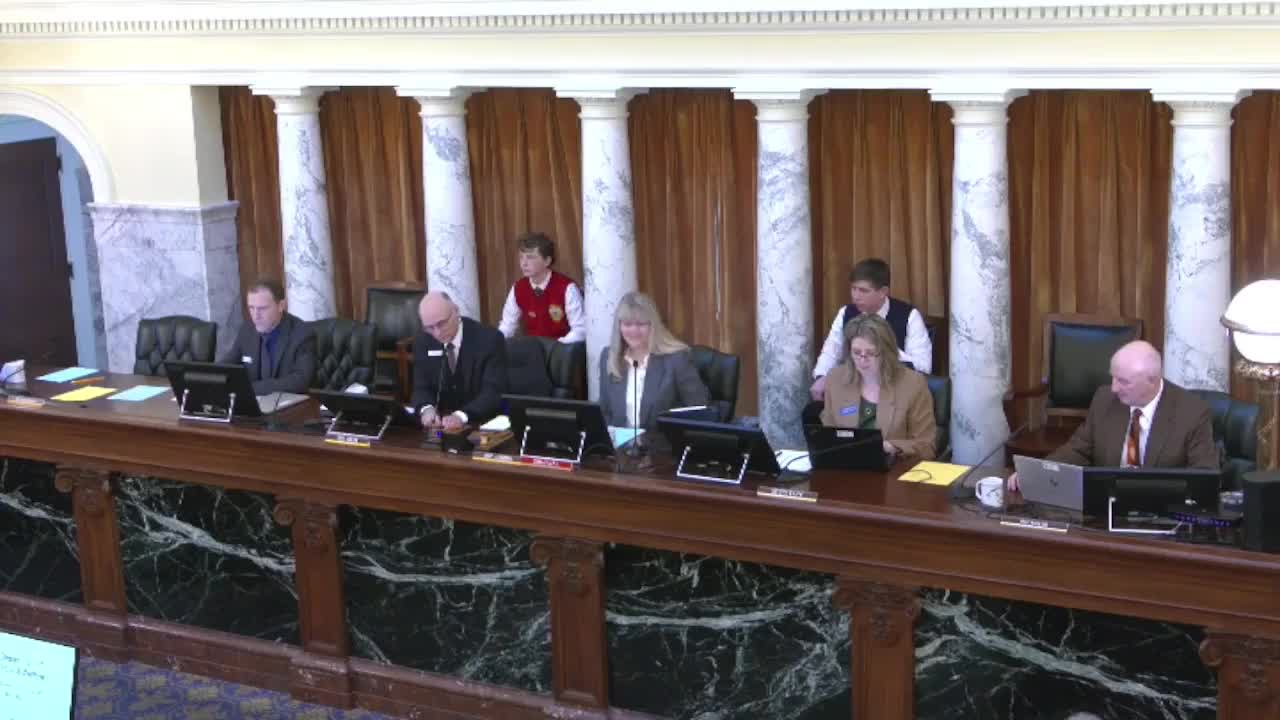
Alex Williamson, budget and policy analyst with Legislative Services, told the Joint Finance‑Appropriations Committee on Feb. 26 that Idaho’s Division of Medicaid expended about $4.27 billion in fiscal 2024 and that most spending is for benefit payments.
Alex Williamson, budget and policy analyst with Legislative Services, told the Joint Finance‑Appropriations Committee on Feb. 26 that Idaho’s Division of Medicaid expended about $4.27 billion in fiscal 2024 and that most spending is for benefit payments. “Of the $4,270,000,000 expended, trusting benefit payments made up over 98% of that,” Williamson said.
Williamson outlined five supplemental requests in the governor’s recommendation and a package of 2026 enhancements. She said the department’s budget shows a “lot of moving parts,” citing provider rate increases adopted in 2022, changes to upper payment limit calculations, the lingering effects of the COVID public‑health emergency and population growth.
The analyst also described the population mix driving costs: basic adults and children make up about 51% of participants but account for roughly 19% of costs, while coordinated and enhanced plans—covering elderly and disabled populations—represent about 20% of participants but about 57% of expenditures because of higher acuity.
Director Alex Adams, Department of Health and Welfare, told the committee the department sought a maintenance‑level budget and did not request benefit expansions or new provider rate increases in the package it submitted. “I submitted as close to a maintenance budget as I could submit. I didn’t ask for any policy adjustments,” Adams said, adding that entitlement rules and federal‑state program structure limit the department’s discretion.
Officials emphasized forecasting uncertainty. Williamson and Adams said the state relies on population forecasts and external actuarial inputs (the Milliman report was cited as the 2018 forecasting source used at launch of expansion), and that unanticipated events—including a pandemic coinciding with the January 2020 launch of Medicaid expansion—contributed to higher costs than originally projected.
Committee members pressed how forecast changes flow into the budget. Williamson said population forecast adjustments and FMAP (federal medical assistance percentage) shifts are part of the enhancement totals for 2026; she told the committee the FMAP change would shift about $45 million from federal funds to the general fund. Adams noted that if the special 90/10 expansion match were reduced toward a traditional match, “If that happened today, that would shift more than $200,000,000 to the state general fund away from federal fund.”
Williamson listed specific supplemental items in the governor’s recommendation, including a federally required external quality review (EQR) supplemental (analyst cited amounts of about $1.3 million–$1.35 million), a request tied to Idaho Behavioral Health Plan system configuration (roughly $695,500 one‑time), a capitation rate increase (about $108.8 million one‑time federal), and a hospital assessment related supplemental of roughly $190 million (about $77 million from the hospital assessment fund and $113 million federal) tied to the 2022 change in upper payment limit methodology (Senate Bill 1350, 2022).
Adams and Williamson said supplementals reflect expenses already incurred or federal requirements; they warned that because Medicaid is an entitlement program, under‑forecasting results in supplementals while over‑forecasting would produce year‑end reversions. Adams said the department will publish ranges (baseline, pessimistic, optimistic) and a monthly Medicaid transparency report to give earlier signals to lawmakers.
What’s next: Committee members asked for follow‑up materials, including details on postpartum coverage, the department’s menu of possible cost containment options previously provided to policy committees, and updated forecasts. Williamson and Adams said they would provide additional detail to the committee.