Get Full Government Meeting Transcripts, Videos, & Alerts Forever!
Get email alerts on the State Billing Administrative Hearings topic
No spam. Unsubscribe anytime.
Senate Finance committee gives due-pass recommendation to bill adding Office of Administrative Hearings to statewide cost allocation billing
Summary
The Senate Finance Committee voted unanimously to send Senate Bill 1116 to the Senate floor with a due-pass recommendation. The bill would add the Office of Administrative Hearings to the Statewide Cost Allocation Plan (SWICAP/SWICAP) billing process so the office can recoup allowable costs into the general fund.
The Idaho Senate Finance Committee voted to send Senate Bill 1116 to the Senate floor with a due-pass recommendation after a staff presentation and brief questions from senators.
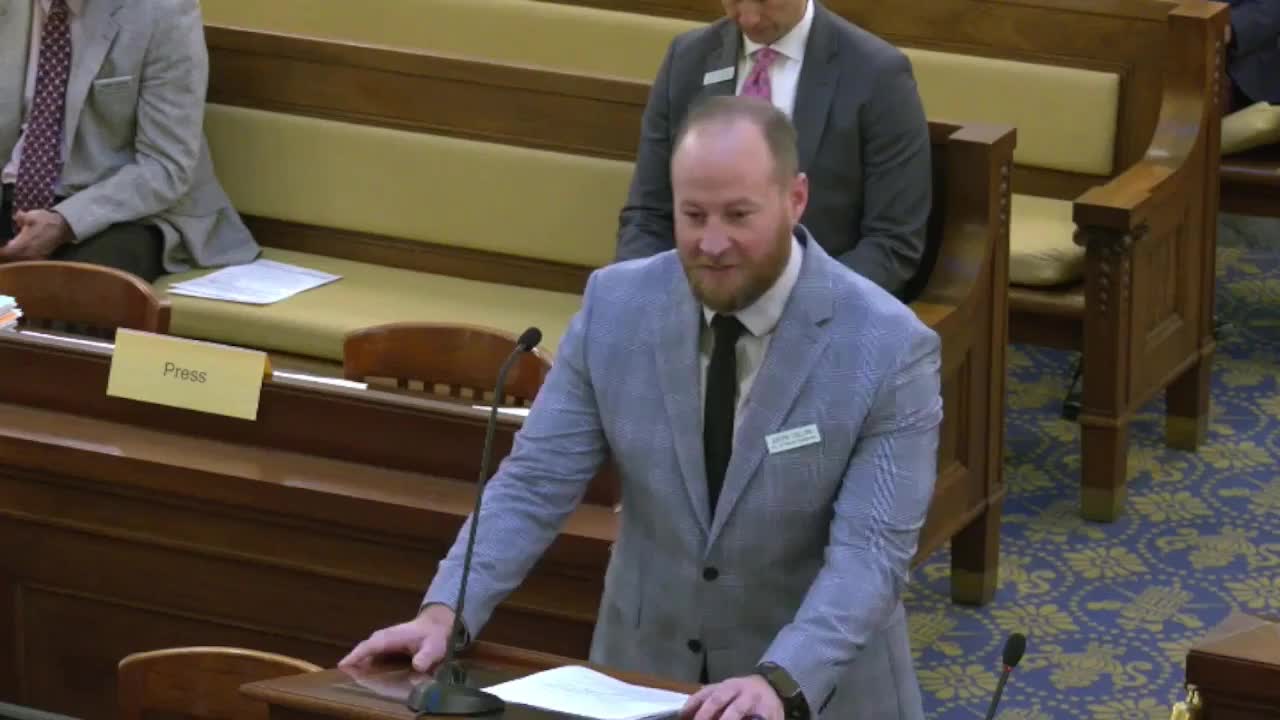
Justin Collins, state financial officer with the Division of Financial Management, told the committee that S1116 would change billing procedures for the Office of Administrative Hearings so the office could recoup allowable costs into the general fund through the Statewide Cost Allocation Plan (referred to in the transcript as SWICAP/SWICAP). Collins described three main components: adding the Office of Administrative Hearings to the group of generally funded agencies that are billed through the statewide cost allocation; repealing language specific to the current billing structure (referred to in the hearing as "60 seven-fifty two-eighty 5"); and adding language to that same statutory section to require the Office of Administrative Hearings to work with the Division of Financial Management to include the office's billings in the SWICAP budget for the next year.
Collins said the change would align the Office of Administrative Hearings' billing with the current practice used for the attorney general's office, the treasurer and the controller, where DFM recoups allowable costs after budgets are passed and allocates them to the agencies that received the services.
Senator Wintrow asked whether the statewide cost allocation covers legal counsel and services through the Attorney General's Office, and expressed concern about the attorney general's office capacity to handle all requests across state agencies. Collins said DFM handles the allocation and billing process and deferred capacity questions to the Attorney General's Office.
Senator Janie Ward Engle King moved to send S1116 to the Senate floor with a due-pass recommendation; the motion was seconded (as recorded in the transcript). The committee then conducted a roll-call vote called by committee staff. The roll call in the record resulted in all yes votes, with ten senators recorded as voting aye. The committee clerk announced the bill passed the committee unanimously and it will move forward to the Senate with a due-pass recommendation.
Collins also clarified that the Office of Administrative Hearings would only budget and bill for agencies it serves: "only the agencies that they serve budget and bill for. Same would be for office administrative hearings. They would only budget for those that they're serving and then only bill for those that they're serving," he said. The committee did not record any amendments or further substantive debate on the bill during the session.
The bill will next appear on the Senate calendar for full consideration; appropriations or other funding effects would be handled later in the legislative process if the bill advances.