Get Full Government Meeting Transcripts, Videos, & Alerts Forever!
Get email alerts on the Juvenile Corrections Budget topic
No spam. Unsubscribe anytime.
Juvenile Corrections requests radios, treatment funding as youth mental-health needs rise
Summary
The Idaho Department of Juvenile Corrections told the Joint Finance-Appropriations Committee it is seeking one-time and ongoing funding for radio upgrades, substance use disorder residential treatment and IT replacements while reporting rising mental-health needs and a modest increase in facility census.
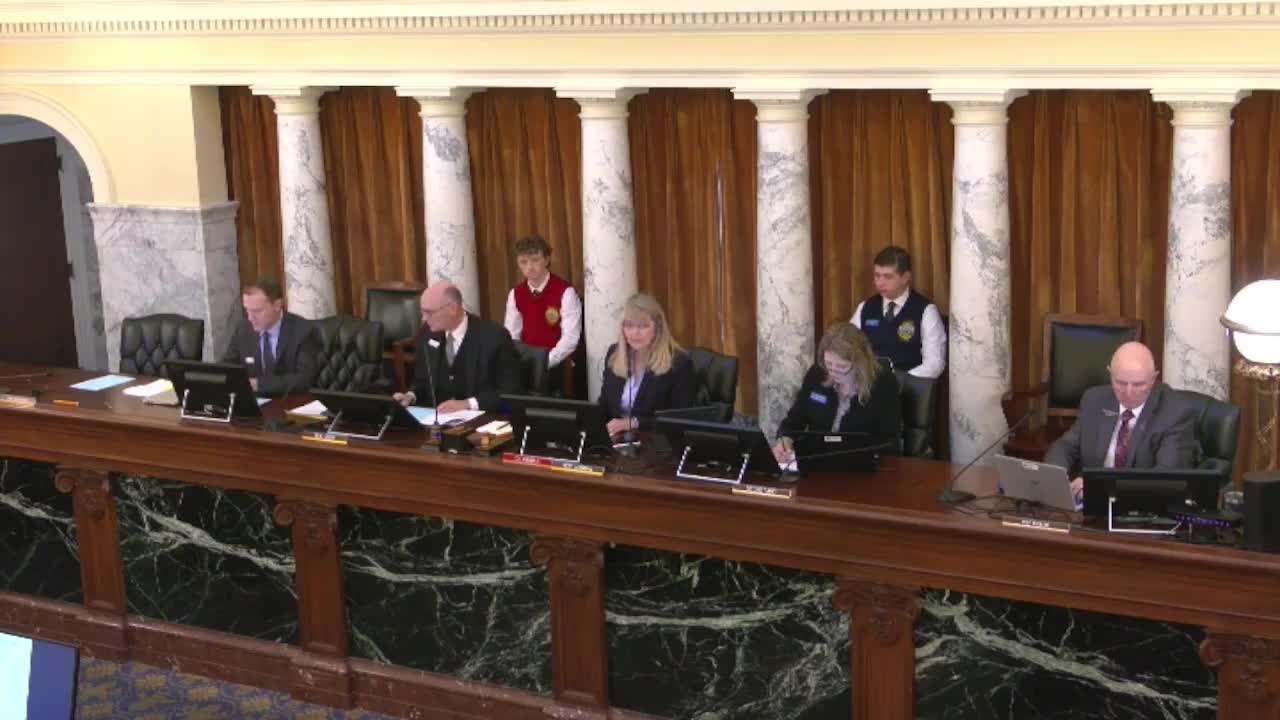
Boise — The Idaho Department of Juvenile Corrections told the Joint Finance-Appropriations Committee on Feb. 18 that it is seeking several budget changes including a $380,000 one-time radio upgrade, a $300,000 ongoing general-fund request to cover substance use disorder residential treatment, and IT replacement items while describing increased mental-health needs among youth in custody.
The requests were presented by Noah Peterson, budget and policy analyst for the Legislative Budget Office, and by Ashley Dowell, director of the Department of Juvenile Corrections (IDJC). Peterson said the radio request would be paid from the Juvenile Corrections Endowment Income Fund and would give all three state juvenile correction centers a ‘‘man down’’ capability and consistent programming across sites in Lewiston, Nampa and St. Anthony. He said the agency seeks $380,000 one-time to purchase and program radios.
Why it matters: committee members pressed the agency for data on whether population trends or one-time federal funding shifted costs, and asked the department to return with additional information. Director Ashley Dowell emphasized rising mental-health needs and an increase in self-harm and suicidal ideation among youth in custody as a primary operational concern.
Peterson outlined the agency's enhancement requests and recent budget history. He said the cost of the residential substance use disorder program doubled since 2021 — from roughly $198 per day to $399 per day — and the average length of stay rose from 31 days to 67 days, producing program costs that increased from about $1.26 million in FY2021 to about $2.7 million in FY2024. He told the committee the department had previously received short-term support from the Department of Health and Welfare using ARPA funds, and that IDJC's $300,000 request would replace funds Health and Welfare can no longer provide.
Director Dowell told senators and representatives she was ‘‘very grateful. We have an amazing, passionate, dedicated staff''They do tremendous work'and'they work really, really hard every day to help [youth] make better decisions and to successfully reunify with families and their communities when they are out of our custody.’’ She also said she is ‘‘concerned about just the level of mental health we're seeing in the youth with our facilities'particularly increases in suicidal ideation and self-harming behavior.’’
On population trends, Dowell said the department's in-custody census reached an all-time low in May 2024 at 137 youth and later rose to 176, which she said represents about a 19% increase from that low point. Committee members asked for more detailed population and flow data; Peterson said he would provide the committee with time-series figures and the agency agreed to follow up.
Members queried the department's youth crisis centers, which were created in prior budget cycles to divert youth from detention. Director Dowell said she could not provide immediate diversion counts but offered anecdotal examples of crisis centers stabilizing children under age 10 and older youth and diverting them from custody; she agreed to provide available data to the committee.
Other budget items included: - $145,100 requested from dedicated funds for replacement items (breakouts available in the legislative budget book), and a $232,500 request for IT hardware recommended by the Office of Information Technology Services (ITS). Peterson said the radio and IT items were recommended by the governor. - A net-zero shift of $675,100 from personnel costs to operating expenditures and a requested reduction of 7 FTP reflecting consolidation of some IT positions with the Office of Information Technology Services.
Committee action and follow-up: No formal fiscal actions or votes were taken during the hearing. Members directed staff to provide additional materials: population and flow data for youth in IDJC custody, a fiscal-impact review of the residential treatment cost increases, and utilization or diversion data for youth crisis centers. Director Dowell agreed to return to the committee with further analysis and potential policy ideas addressing the mental-health trends raised by members.
Context and limitations: Peterson noted a previous spike in appropriations tied to one-time supplementals and reappropriations related to case-management software and youth assessment and crisis centers, which makes multi-year trends in expenditures uneven. Several revenue streams were discussed (Juvenile Corrections Fund fees, cigarette and tobacco tax fund distributions for probation services, miscellaneous revenue and the Endowment Income Fund) and Peterson said detailed fund-source breakouts are in the legislative budget book slides.
Ending: Committee members thanked director and staff and asked them to return with the requested population, program and cost data. The committee moved on to its next agenda item, the Executive Office of the Governor.