Get Full Government Meeting Transcripts, Videos, & Alerts Forever!
Get email alerts on the Health‑care‑workforce topic
No spam. Unsubscribe anytime.
Senate committee advances bill to ease supervision for prescribing psychologists, add background checks
Summary
The Senate Health and Welfare Committee voted to send Senate Bill 1088 to the Senate floor with a due‑pass recommendation after sponsor testimony and clinicians said the measure would reduce supervision barriers for prescribing psychologists, broaden who may serve as collaborators, expand service‑extender eligibility and add an initial background check to comply with an interstate compact.
The Senate Health and Welfare Committee voted to send Senate Bill 1088 to the Senate floor with a due‑pass recommendation after the bill’s sponsor and several Idaho psychologists described the measure as a set of technical and access‑focused changes to the state’s psychology practice laws.
The bill’s sponsor, Senator Mark Harris, told the committee SB 1088 “improves and streamlines the practice of psychology in the state of Idaho by removing unnecessary barriers, deleting obsolete, redundant language, and making some other changes.” He said the proposal targets the supervision model for prescribing psychologists and other licensing technicalities.
Supporters said the most significant policy change would replace the current supervision agreement for provisional prescribing psychologists with a collaborative‑practice model. The change would allow provisional prescribers to form collaborative agreements with a broader set of experienced prescribers — including practice nurses, pharmacists, prescribing psychologists and physicians — rather than limiting supervision to a physician licensed in Idaho or an adjoining state. Sponsor testimony noted Idaho has had eight prescribing psychologists since the authorization took effect about eight years ago and argued the existing supervision regime has slowed growth in that workforce.
Presenters and witnesses described four main areas of change: 1) altering supervision for provisional prescribing psychologists to a collaborative agreement; 2) removing a permanent advisory panel for prescribing psychologists that supporters said had completed its work; 3) clarifying that graduate students enrolled in doctorate programs that do not grant a standalone master’s degree can qualify as service extenders (people who work under the supervision of a licensed Idaho psychologist); and 4) adding an initial background‑check requirement for new psychologist licenses to comply with PSYPACT, the psychology interjurisdictional compact. Proponents told the committee the background‑check requirement would not be retroactive for currently licensed psychologists.
Dr. Kendra Westerhouse, a licensed psychologist representing the Idaho Psychological Association, testified the service‑extender change will help underserved areas by allowing doctoral trainees from programs that do not award a standalone master’s degree to function under supervision. Dr. Lynn MacArthur said PSYPACT participation makes continuity of care easier for Idaho patients who travel or relocate, and that the background‑check requirement provides an additional safety element for families. Dr. Patrick Bartos, a prescribing‑psychology graduate who has not been able to practice because he could not secure a supervising physician, told the committee administrative and insurance barriers had prevented some physicians from agreeing to supervise provisional prescribers.
Lance Shiles, a contract lobbyist representing the Idaho Psychological Association, told the panel that the division of occupational and professional licenses had been consulted and raised no objection during drafting, and that he was unaware of organized opposition.
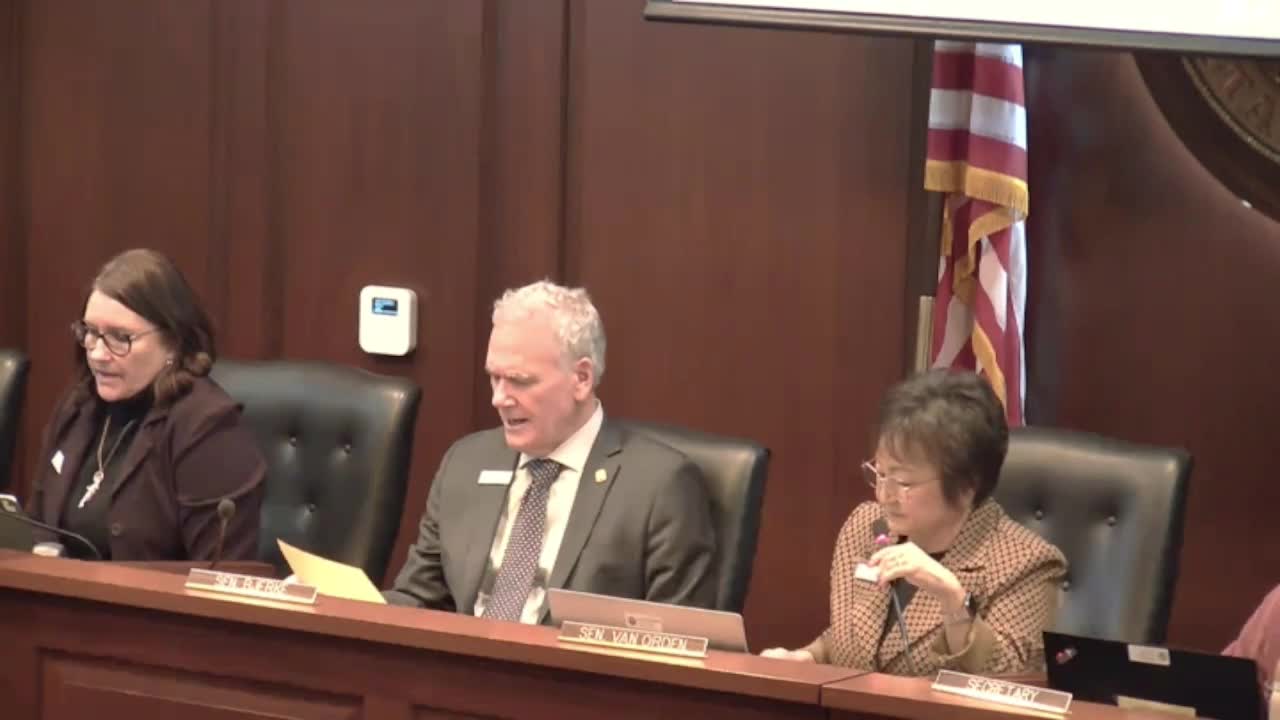
Senator Susan Wintrow and others praised the transparency of the bill packet and the drafts showing repealed language. After discussion and no roll‑call challenge, the committee moved and seconded a motion to send SB 1088 to the floor with a due‑pass recommendation; the motion carried on a voice vote.
Supporters told the committee they expect the bill to broaden access to trained prescribing psychologists while maintaining patient safeguards through collaborative agreements and the added background‑check provision. The measure also includes cleanup language removing obsolete statutes and eliminates an advisory panel that proponents said has fulfilled its original purpose.
The bill will be considered next by the full Senate. Committee testimony and sponsor remarks indicate further technical questions were answered during one‑on‑one briefings and in the bill packet; no organized opposition was recorded in the committee hearing.