Get Full Government Meeting Transcripts, Videos, & Alerts Forever!
Get email alerts on the Extended Foster Care topic
No spam. Unsubscribe anytime.
Senate committee backs extending foster‑care eligibility to age 23 and eases kinship licensing rules
Summary
The Senate Health and Welfare Committee voted to send House Bill 245 to the Senate floor with a due‑pass recommendation after hearing testimony from department officials, former foster youth and advocacy groups about extending voluntary foster care eligibility from 21 to 23.
The Senate Health and Welfare Committee voted to send House Bill 245 to the Senate floor with a due‑pass recommendation after a lengthy hearing that included department officials, former foster youth and nonprofit advocates.
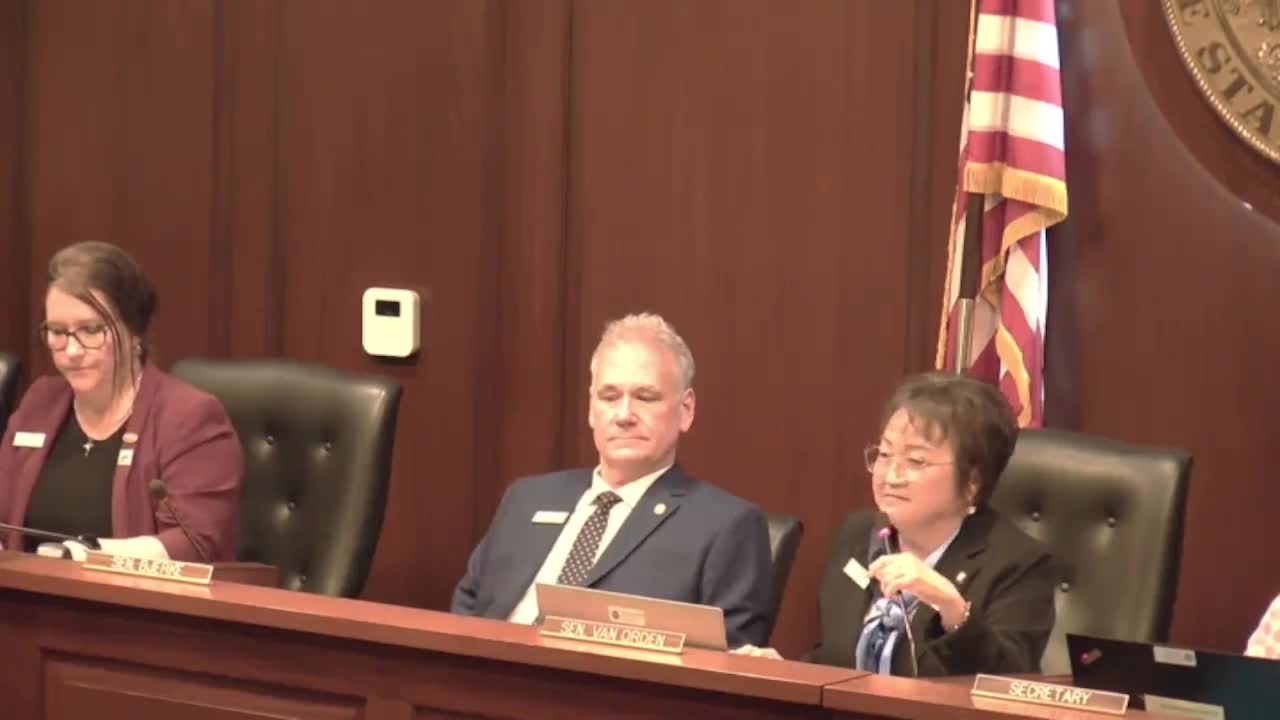
Senator Carl Bjerke, sponsor of the bill, said the measure would extend voluntary foster‑care services from age 21 to 23 and make it easier for relatives to receive expedited licensure or a limited variance to take a related child into foster care. "We're thinking about the return on investment ... research shows that extended foster care reduces food insecurity by 21%, homelessness by 19%, and arrest by 28%," Bjerke said, arguing that keeping young people in foster care longer can reduce later public costs.
Monty Prow, deputy director at the Department of Health and Welfare, described the practical services available under extended foster care. "If they voluntarily agree to be part of extended foster care, they have to be part of an independent living or transition plan," Prow said. He said case managers check in monthly, supports include help with employment, housing and Medicaid, and that youths living independently may receive about $876 per month; foster‑parent payments continue when youths live with foster families. Prow also said about half of youth in extended care remain with foster families while the rest live independently or with relatives.
Multiple witnesses with lived experience urged support. Ivy Smith, identifying herself as a former foster youth and representing Idaho Voices for Children, described barriers she faced when she aged out and cited a Chapin Hall study showing reductions in homelessness, pregnancy and arrest when states offered extended care. "Please help Idaho's foster youth have a fighting chance," Smith said.
Other witnesses — including Sarah Betweiser of Signet (testifying on behalf of Family Advocates), Shane Hansen of Freedom Youth Foundation, and Marissa Franklin, who said foster care saved her life — described programs that provide mentoring, employment training and financial literacy, and argued two additional years can change outcomes.
Committee discussion recorded a range of views. Senator Lenny voiced concern that extending eligibility could delay independence but ultimately said the testimony persuaded him to support the bill in committee. Senator Shippy said he would vote no, arguing the program risks creating dependency. Senator Blaylock and Senator Wintrow said they supported the bill and credited department staff and advocates for providing data and program details.
Senator Harris moved to send the bill to the floor with a due‑pass recommendation; Senator Wintrow seconded. The committee approved the motion by voice vote; the hearing record includes statements of support and opposition but no roll‑call tally.
What the bill would change
House Bill 245 would (a) extend voluntary foster‑care eligibility to age 23, (b) allow the Department of Health and Welfare to expedite placement with a relative and grant limited variances or waivers of licensing standards for relative caregivers, and (c) preserve requirements that participating youth have transition/independent living plans and case management. Sponsor and department testimony characterized participation as voluntary.
Costs, usage and evidence cited
Sponsor remarks compared daily costs in corrections and foster care, saying incarceration costs about $80 per day while foster care costs roughly $16 per day. Department witnesses and advocates cited national research; Ivy Smith identified Chapin Hall as a primary source for estimates that extended care reduces homelessness, pregnancy and arrests and increases college persistence. Carl Bjerke said Idaho currently had "about 88" youths in the system up to age 21 and estimated that number "would lower to 40 or so" under the change, a projection the department did not present as a hard estimate.
Next steps
The bill now advances to the Senate floor. Committee members said they may monitor outcomes and return for data in future sessions.