Get Full Government Meeting Transcripts, Videos, & Alerts Forever!
Get email alerts on the Childcare topic
No spam. Unsubscribe anytime.
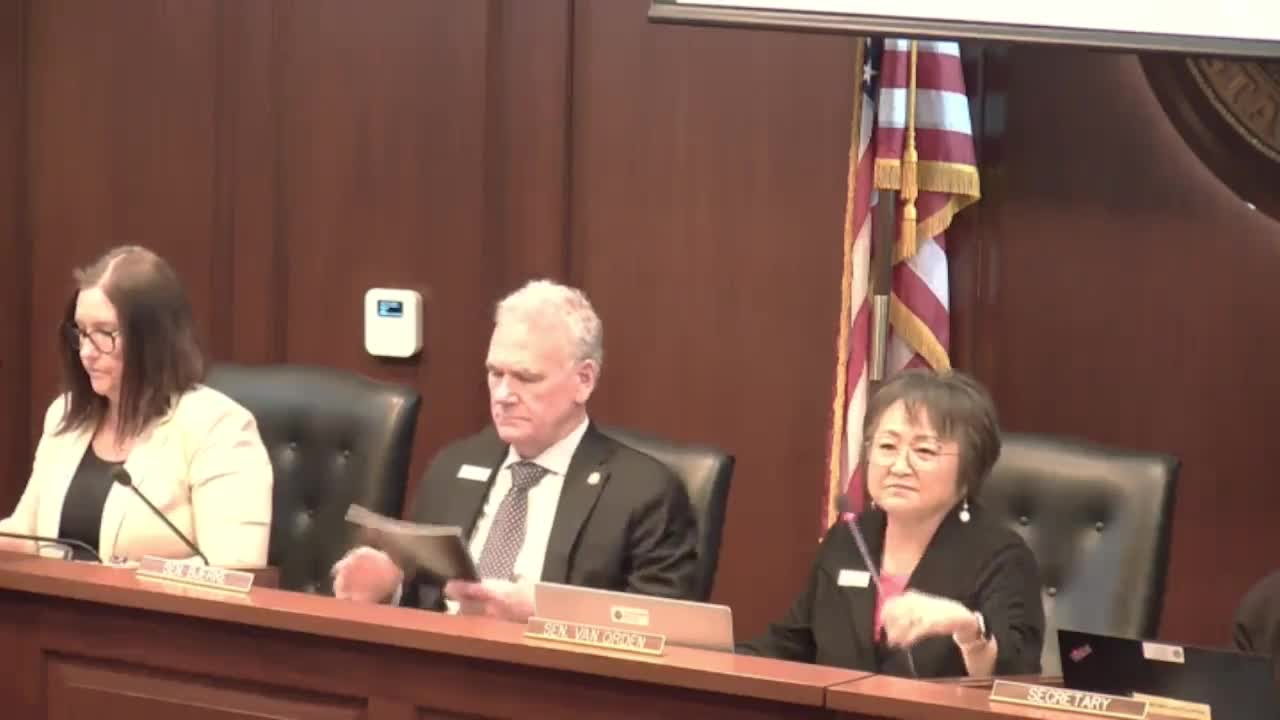
Senate committee sends bill letting daycare providers set ratios to the floor over safety objections
Summary
The Idaho Senate Health and Welfare Committee voted to send House Bill 243 to the floor with a “do pass” recommendation after a day-long hearing in which proponents said the bill will expand child-care capacity and opponents warned it would reduce safety by removing statutory child-to-staff ratios.
BOISE — The Idaho Senate Health and Welfare Committee on Thursday advanced House Bill 243, which would remove numeric child-to-staff ratios from state statute and require licensed child-care providers to set and publish their own ratios and supervision policies.
Sponsor Representative Rod Furness, R‑District 31, told the committee the bill is intended to ease regulatory barriers for people starting and running day-care businesses and to increase child-care capacity. “House Bill 243 helps providers the Idaho way by reducing onerous regulations and helping parents and students find affordable daycare,” Furness said.
Supporters and opponents sharply disagreed over whether the bill would increase access to licensed care or would weaken basic safety standards.
Why it matters: Idaho faces a sizable child-care gap, and supporters argued the current regulatory framework deters new providers. “The latest available data estimates Idaho's childcare shortage to be nearing 21,000 seats,” Nicholas Kleinworth, policy director at the Idaho Freedom Foundation, said in support of the bill. Proponents, including the bill’s technical presenter from Kestrel West, said the measure keeps safety requirements such as background checks, inspections and misdemeanor penalties for operating without a license while moving ratio details out of statute into provider policy and state rulemaking by 2026.
What the bill would change: Kate Oz of Kestrel West (presenting the bill language) told the committee the measure moves some supervisory standards from rule into statute, clarifies the definition of “active supervision,” and removes specific numeric ratios from the code. “Every day care facility must have a child-to-staff ratio appropriate to ensure health, safety, and welfare of all children in attendance,” Oz said, adding providers must publish their ratio policies for parents and that federal subsidy rules would still apply for providers who accept federal funds.
Opponents pressed for keeping statutory ratios. Multiple witnesses representing early‑childhood professionals, cities and advocacy groups urged the committee to preserve specific ratio limits and to study alternatives before changing the law. Christine Tiddens, executive director of Idaho Voices for Children, said stripping numeric ratios from statute would “open the door to operators and bad actors who cut corners to save costs” and pointed to research linking lax staffing to higher rates of abuse and neglect.
Safety concerns and testimony about a death: Several witnesses described concrete safety concerns. Mark Kirby testified in opposition and said his nephew died after a daycare failed to follow safe‑sleep and supervision practices; Kirby said state investigators found the center exceeded legally allowed child-to-staff ratios in that case. In a separate statement, Chief Roger Shy of the Pocatello Police Department told the committee that his licensing officer processed hundreds of applications and that denials are rare but justified; he described a local investigation that found staff operating over allowed ratios and uncovered video evidence of physical abuse, leading to criminal charges and license revocations.
Local control and enforcement questions: City officials and chambers of commerce raised concerns about preemption and the operational impacts of shifting licensing responsibility. Kathy Grismeyer, director of policy and government affairs for the City of Boise, said Boise already uses a mix of incentives and regulatory flexibility to support in‑home providers and worried how the state would absorb locally licensed facilities if the law changed. “It is really unclear to me, with a fiscal note of $0, how the department is planning to bring on all of these licensed facilities into its care,” Grismeyer said.
Supporters’ policy pitch: Proponents said the bill would let markets and parents choose higher‑quality, smaller‑ratio care where they want it while allowing new small providers to form without “onerous” local rules. Chris Cargill, president of the Mountain States Policy Center, said regulation is not automatically synonymous with safety and argued the bill would expand licensed options: “This legislation puts you all as legislators back in the driver's seat instead of depending on a patchwork of laws,” he said.
Committee action: After public testimony that included more than a dozen witnesses for and against the bill, Senator Leddy moved to send HB 243 to the floor with a “do pass” recommendation; the motion was seconded by Senator Keiser. A substitute motion to send the bill to the fourteenth order of business for possible amendment (offered by Senator Blaylock) failed on a recorded voice/roll show of hands. The committee subsequently approved the “do pass” motion and sent HB 243 to the Senate floor for further consideration.
What was not changed: Presenters emphasized that the bill would not remove criminal background checks, eliminate inspection authority, or make operating without a license lawful. Kate Oz told the committee the bill leaves in place mandatory background checks and that operating without a license remains a misdemeanor.
Next steps: With the committee’s recommendation, HB 243 will be considered by the full Senate. Committee discussion noted differing ideas about whether the change should be handled now or be the subject of a study and amendment process before final action.
Ending: The committee hearing closed after roughly an hour of testimony and discussion; the measure now moves to the full Senate where senators will have an opportunity to debate and propose amendments.