Get Full Government Meeting Transcripts, Videos, & Alerts Forever!
Get email alerts on the Blind Services Funding Programs topic
No spam. Unsubscribe anytime.
Commission for the Blind and Visually Impaired briefs committee on services, funding and programs
Summary
The Idaho Commission for the Blind and Visually Impaired presented an overview of services to the Senate Health and Welfare Committee, describing vocational rehabilitation, school‑to‑work transition programs, summer training (VIEW, College Days, work‑readiness), independent living services, a Boise assessment and training center with dorms, the R
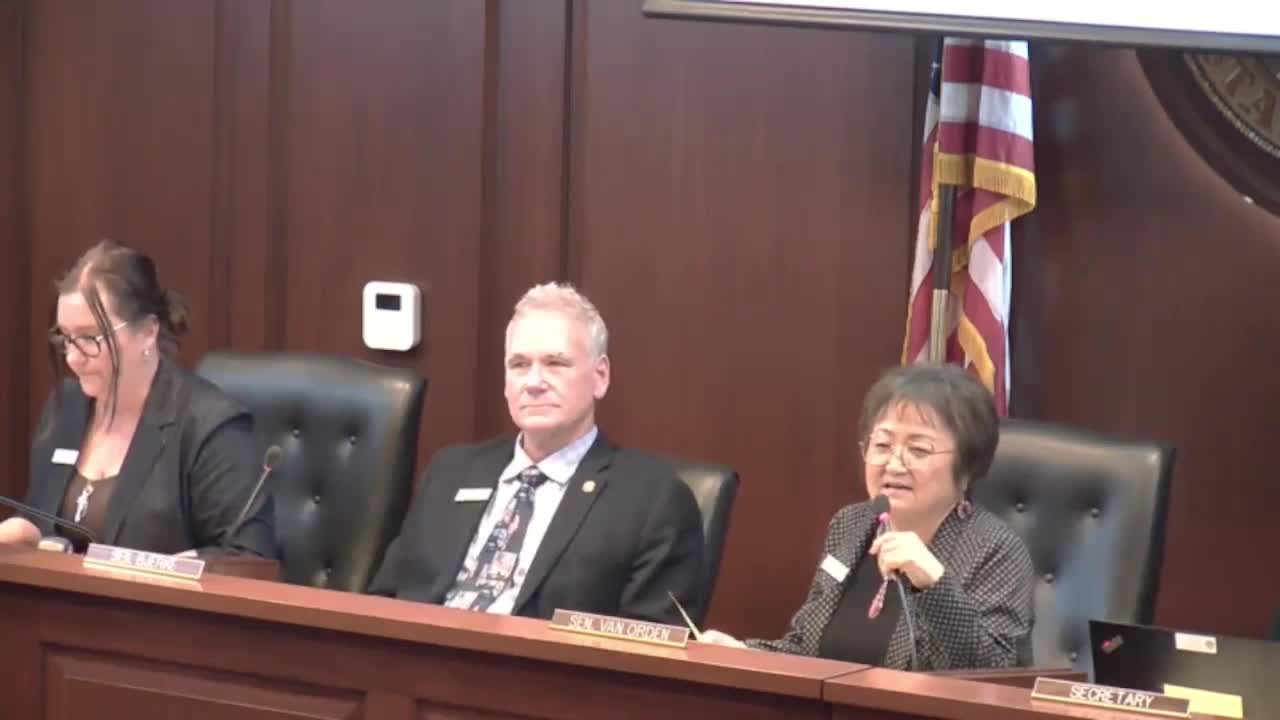
Beth Cunningham, administrator of the Idaho Commission for the Blind and Visually Impaired, and Steve Ochabal, independent living program coordinator, provided the Senate Health and Welfare Committee with an overview of the commission’s programs, offices and funding.
Cunningham said the commission’s mission is to empower Idahoans who are blind or visually impaired through vocational rehabilitation, skills training and independent‑living supports. She said the commission served roughly 2,000 people in the last fiscal year and maintains offices in Boise, Coeur d’Alene, Idaho Falls, Lewiston, Pocatello and Twin Falls to serve all 44 counties.
The commission described several programs: vocational rehabilitation services that help clients maintain or obtain competitive employment; school‑to‑work transition services for students ages 14–21; an Assessment and Training Center in Boise that offers 10‑ to 12‑week residential training in orientation and mobility, activities of daily living, braille and assistive technology; and the Business Enterprise Program established under the Randolph‑Shepherd Act that allows blind vendors to operate vending and food operations in public buildings.
Summer programs include a work‑readiness camp, a week‑long "College Days" program and the VIEW program (one week of job‑readiness training followed by four weeks of paid work experience). Participants and staff gave short testimonials: program participant Carter Ray said, "I would highly recommend College Days because when I go to college myself, it won't have to be as hard as I thought it would be." A VIEW participant, Mia of Kuna, said VIEW "really helps you build that confidence in yourself." Rehabilitation instructor Bailey Weir described partnerships with local businesses that place students in work sites and said the on‑site experience increases future hiring openness.
Steve Ochabal described independent living services for people under age 55 and for those 55 and older. He also described a site‑restoration program funded by state general funds that can assist clients with vision‑saving procedures (for example, cataract surgery) with a $5,000 lifetime cap per individual. Cunningham said roughly 80% of the commission’s budget is federal; she cited $1.8 million in general‑fund support and $6.27 million in total funding.
Committee members asked about the commission’s funding mix and the potential impact of changes in federal funding; Cunningham said a large loss of federal funding would have a significant effect and noted that the general‑fund‑supported site‑restoration program serves about 70–75 people per year. Senator Wintrow asked about the commission’s relationship to the Idaho Division of Vocational Rehabilitation; Cunningham said the commission is housed under the governor’s office while IDVR is in the Department of Education, and that the commission receives federal grants directly.
Why it matters: The presentation detailed services that support employment and independent living for blind and visually impaired Idahoans and highlighted the commission’s federal funding dependence and a small state general‑fund allocation for site‑restoration services.
What remains unclear from the hearing: The committee hearing supplied program totals and budget summaries but did not include the commission’s full audited budget document or granular line‑item data in the transcript. Committee members requested clarity about federal funding risks; administrators reiterated the reliance on federal grants.
Next steps: Committee members thanked the commission for the briefing; no formal committee action was taken on the presentation.