Get Full Government Meeting Transcripts, Videos, & Alerts Forever!
Get email alerts on the State Budget Funding topic
No spam. Unsubscribe anytime.
State Independent Living Council outlines fund balances, asks panel to shift small appropriation to general fund
Summary
The Idaho State Independent Living Council told the Joint Finance-Appropriations Committee it spends nearly all of its federal-dedicated revenues, maintains roughly six months of operating reserves and that the governor recommends an $11,700 shift from the council’s dedicated fund to the general fund to cover statewide cost increases.
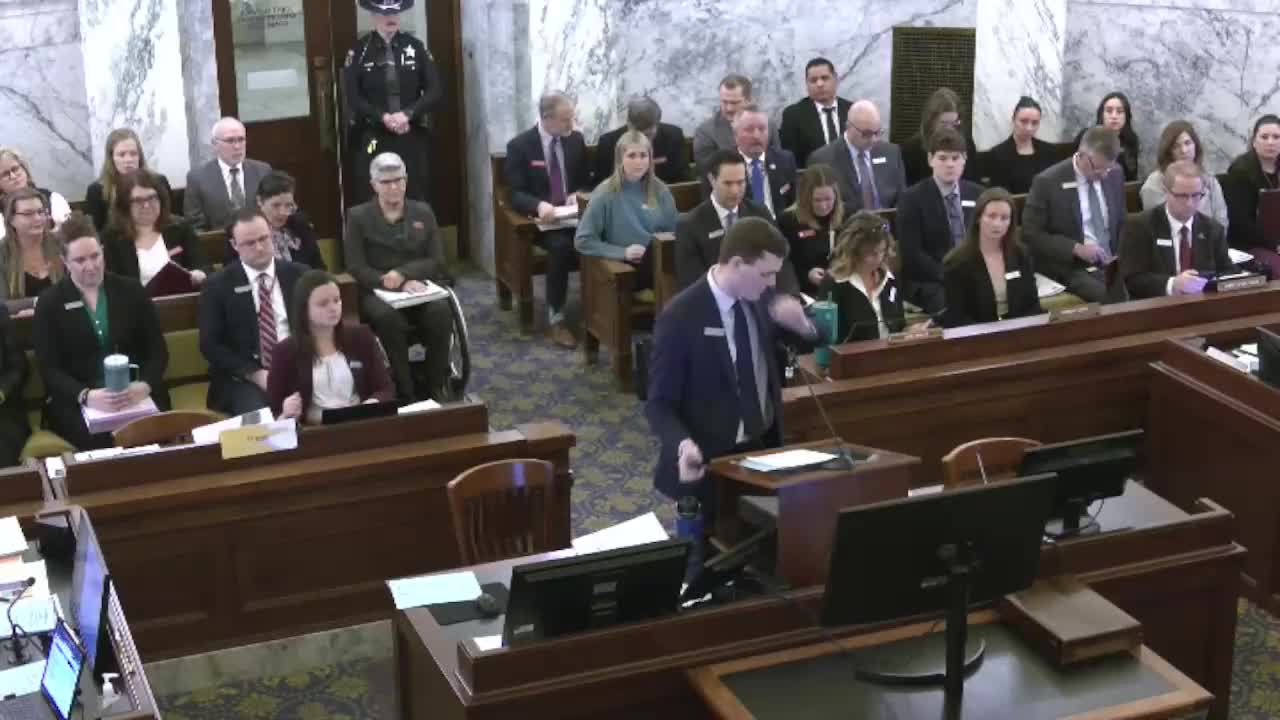
The Idaho State Independent Living Council told the Joint Finance-Appropriations Committee on Jan. 15 that it typically spends nearly all federal dedicated revenues each year, maintains roughly $280,000 in reserves (about six and a half months of expenses), and that the governor recommends shifting $11,700 of personnel appropriation from the council’s dedicated fund to the general fund for FY2026.
Kellen McGurkin, a budget and policy analyst with the Legislative Services Office, told the committee the council (SILC) has four full-time positions, including Executive Director Mel Levitan, and that those positions are “essentially always filled.” McGurkin said variations between appropriation and expenditures appear because federal grant periods and state fiscal years do not align, which can make a year look like an agency spent more than it received even when it did not. “Overspent isn’t a term I would use,” he said, clarifying the timing mismatch.
The nut of the agency’s fiscal picture is its dedicated fund, which SILC receives through pass-through federal independent living grants (Title I of the Rehabilitation Act and Title VII of the Workforce Investment Act). McGurkin said those receipts nearly match the council’s expenditures in most years; SILC recorded minor overspends of about $3,000 in FY2022 and $13,000 in FY2023 attributable to federal grant timing rather than ongoing shortfall.
Levitan, identified himself as the executive director of the Idaho State Independent Living Council and thanked the committee for its support. He noted SILC uses a small staff and travels statewide to provide training and advocacy, and said the council used a $10,000 one-time increase last year to complete three audits with no findings. “We make the most that we can with a very small budget,” Levitan told the committee.
McGurkin said the governor’s FY2026 recommendation would move $11,700 in appropriation from SILC’s dedicated fund to the general fund. The effect, he explained, would be that the general fund would pick up roughly half of statewide increases in health benefit and change-in-employee-compensation (CEC) cost increases that otherwise would come from SILC’s dedicated fund. The committee did not take a vote during this presentation; McGurkin and Levitan stood for questions and provided clarifications.
The council’s appropriation history shows periodic small swings tied to federal title funding; McGurkin pointed to a roughly $30,000 Title I increase in FY2023 that was the first such increase in about a decade. Operating costs are concentrated in rental and travel expenses used to reach regions outside the Treasure Valley, while personnel costs account for about 69–70% of expenditures in recent years.
The presentation referenced SILC’s statutory establishment under state law and federal grant authorities; McGurkin directed the committee to the Legislative Budget Book (LBB) materials for line-item detail and fund balances. No formal action was recorded during the hearing on the governor’s recommendation.
Looking ahead, the council’s modest reserve level—about six months of operating expenses—was presented as a buffer if federal revenue timing shifts. McGurkin and Levitan said they are available to provide additional documentation to the committee if members want further detail on fund receipts or the mechanics of the proposed appropriation shift.