Get Full Government Meeting Transcripts, Videos, & Alerts Forever!
Get email alerts on the Behavioral Health topic
No spam. Unsubscribe anytime.
JFAC approves behavioral-health spending, adds language to ease federal-fund transfers
Summary
The Joint Finance-Appropriations Committee approved a series of one-time and ongoing appropriations and fund shifts for Idaho behavioral-health programs and accepted language allowing limited transfers between expense classes if federal grants change.
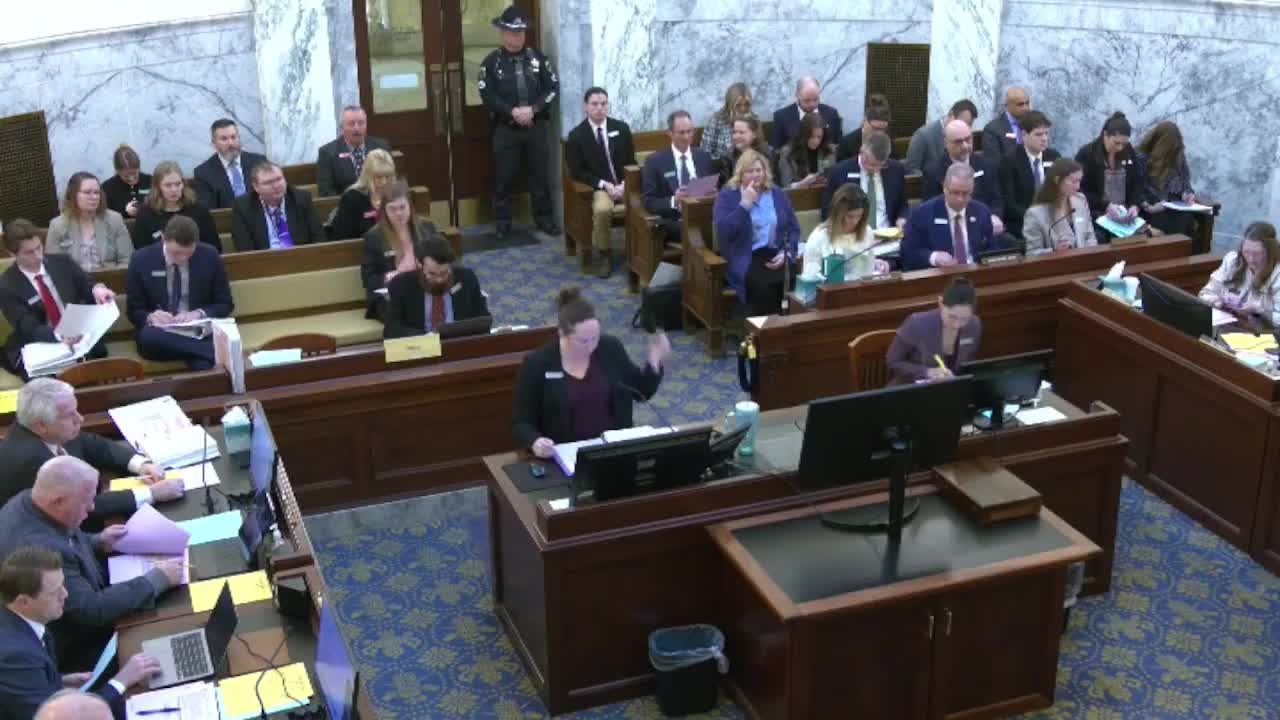
The Joint Finance-Appropriations Committee on Friday approved multiple appropriations and fund-shift changes to support mental-health services, psychiatric hospitalization and substance-abuse programs while adopting language clarifying how federal grant dollars may be treated if funding changes.
Idaho Legislative Services budget analyst Alex Williamson told the committee the items “all roll up into one enhancement bill for behavioral health,” then walked members through a dozen separate motions covering prior-year supplemental requests, fiscal‑2026 enhancements and technical fund shifts.
Why it matters: Committee members said the actions were intended to keep federal grant spending aligned with implementation schedules for the Idaho Behavioral Health Plan, to help hospitals cover rising civil‑commitment costs and to allow the Department of Health and Welfare to move money between expense classes when federal grant timing changes. The committee also approved language intended to limit the state’s exposure if federal grants are reduced or rescinded.
Most significant votes and actions - A fiscal‑year 2025 supplemental to spend unused federal grants for Idaho Behavioral Health Plan (IBHP) contract implementation: $6,743,800 from the Cooperative Welfare Federal Fund was approved. Vote: Senate 8 ayes, 2 nays; House 7 ayes, 3 nays; Grand total 15 ayes, 5 nays. (Motion moved on the record and carried.) - Fiscal‑year 2026 IBHP federal grant increase: $261,400 in federal funds was approved. Vote: Grand total 18 ayes (passed). - Psychiatric hospitalization (community hospitalization) supplemental for FY2025 to cover civil‑commitment expenditures: $2,663,500 from the Cooperative Welfare General Fund was approved. Vote: Grand total 19 ayes, 1 nay. - Forecast adjustments and fund shifts for State Hospital West and State Hospital South (FY2025): the committee approved shifting federal-funded appropriations to dedicated or general funds where federal collections were lower or reclassified; multiple line items passed with unanimous or near‑unanimous votes. (Examples below.) - A series of transfer-limit exemption language items (to allow the Division of Mental Health Services and psychiatric hospitalization to move funds between personnel, trustee/benefit and other expense classes in accordance with Idaho Code 67‑3511) were accepted by unanimous consent. - Substance‑Abuse Treatment and Prevention fund reallocation for FY2026 (to align personnel and trustee/benefit funding between federal and dedicated funds): following a correction to the motion text, the committee approved a net‑zero reallocation. Final vote: Grand total 14 ayes, 6 nays (motion passed).
What the committee said Alex Williamson, the Legislative Services analyst, repeatedly told the committee the appropriations were intended to match federal grant timing and to allow the department to use previously awarded grant dollars that had not been appropriated because of implementation delays. “Due to some delays with the go‑live, that appropriation for those funds expired, and so the agency is asking for the appropriation to spend those unused funds,” she said.
Representative Furniss (mover on the community hospitalization request) and other members noted rising civil‑commitment costs at community hospitals and said the supplemental was needed to cover unanticipated spending.
Several members asked for reporting and for clauses protecting the state if federal funds are reduced. The committee adopted language requiring agencies to report and stating that state general funds will not automatically backfill federal grants removed or rescinded — and providing limited authority to move existing appropriations among expense classes when grants are delayed or reclassified.
Context and background The Idaho Behavioral Health Plan has multiple federal grants that support implementation of statewide behavioral‑health reforms and new managed‑care arrangements. Several votes reflect a pattern seen in other agencies: federal grant timing and the state’s managed‑care transitions have changed the mix of federal, dedicated and general funds the department uses; the committee’s role is to appropriate spending authority consistent with the anticipated receipts and to add reporting or limitation language where members want additional oversight.
Ending The set of motions will be bundled into the committee’s behavioral‑health enhancement bill and sent forward with due‑pass recommendations to the next legislative steps. Committee members said they plan to monitor implementation closely and review any department reports required by the new language.