Get Full Government Meeting Transcripts, Videos, & Alerts Forever!
Get email alerts on the State Budget Process topic
No spam. Unsubscribe anytime.
Legislative staff outline statewide budget choices: two revenue forecasts, benefit adjustments and competing compensation packages
Summary
Legislative staff presented statewide decision packets including two general‑fund revenue projections, options for personnel‑benefit cost adjustments, contract inflation and competing change‑in‑employee‑compensation (CEC) packages to be set by the committee ahead of agency program budgets.
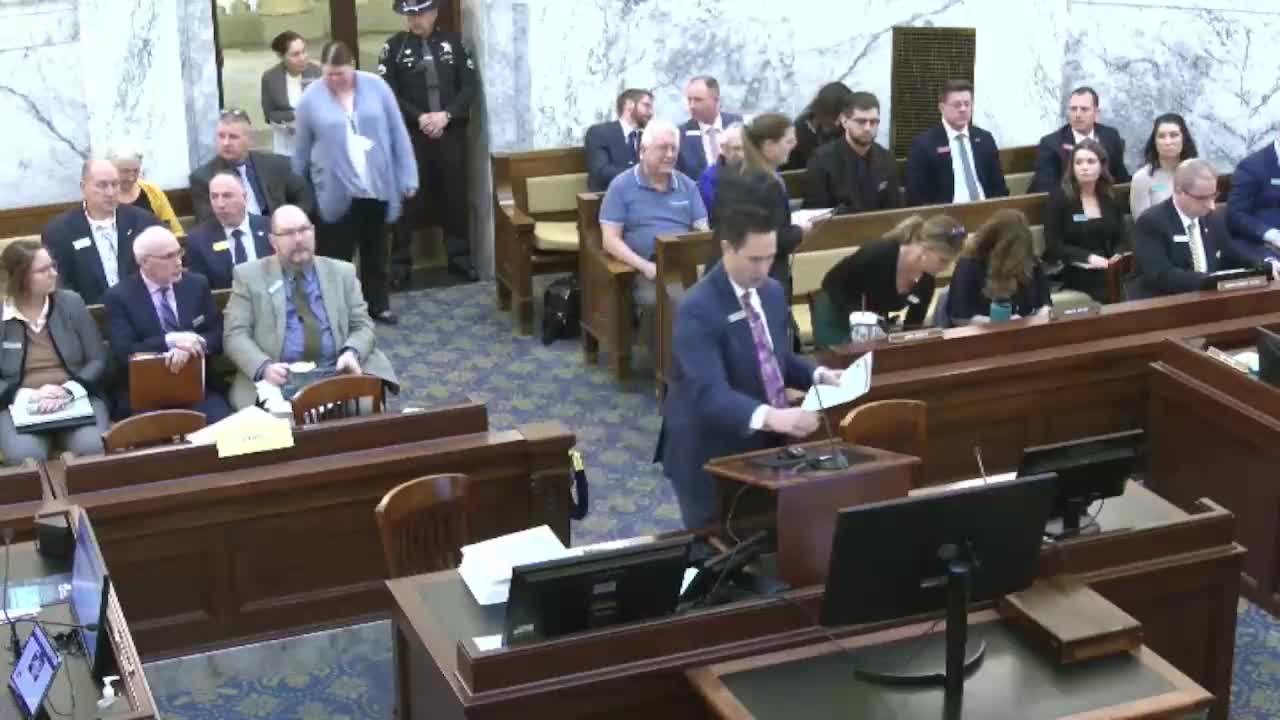
Keith Bybee, Division Manager of Budget Policy Analysis for the Legislative Services Office, and other staff walked the committee through the statewide decision packet that the Joint Finance‑Appropriations Committee must set before agency program maintenance budgets are finalized.
The packet offers two revenue forecast options for FY2026: the governor’s recommendation at $6.26 billion and the Economic Outlook and Revenue Assessment Committee’s (EORAC) recommendation at $6.40 billion. Bybee explained the committee will need to select one forecast to frame appropriations.
Personnel benefit costs are a primary item. The governor’s personnel benefit recommendation included a larger health‑insurance adjustment (about $56.3 million) while the CEC committee proposed lower funding for health insurance ($40.7 million in the analyst presentation); the committee heard a request from Division of Financial Management (DFM) that funding reserves be maintained to avoid future large midyear adjustments.
Bybee described contract inflation ($3.3 million statewide) and a statewide cost‑allocation increase of $5.5 million (about $3.6 million on the general fund), driven by higher charges from the State Controller’s Office and the Office of Information Technology Services. He said the State Controller rate spike reflected catch‑up adjustments tied to payroll system migration work.
Change‑in‑employee‑compensation (CEC) proposals were a focal point. The governor proposed an equivalent of a five‑percent increase (or $1.55 per hour in examples used internally) totaling roughly $179.7 million statewide, including K‑12 support units and agency salary schedule changes. The CEC committee proposed a slightly smaller package (reported at about $174.7 million in the work packet). Bybee cautioned that salary schedule numbers were being finalized and small adjustments were possible before the committee votes scheduled later in the week.
DFM administrator Laurie Wolf briefed the committee about actuarial analysis for health insurance funding and reserves. She said the actuary’s May report guides the budgeted health‑insurance level and warned that funding at the very minimum actuarial level would expose the state to larger required increases next year; she said the actuarial update in October guides the final fund reserve posture.
Committee members asked for additional materials: a clearer agency‑level view showing how a dollar‑per‑hour or percent‑based CEC would affect different classifications and an explanation of why the State Controller rate increased. Bybee said the committee will vote on statewide decisions on Thursday and set program maintenance budgets on Friday under a tight schedule.
No final votes on these statewide decisions were taken during the hearing; staff said updated numbers and supporting memos will be provided before formal committee actions.