Get Full Government Meeting Transcripts, Videos, & Alerts Forever!
Get email alerts on the Aging Services topic
No spam. Unsubscribe anytime.
Commission on Aging seeks remaining ARPA funds, requests modest ongoing inflation increase
Summary
The Idaho Commission on Aging asked the Joint Finance-Appropriations Committee to approve one-time requests to draw down remaining American Rescue Plan Act (ARPA) funds for meal programs, caregiver supports and modernization projects and requested a small ongoing general-fund increase to cover inflation for fiscal 2026.
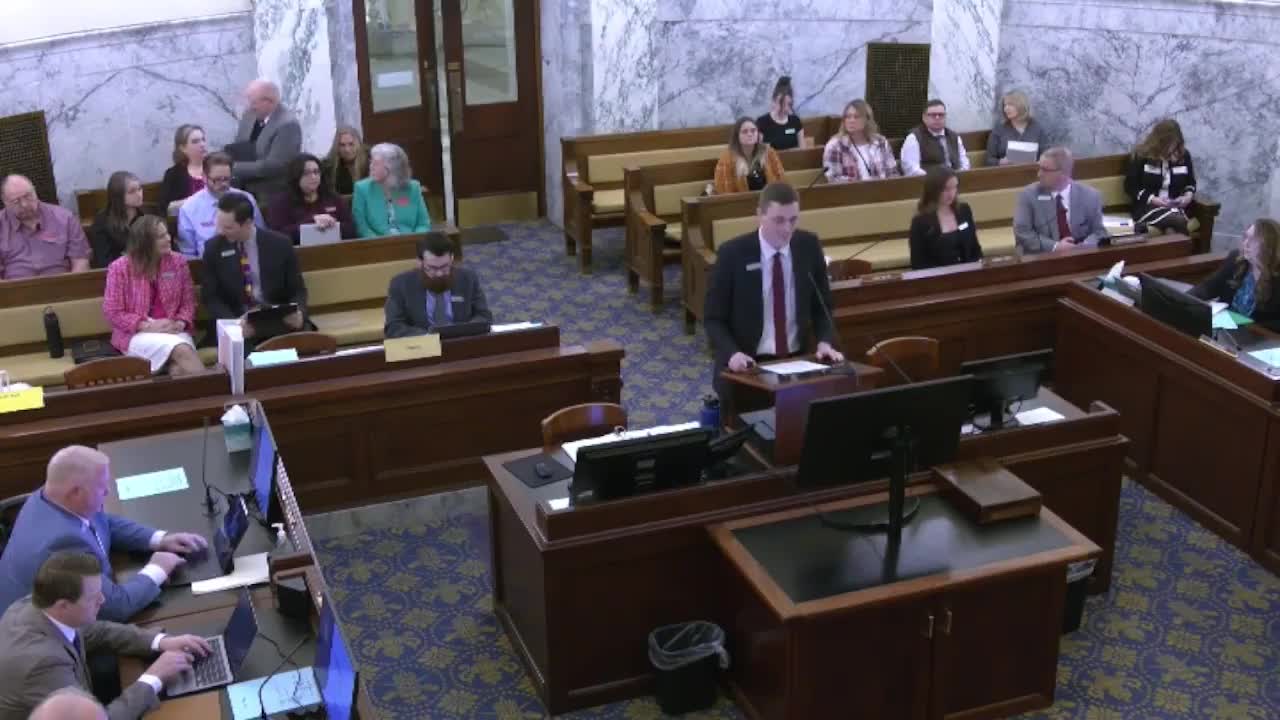
The Idaho Commission on Aging asked the Joint Finance-Appropriations Committee on Feb. 24 to approve a final one-time appropriation to draw down remaining federal ARPA funds and recommended a small ongoing general-fund increase to cover inflation for fiscal 2026.
Legislative Services budget analyst Colin McGurkin said the commission ‘‘implements the Federal Older Americans Act and Idaho Senior Services Act’’ and that the agency distributes direct services through six local Area Agencies on Aging (AAAs) around the state. McGurkin told the committee the agency’s FY 2024 expenditures totaled about $16.7 million, with nearly 88% recorded as trustee and benefit payments to AAAs for services such as meals, transportation and caregiver assistance.
The request centers on one-time federal ARPA balances. McGurkin said the commission has used ARPA funds since FY 2022 for one-time modernization projects and service enhancements, with about $7.4 million in ARPA-related expenditures already recorded; the agency requested $1.8 million in FY 2025 to use remaining ARPA funds before they expire Sept. 30, 2025. He also said the commission requested a $500,000 one-time federal appropriation to pay final invoices and draw down remaining ARPA funds; $450,000 of that would go to AAAs and $50,000 to cover staff time and operating expenses.
Director Judy Taylor, director of the Idaho Commission on Aging, described how ARPA-supported projects were used locally. Taylor said community health workers hired under a public-health workforce pilot performed in‑home assessment and planning to support a high-risk caregiver pilot and that the ‘‘boots on the ground’’ approach allowed case planning, short respite and connections to services. She said some ARPA-funded items—such as memberships for adult protective services staff and extra respite hours—are one-time and will not be sustained when ARPA funds expire.
Taylor also summarized a FY 2026 request the agency and governor aligned on: $162,600 ongoing from the general fund to cover inflationary increases, including a $155,000 ongoing increase in trustee and benefit payments to AAAs (described as a 3% increase intended to offset rising labor, insurance and fuel costs) and $7,600 for a 2% operating increase. Taylor told the committee the commission’s base budget ‘‘largely consists of appropriations related to the implementation of the Federal Older Americans Act and Idaho Senior Services Act and related adult protective services.’'
Committee members asked for detail on Alzheimer’s and dementia-specific spending and on staff time charged to ARPA. McGurkin said he did not have a specific figure on Alzheimer’s-related spending and offered to follow up. Taylor said she could not state the exact percentage of staff time charged to ARPA but said personnel obligations were otherwise covered in the agency’s budget; deputy staff clarified that staff time charged to federal grants is direct-billed to the appropriate grant source.
Members praised local senior centers and pressed for detail on meal funding. Taylor said the commission used prior state appropriations to raise meal rates by 25 cents per meal beginning July 1 and that home-delivered meal waitlists that existed last year had been eliminated.
Why it matters: The commission funds a statewide network of services that many Idaho seniors rely on for nutrition, adult protective services and caregiver support. Committee approval to use remaining ARPA funds will determine whether one-time projects and service enhancements can be completed before federal deadlines.
The committee did not take a formal vote during the Commission on Aging presentation; staff said they would provide follow-up details requested by legislators (including Alzheimer’s-specific spending and the precise share of staff time charged to ARPA). Taylor closed by asking for the committee’s support and saying appropriated funds would be ‘‘invested wisely, with outcomes monitored and reported transparently.’'
Ending note: The commission’s request is framed around completing one-time projects funded by ARPA and a modest ongoing inflationary adjustment; lawmakers asked staff for follow-up numbers that could influence final FY 2026 budget decisions.